Start with the room, not the fiber
A rug can soften a room, define a seating area and make hard flooring more inviting. Wool and cotton both offer a natural-fiber feel, but the better choice depends on where the rug will go and how you use that space. Before comparing colors or patterns, think about foot traffic, spills, furniture and how often you are willing to clean the rug.
A busy entryway asks more of a rug than a quiet bedroom corner. A dining area needs a surface that is easy to clear of crumbs and reach beneath the table. In a living room, comfort under bare feet may matter as much as cleaning. These everyday details are more useful than treating either fiber as the universal winner.
How wool and cotton feel underfoot
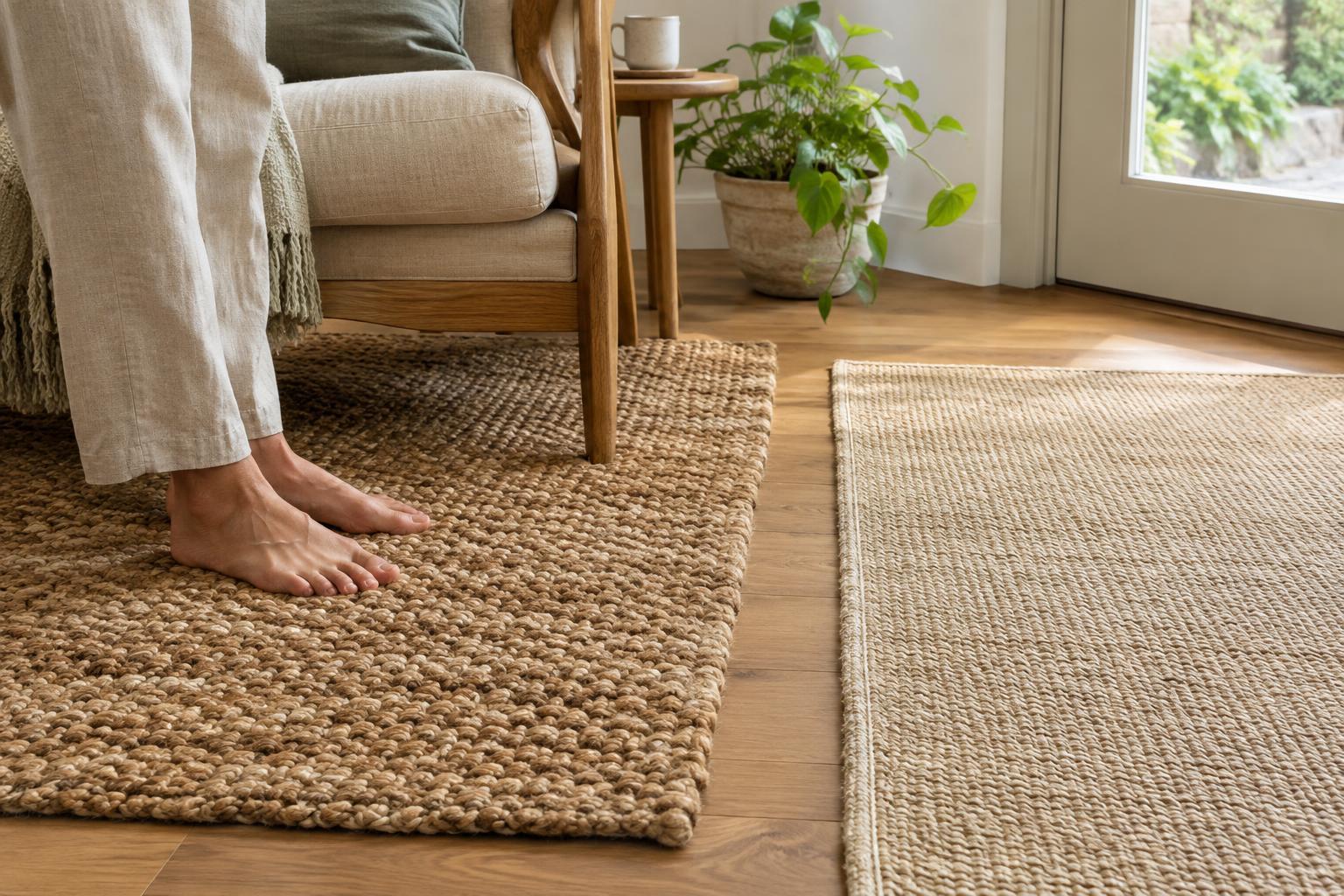
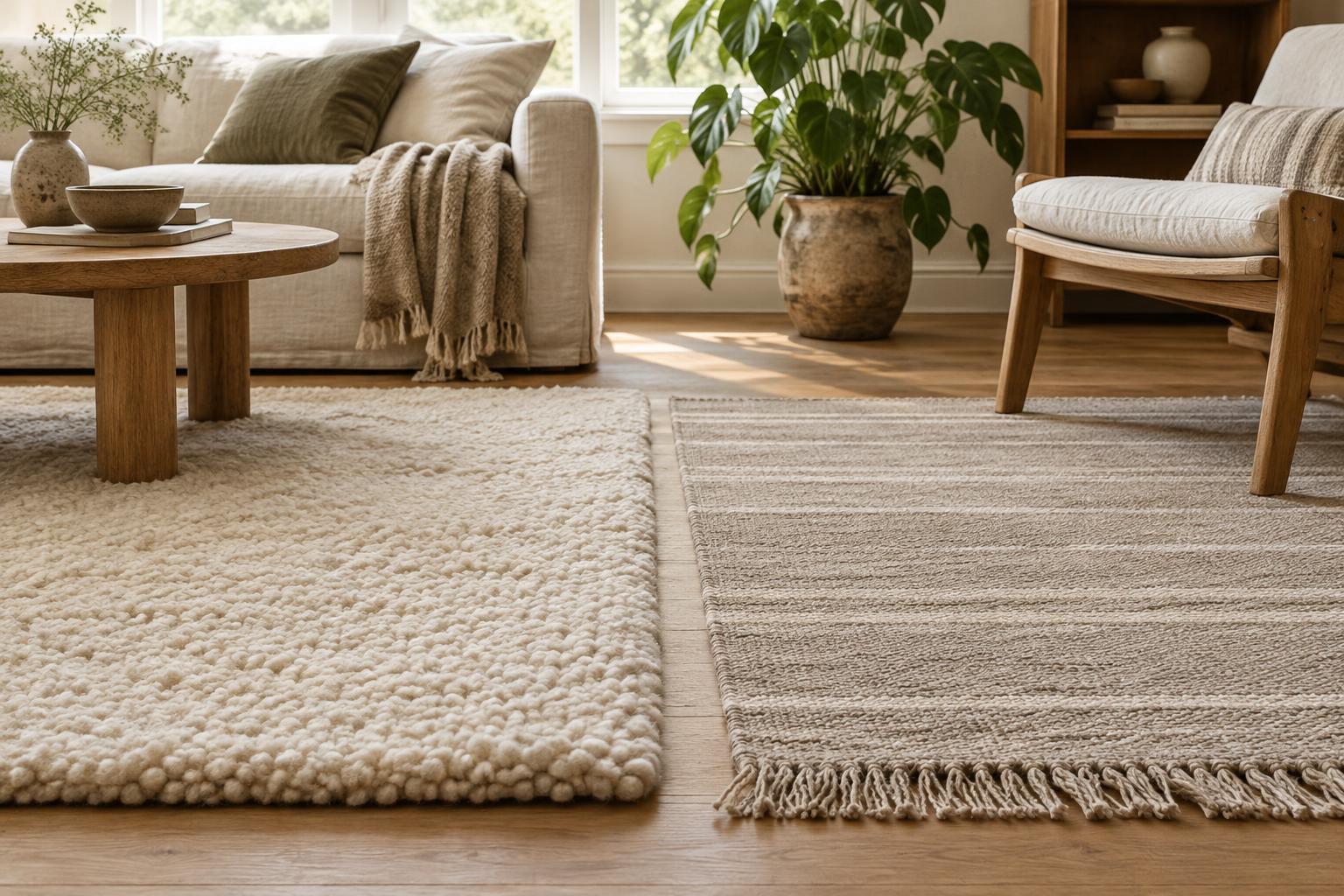
Wool often feels springy and substantial. Its fibers can give a pile rug a cushioned feel, while a flatwoven wool rug offers texture without as much height. That warmth can be welcome beside a bed or across a living-room floor. Some people find wool slightly coarse, though, and the feel varies considerably with the yarn, weave and finish. If softness is your priority, touch a sample rather than relying on the fiber name alone.
Cotton generally has a lighter, more casual feel. Many cotton rugs are flatwoven or low-profile, making them useful where a door needs to swing freely or chairs need to move. A soft cotton weave can be pleasant under bare feet, but it will not necessarily provide the cushioning of a thicker wool rug. For either material, a suitable rug pad can add comfort and help keep the rug in place. Check that the pad is appropriate for both the rug and your floor finish.
What changes with wear
Wool is often a good candidate for a rug you want to keep in a frequently used room. Its fibers tend to recover from compression better than cotton, although construction matters: a tightly made rug will generally hold its shape better than a loosely made one. Expect some shedding from certain new wool rugs, especially pile styles, and follow the maker’s care guidance rather than pulling loose fibers.
Cotton rugs can be easier to lift, move and rotate, which is useful in a flexible room. They may flatten, wrinkle or show traffic paths sooner, particularly if they are lightweight or loosely woven. Neither fiber is immune to fading, so consider how much direct sunlight reaches the floor. Rotating a rug periodically can spread wear and light exposure more evenly.
Look beyond the front surface when comparing two rugs. Edges, stitching, pile density and backing all affect how a rug performs. Also check its dimensions against the layout: a rug that stays clear of a door and supports the furniture as intended will be easier to live with than one chosen solely for its material.
Cleaning: read the label before you commit
The appeal of cotton is that some smaller cotton rugs are machine washable. That is a feature of the individual rug, not a promise about every cotton rug. Check the care label, the capacity of your washing machine and the instructions for drying. Large rugs, rugs with special dyes and rugs with certain backings may need a different approach. Washing can also change the shape or feel of a rug if the maker has not designed it for that treatment.
Wool usually calls for a gentler routine. Regular vacuuming helps remove grit before it works into the fibers; use a setting suitable for the rug’s construction. Blot a spill promptly with a clean cloth instead of scrubbing it deeper into the weave. Avoid soaking a wool rug, and test any cleaner in an inconspicuous spot first. For a large stain or a rug whose care instructions are unclear, a rug-cleaning specialist may be the safer option.
For either fiber, deal with tracked-in dirt at the door and allow damp areas to dry fully. A rug that is simple to maintain in your actual household is likely to look better than one whose care requirements you cannot comfortably meet.
A practical way to choose
Choose wool if you want a warmer, more cushioned surface and are comfortable with careful spot cleaning and ongoing vacuuming. Consider cotton if you prefer a lighter rug, want to change your layout easily or have found a washable style that suits the room. For a spill-prone space, compare the specific care labels before choosing; fiber alone does not tell the whole cleaning story.
Finally, bring the decision back to the room. Check a sample in its natural light, walk on it if you can, and confirm the rug’s thickness will work with doors and furniture. The right natural-fiber rug is the one whose feel, construction and upkeep fit the way you live.