An accessory should work with real life
The most useful scarf is not necessarily the most dramatic one. It might be the square you reach for when a plain shirt needs a little definition, or the larger wrap that makes a familiar coat feel complete. Before choosing a color or print, think about the moments when you would wear it: a walk to the market, a day indoors with the windows open, an evening out, or a cool journey home. Those situations suggest different weights, sizes and ways of tying.
UniqueYou’s approach is to offer elegant, accessible accessories that can meet a woman’s existing wardrobe rather than demand an entirely new one. That makes the starting point pleasantly concrete. Put the scarf beside the coats, knitwear and shirts you already own. If it gives you several combinations you would genuinely wear, it has earned its place. A striking print can do this just as well as a quiet neutral; the question is whether it connects with your clothes and your habits.
The story behind the name
UniqueYou began in 2014 with scarves and clothing. Its history includes a pause and a return after the domain was recovered, so it is more accurate to describe a beginning and a later return than an uninterrupted run. Today the focus here is on its women’s scarves, shawls, wraps and square scarves. That is a useful range for someone who likes the effect of a textile accessory but wants to decide whether a small neckerchief or a broad shoulder wrap will actually be worn.
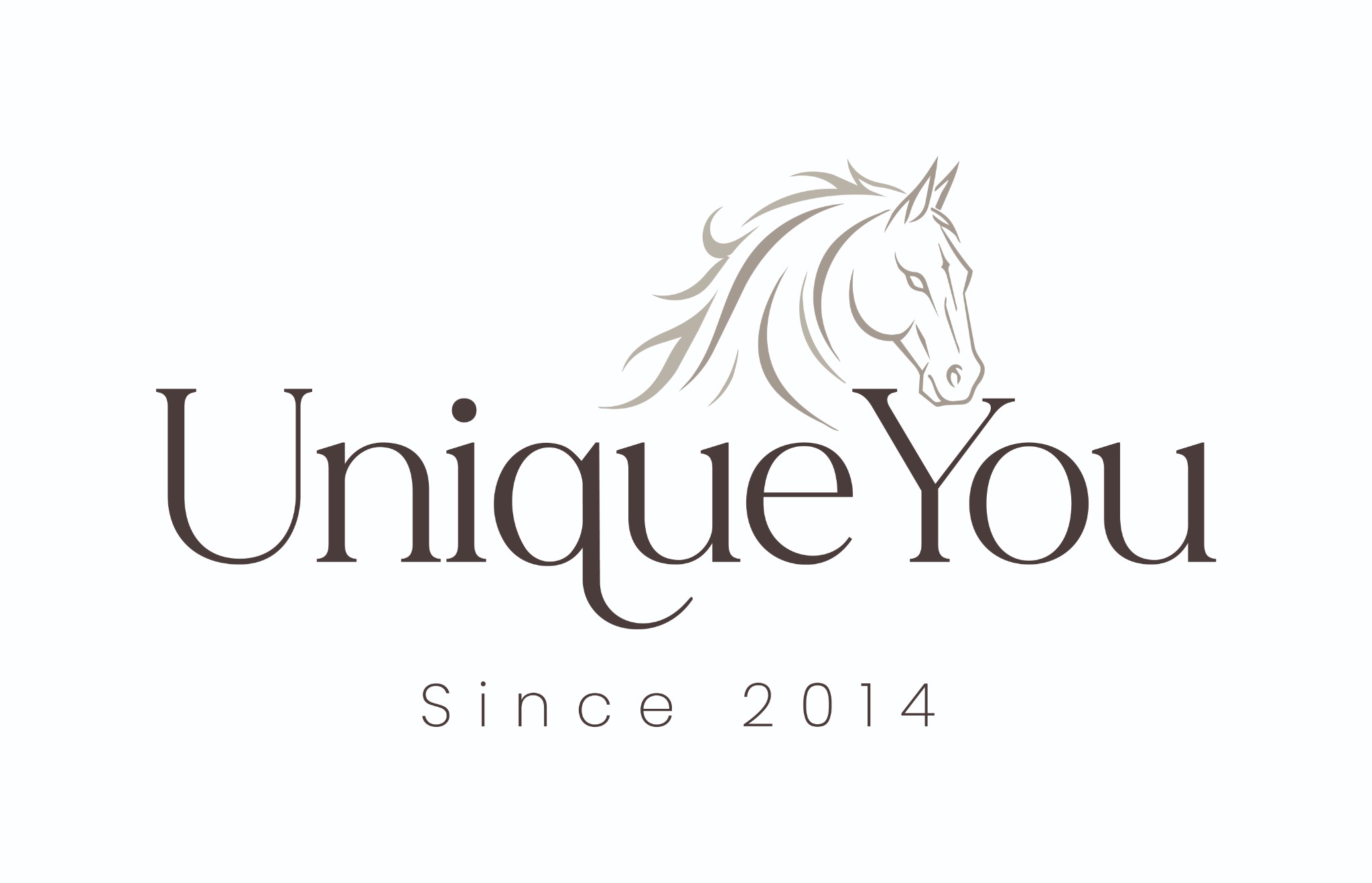
The original brown wordmark, horse motif and “Since 2014” detail give the name a recognizable identity; a neutral taupe palette provides a restrained setting for different scarf colors. Those visual cues can make browsing feel coherent, but they cannot tell you how a particular piece will feel against your skin. For that, look beyond the photograph to its dimensions, composition and care information. A brand identity introduces the collection; the individual product details should guide the choice.
Let the wardrobe set the palette
Open the part of your closet you use most often and look for colors that recur. Black, navy, cream, brown and gray can each provide a base, but the best accent depends on the shades already present. A burgundy scarf beside a charcoal coat creates a different effect from the same scarf beside a warm tan jacket. If your clothes carry several prints, a solid scarf may give the eye a resting place. If they are mostly plain, a patterned square can become the point of interest without requiring a new outfit.
It can help to lay two or three likely outfits on a bed or chair rather than judge a scarf against a blank screen. Look at the garment closest to the face, the outer layer and the bag you carry most. Decide whether you want the scarf to blend, echo a small existing color, or deliberately contrast. Then try to imagine it in ordinary daylight. This is much like choosing a textile for a plant-filled room: color and texture become clearer when seen alongside the things they will actually accompany.
Silk, cashmere and wool: choose the product, not just the category
UniqueYou has silk, cashmere and wool categories, but composition varies by product. A material category is therefore a place to begin looking, not a promise that every piece has the same fiber content or feel. Read each listing before deciding. Silk may appeal when you want a scarf that can be folded neatly and bring a smooth finish near the face. Wool or cashmere may be worth considering when your priority is a softer-looking layer for cooler weather. Size and weave also affect how a scarf drapes.
Consider how you will use and care for the piece. Will it sit at your neck for hours, rest over a coat, or spend much of the day folded in a bag? Check the stated composition and care guidance against that routine, especially if you are sensitive to particular fibers or prefer straightforward maintenance. Photos can show color and styling, while measurements help you judge coverage. Neither should replace the product information. The practical choice is the piece whose stated details fit your needs, not simply the material name you initially had in mind.
Size changes the way a scarf works
A small square can bring color to a neckline without covering a blouse. Folded into a narrow band, it can sit close to the neck; tied in the hair, it can introduce a print without competing with a patterned top. A larger square offers more room to fold, knot or drape, while a long scarf can create a vertical line over a coat. Shawls and wraps have a different presence: they may cover the shoulders and become a noticeable part of the outfit rather than a finishing detail.
Before buying, compare the listed measurements with an accessory you already own. If your favorite scarf keeps slipping because it is too short for your preferred knot, seek more length. If a large wrap spends the day in your hands, a smaller shape may suit you better. Consider proportion alongside your clothing: a generous scarf can balance a simple coat, but it may crowd a high collar or a top with substantial detail. The goal is not to follow a rule about body shape; it is to leave enough room for both the garment and the accessory to be seen.
Three low-effort ways to style one piece
For a straightforward neck tie, fold a square diagonally, roll it loosely and knot it where it feels comfortable. Let the ends show over a plain shirt, or tuck them beneath a collar for a quieter result. A longer scarf can be draped once around the neck with the ends left uneven; the asymmetry often looks more relaxed than a tightly arranged knot. With a broad wrap, try laying it across the shoulders before deciding whether you need to secure it at all.
Think about the setting as well as the mirror. An elaborate knot may look attractive at home but prove awkward with a coat collar or bag strap. Hair styling calls for a similarly practical test: check that a scarf stays in place when you move, and avoid tying it so tightly that it becomes uncomfortable. The appeal of a versatile accessory lies in being able to wear it repeatedly without a lengthy routine. A few simple arrangements, tried with clothes you already own, will tell you more than a list of styling possibilities.
Choosing a gift without guessing someone else’s style
A scarf can be a thoughtful gift because it does not require the same fit decisions as many garments, but its color, texture and scale still matter. Notice what the recipient actually wears rather than what you hope they might try. Someone who favors muted knits may enjoy a soft contrast or a print with familiar colors. Someone who regularly wears bold coats may welcome a quieter scarf that links those pieces to everyday clothes. If they rarely wear anything around the neck, a square that can also be tied to a bag may be more suitable than a substantial wrap.
When you are unsure, use observation rather than assumptions about age or occasion. Which coat appears most often? Do they wear warm or cool shades near the face? Are their accessories neatly structured or loosely draped? Check material information if they have known sensitivities, and pay attention to dimensions so the gift suits their preferred way of dressing. A small note explaining the combination you imagined can make the choice personal without suggesting there is only one correct way to wear it.
Make room for an accessory without adding clutter
Homes that accommodate plants well tend to give each pot enough light and space rather than filling every surface. A wardrobe benefits from the same restraint. You do not need a scarf for every possible outfit. One piece that works with several coats and tops may be more satisfying than several that suit only one photograph. Before choosing another color, take stock of the shapes you already own: a neckerchief and a broad wrap solve different problems, while two nearly identical scarves may not.
Give scarves a place where you can see them without crushing them. A drawer with room to fold, or a suitable hanger used according to the fabric’s needs, can make them easier to reach. Follow the care instructions for each product rather than treating every fiber alike. When a scarf is easy to find, comfortable to wear and compatible with your usual clothes, it becomes part of the daily rhythm of getting dressed. That is a more useful measure than how impressive a collection looks when laid out all at once.
Find the version that fits your location and language
UniqueYou has 20 regional domains, 21 regional-language versions and 16 distinct languages. The numbers differ because some countries share a language, while one domain can offer more than one language version. The United Arab Emirates is the latter case: its Arabic version is at the root of its domain, and its English version is at /en. Choose the destination language you want to read before following a regional term below; a familiar-looking country name does not always mean the page is in English.
The guide below points to country and language versions, along with selected scarf categories. Each local term is kept in its destination language so you can recognize what you are opening. Use the category descriptions as starting points, then check the details of any individual piece for its composition, dimensions and care. The right regional page helps you browse in the intended language; the right scarf still depends on the wardrobe it will join.
Regional guide: choose a country and destination language
Each entry names the destination language before its local terms and points to a regional homepage or a selected category. Similar categories in different countries are useful ways to explore a style, not a reason to assume the individual products have identical details.
Poland — Polish
In Polish, the local term leading to the regional shop for silk scarves is — sklep z jedwabnymi apaszkami. If burgundy is already a color you wear with coats or knitwear, the Polish burgundy-scarf category at UniqueYou offers a focused place to browse. Compare the shade with garments you own rather than judging it on its own.
Germany — German
For the German-language regional homepage, start with UniqueYou. In German, a local term leading to the merino-wool scarf category is — schal aus merinowolle. The broader scarf category at UniqueYou is useful if you want to compare shapes before narrowing the choice by fiber. Check the details of any piece that catches your eye.
Czechia — Czech
The Czech-language regional homepage is at UniqueYou. In Czech, the term leading to a scarf category is — velká šála; it is a starting point for considering a more generous shape. If you are picturing a smaller accent tied in the hair or worn on the head, explore the relevant category at UniqueYou and check its dimensions.
Spain — Spanish
The Spanish-language regional homepage is at UniqueYou. In Spanish, the local term leading to scarves for the head and hair is — pañuelos cabeza mujer. If you prefer a pattern to set against otherwise plain clothes, the leopard-print scarf category at UniqueYou offers another direction. Consider how much print you want near your face.
France — French
Begin with the French-language regional homepage at UniqueYou. In French, the term leading to leopard-print scarves is — foulards léopard élégants, a route worth considering when a simple outfit could use a patterned accent. For a different material category, explore cashmere scarves at UniqueYou, then read each product’s stated composition.
Hungary — Hungarian
In Hungarian, the local term leading to the regional shop for women’s scarves is — női kendők webáruháza. If you often dress in solid colors and want to test a familiar geometric pattern, the Hungarian checked-scarf category at UniqueYou is a useful next stop. Compare the scale of the check with the patterns already in your wardrobe.
Italy — Italian
In Italian, the local term leading to the regional online shop for scarves is — negozio online di sciarpe e foulard. For an accessory with more room to drape across the shoulders, browse the Italian silk-stole category at UniqueYou. Before settling on a piece, compare its measurements with a wrap you already find comfortable to wear.
Romania — Romanian
In Romanian, the local term leading to the regional scarf shop is — magazin de fulare. The white-scarf category at UniqueYou offers a restrained color direction that can look quite different beside dark tailoring, pale linen or a warm coat. Look at the particular shade and fabric details rather than assuming every white scarf will have the same effect.
Slovakia — Slovak
The Slovak-language regional homepage is at UniqueYou. In Slovak, the local term leading to the cotton neck-scarf category is — bavlnená šatka na krk eshop; it is one route for exploring a smaller piece worn near the collar. Silk neck scarves are another category at UniqueYou. Use the individual listings to compare dimensions and composition.
Finland — Finnish
The Finnish-language regional homepage is at UniqueYou. In Finnish, the local term leading to the merino-wool scarf category is — muodikkaat merinovillaiset kaulaliinat, useful when considering a layer for cooler days. The silk-scarf category at UniqueYou offers a different styling direction. Which one fits best depends on when you expect to wear it.
Sweden — Swedish
In Swedish, the local term leading to the regional scarf shop is — butik med scarfar. For a color that can sit quietly alongside a patterned coat or brighter knitwear, explore the black-scarf category at UniqueYou. Pay attention to texture and size: a dark accessory can still change the overall balance of an outfit.
Denmark — Danish
The Danish-language regional homepage is at UniqueYou. In Danish, the local term leading to scarves for the head and hair is — tørklæde hår. If your priority is more fabric for wrapping or draping, the large-scarf category at UniqueYou gives you a contrasting shape to consider. Measurements will help you decide which suits your routine.
Belgium — Dutch
Belgium’s entry here is in Dutch. In Dutch, the local term leading to its regional shop for cashmere scarves is — winkel voor kasjmieren sjaals. For a pattern that can connect two colors already in an outfit, look at the striped-scarf category at UniqueYou. Check the individual scarf’s fiber details before treating the shop term as a product description.
Austria — German
The Austrian regional homepage is in German at UniqueYou. In German, the local term leading to its women’s merino-wool scarf category is — Schals aus Merinowolle für Damen. For a broader accessory you might drape over the shoulders, explore the stole category at UniqueYou. Germany and Austria share the destination language here but have separate regional domains.
Netherlands — Dutch
In Dutch, the local term leading to the Netherlands’ regional scarf homepage is — merk voor sjaals en sjaaltjes. The black-scarf category at UniqueYou is a practical place to compare shapes if your wardrobe already has plenty of color. As with any neutral, hold the idea against your usual outerwear: proportion and texture can matter as much as shade.
United States — English
The United States regional homepage is in English at UniqueYou. In English, the term leading to the wool-scarf category is — wool scarves for women. If you want less fabric at the neckline, browse the neckerchief category at UniqueYou as a contrast. Comparing those two shapes may clarify whether you need coverage or simply a small accent.
United Arab Emirates — Arabic
This United Arab Emirates version is in Arabic at the domain root, reached through UniqueYou. In Arabic, the cashmere-shawl category is at UniqueYou. It is a place to consider a draped shape, but check an individual listing’s measurements and composition before deciding whether it meets your needs.
United Arab Emirates — English
This United Arab Emirates version is in English at /en, rather than at the Arabic-language root. In English, the term leading to that regional shop is — cashmere scarf shop. It takes you to the English version’s entry point; from there, you can assess the details of any scarf or wrap you are considering.
Ireland — English
In English, the term leading to Ireland’s regional homepage for scarves and shawls is — scarf and shawl brand. If a softer-looking layer appeals for your existing coats, the cashmere-scarf category at UniqueYou offers a narrower place to browse. Let the individual product information, rather than the category name alone, settle questions about composition.
United Kingdom — English
In English, the term leading to the United Kingdom regional scarf shop is — cashmere scarf shop. The wool-scarf category at UniqueYou is a starting point if you are looking for a layer to work with familiar coats. Check each piece’s dimensions and material details, then picture it with the outerwear you actually reach for.
Portugal — Portuguese
In Portuguese, the local term leading to the regional shop for silk scarves is — loja de lenços de seda. If your wardrobe includes warm neutrals or you want a distinct accent against darker clothes, explore the red-scarf category at UniqueYou. Compare the particular red with your usual colors before making it the focus of an outfit.
A scarf is a small addition, but it works best when chosen with the same care you give a well-used room: notice what is already there, decide what is missing, and leave space for the things you love to keep working.