Start with the view you want to soften
A small outdoor space rarely needs a screen on every side. Before buying plants, sit where you normally relax and notice which views make the space feel exposed. A neighboring window may be most noticeable from your chair, while a walkway may matter only when you stand at the door. Mark those sightlines mentally, then plan to interrupt them rather than enclosing the whole patio or balcony.
Check the view at different times of day. Light shifts, and a screen that feels pleasantly leafy in the morning might leave a favorite seat in deep shade later. Also consider what you want to keep: a view of the sky, daylight through a window, or a clear line across the garden. Privacy works best when it protects the places you use without closing off everything around them.
Build a screen in layers, not a solid row
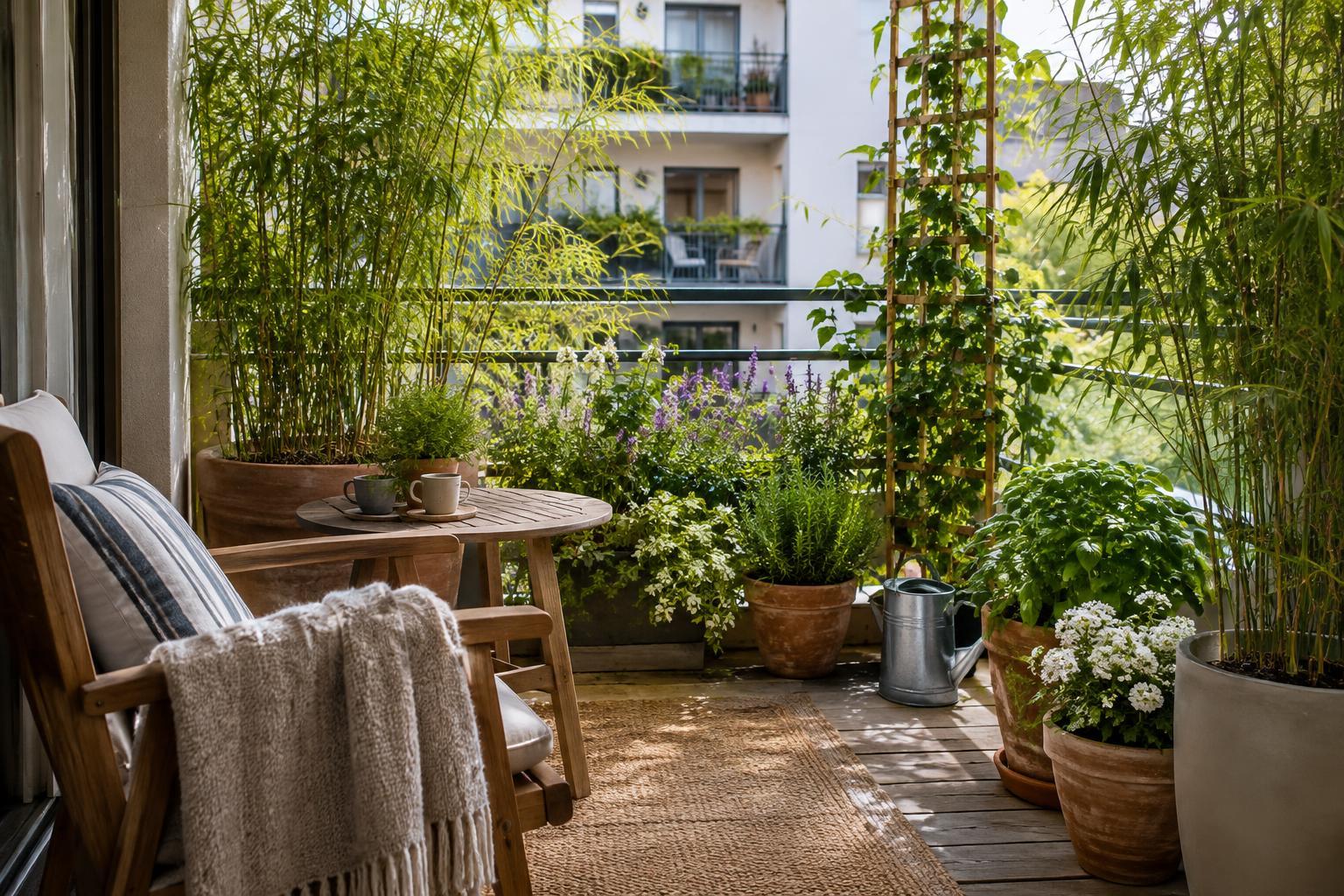
A solid line of tall pots can make a compact space feel narrower. Try placing one taller plant near the main sightline and grouping shorter plants around its base. The changing heights draw the eye while leaving gaps for light and air. A leafy plant beside a chair may do more for comfort than several plants lined up against the far boundary.
If floor space is limited, a freestanding trellis with a suitable climber can add height from a relatively small footprint. Choose a support that fits its location and can be secured appropriately, particularly where wind is a concern. A climber will take time to fill in, so think of the support as part of the initial design rather than expecting immediate coverage. Avoid placing pots or supports where they obstruct doors, shared routes or access you need for cleaning.
Choose plants for the conditions you have
Begin with light. A sun-loving plant may become thin and sparse in a shaded corner, making it a poor screen even if its label promises height. In a bright spot, consider plants that suit container growing and can tolerate the amount of watering you can provide. In partial shade, focus on foliage that grows reliably there rather than choosing a plant for its flowers alone. Local growing conditions and available varieties will shape the best choices.
Think about how much coverage you need throughout the year. Deciduous plants may provide welcome shade and screening during the growing season while letting in more light when their leaves fall. Evergreen plants can offer a steadier backdrop but may create more shade. Neither approach is automatically better: a seasonal screen may be enough if you mainly use the space in warmer months.
Look beyond height when selecting a plant. Mature width matters in a narrow passage, and dense foliage can require regular pruning to stay within its space. Choose plants you can reach easily for watering and upkeep. A manageable plant kept healthy will usually serve a small garden better than an oversized one squeezed into a corner.
Make room for pots, people and water
Before planting, set empty containers in their proposed positions. Walk through the space, pull out a chair and open any nearby doors. Leave enough room to reach each pot without shifting the entire arrangement. This simple trial can reveal that the best place for a privacy plant is slightly beside a seat, rather than directly in front of it.
Tall plants need containers suited to their eventual size and watering needs. Check that pots have drainage and that excess water has somewhere appropriate to go; a saucer may need emptying after watering or rain. On a balcony, account for the combined weight of containers, wet potting mix and plants, and follow any building rules before adding large planters. Keep heavy containers away from edges unless their placement is permitted and secure.
Adjust the arrangement as it grows
Plant privacy is not a one-time installation. Watch how the arrangement changes as foliage fills out. A gap that looked too open at planting may become useful for light and ventilation, while a plant that spreads across a path may need pruning or a new position. If containers are movable, small adjustments can make the seating area feel more sheltered without adding another pot.
Check your screen from both sides when possible. Leaves that brush a frequently used route or crowd a neighbor’s space can turn a pleasant idea into an inconvenience. Aim for a garden that feels comfortable to sit in and straightforward to maintain. In a small space, a carefully placed cluster is often more useful than the tallest possible barrier.