Start with a record you will actually use
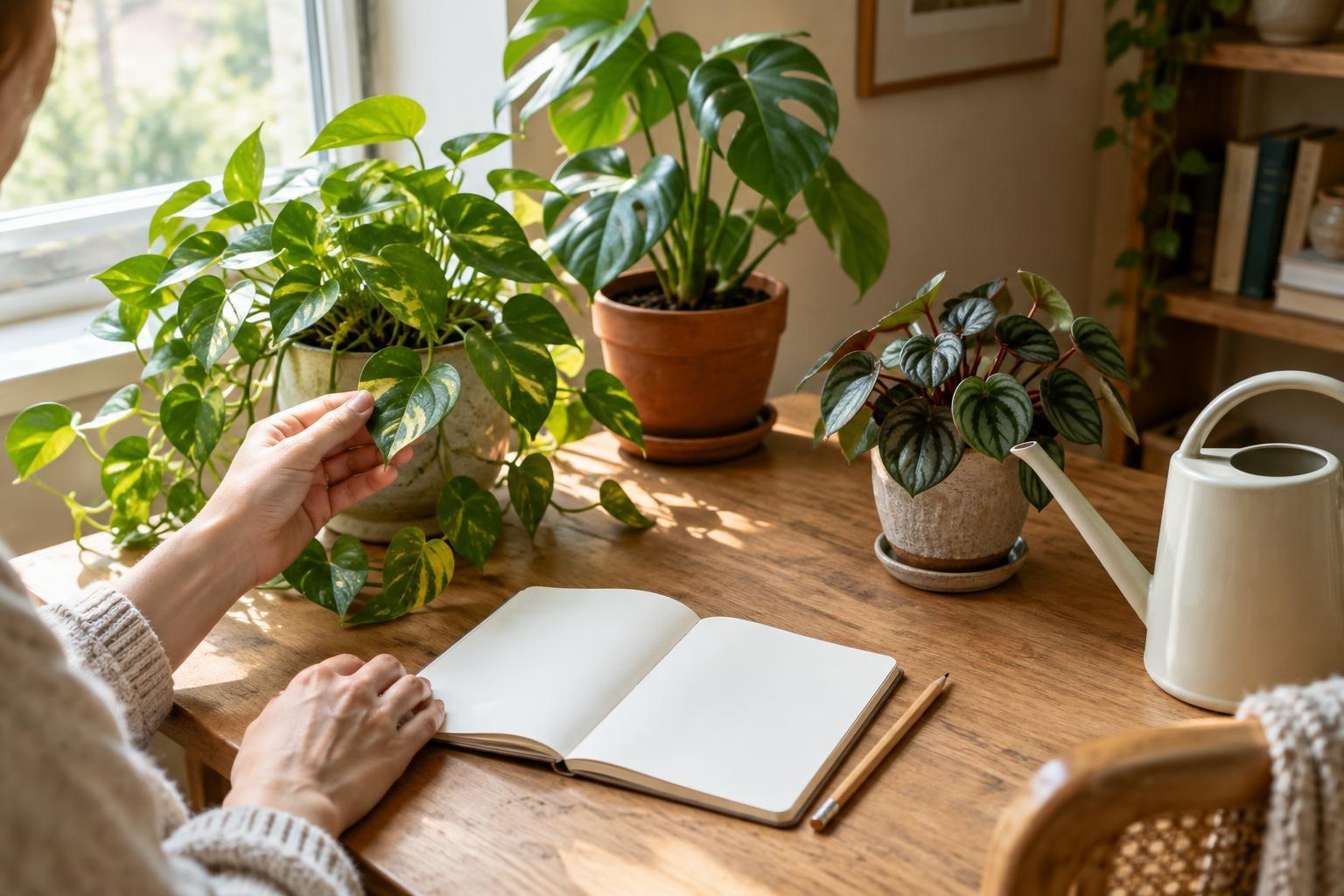
A houseplant journal is a place to notice what changes between one check and the next. It can be a notebook, a calendar or a note on your phone. The best format is the one you can reach when you are standing beside your plants. Give each plant a name you recognize, record where it lives and add a photo or quick description so you can find its entry later.
Begin with only a few details: the date, whether the potting mix feels moist or dry near the surface, any visible change in the leaves, and what you did. An entry might say, “Soil dry a finger’s depth; watered until excess drained; one new leaf opening.” Short notes are easier to maintain than a detailed form, and they give you something useful to compare next time.
Make a baseline before looking for patterns
On your first check, describe each plant as it is rather than trying to diagnose every mark. Note its position relative to the window, which direction the stems lean, whether the newest leaves look different from older ones, and whether the container has a drainage hole. A photograph taken from roughly the same angle each time can make gradual changes easier to see.
If drawing helps you slow down and notice details, a small leaf sketch can serve the same purpose as a photo. For ideas on looking closely at visual details, you can browse Exhibition Guides · Drawing and Art Journal; your journal drawing only needs to be clear enough for you to recognize later.
Do not expect every observation to have an immediate explanation. An older leaf turning yellow, for example, is worth recording, but one leaf alone may not tell you why it changed. Your baseline gives future notes context.
Check regularly, but keep decisions flexible
Choose a convenient time to look over your plants, such as once a week while tidying the room. Check for new growth, leaning stems, damaged leaves and signs that the soil is staying wet longer than expected. Lift a small pot if it is safe to do so: its weight may offer another clue about how much moisture remains. Write down what you notice before deciding what needs attention.
A check-in is not a watering appointment. Pots dry at different rates depending on plant size, container, light and room conditions. If the mix still feels moist, record that and check again later rather than watering to keep a schedule. When you do water, note the date and whether the pot drained freely, so you can compare it with the next check.
For a journal you enjoy opening, use whatever materials you already have, whether that means a pencil, colored tabs or a plain phone note. If you would like ideas for simple drawing supplies, browse Art Materials · Drawing and Art Journal without feeling that special equipment is necessary.
Use notes to test one change at a time
After several entries, look for repeated observations rather than isolated events. Is one plant consistently leaning toward the window? Does another remain damp while nearby pots dry out? Such patterns can help you decide what to try, but they are not a diagnosis by themselves. Check the plant and its surroundings before making a change.
Keep adjustments small enough to evaluate. You might move a plant a little closer to suitable light, turn its pot occasionally if its growth pattern allows, or change how you check soil moisture before watering. Record the adjustment and give the plant time to respond. Moving it, repotting it and changing its watering routine all at once makes it harder to tell which change mattered.
A simple outline of a leaf or stem can also show changes in shape that are hard to describe. If you want to practice making those quick outlines, Drawing Techniques · Drawing and Art Journal offers further browsing for drawing ideas; accuracy matters less here than making a useful comparison.
Let the journal stay small
Review your notes when a season shifts, a plant moves or something about its growth concerns you. You may notice that the same spot behaves differently as daylight changes, or that a plant takes longer to dry after moving to a cooler room. Use that information to pay closer attention, not to impose a rigid rule for the months ahead.
There is no need to backfill missed weeks. Resume with a fresh observation and note anything important that happened in between. A useful houseplant journal is not a perfect record of every leaf. It is a practical reminder of what you saw, what you tried and what you might check next.