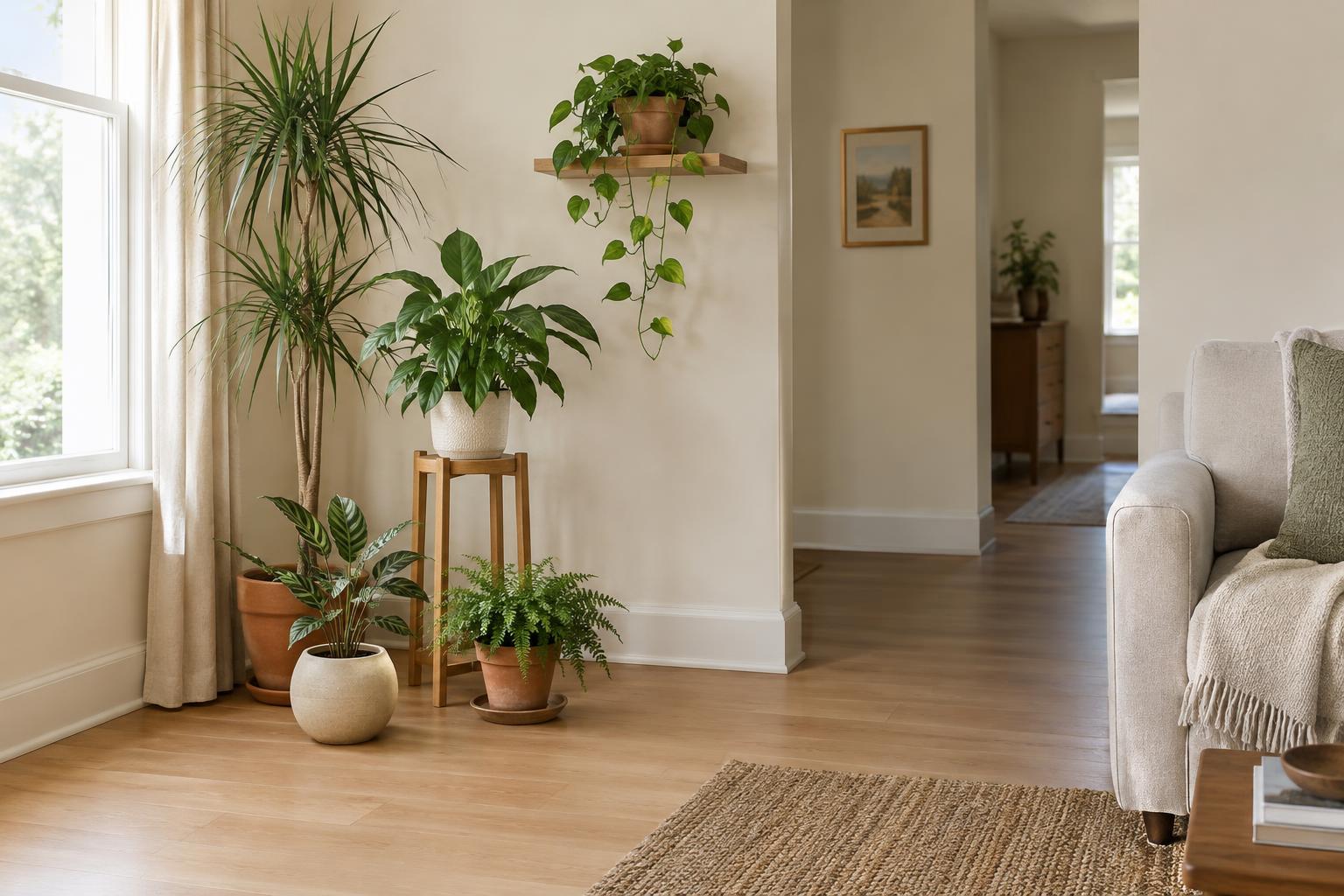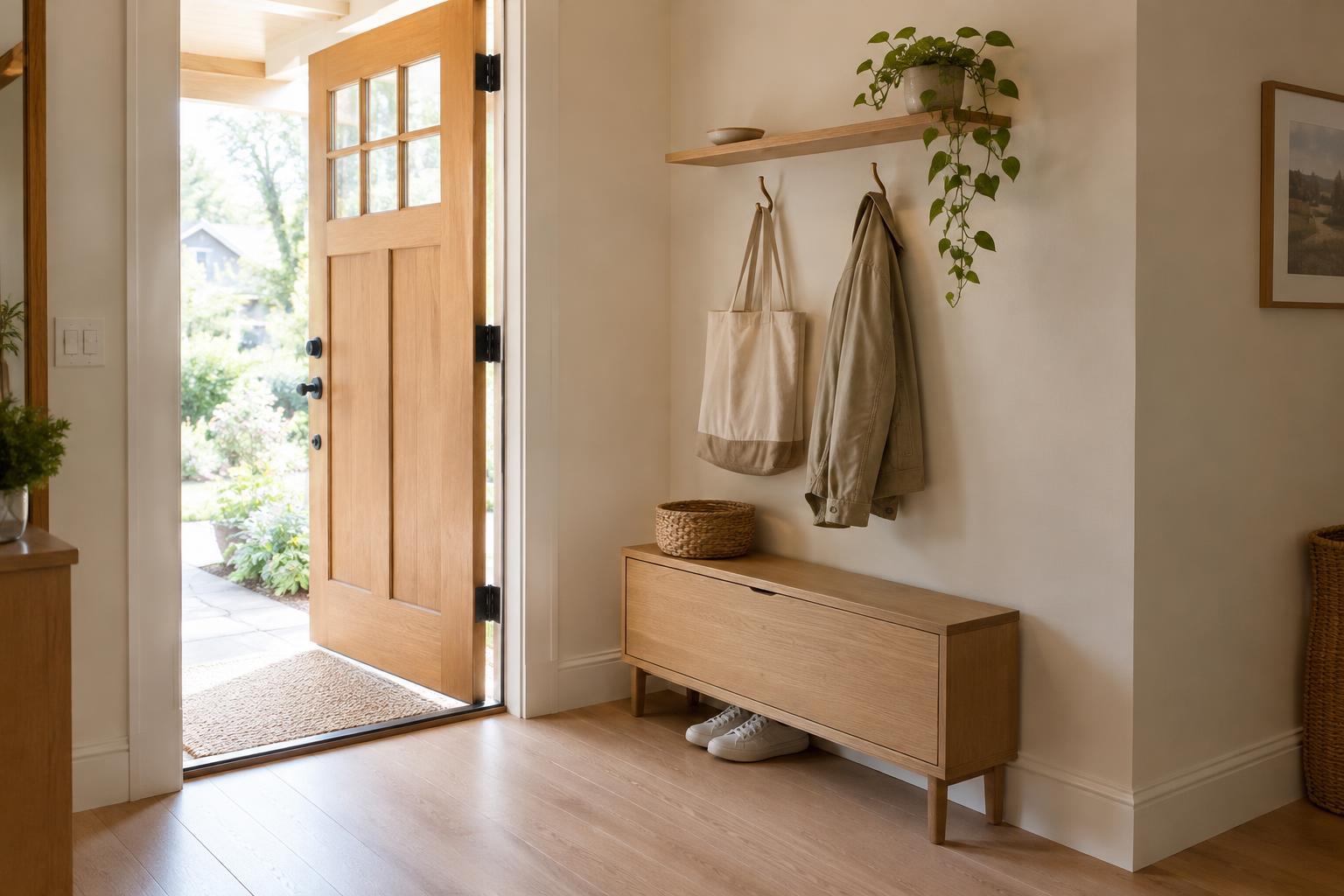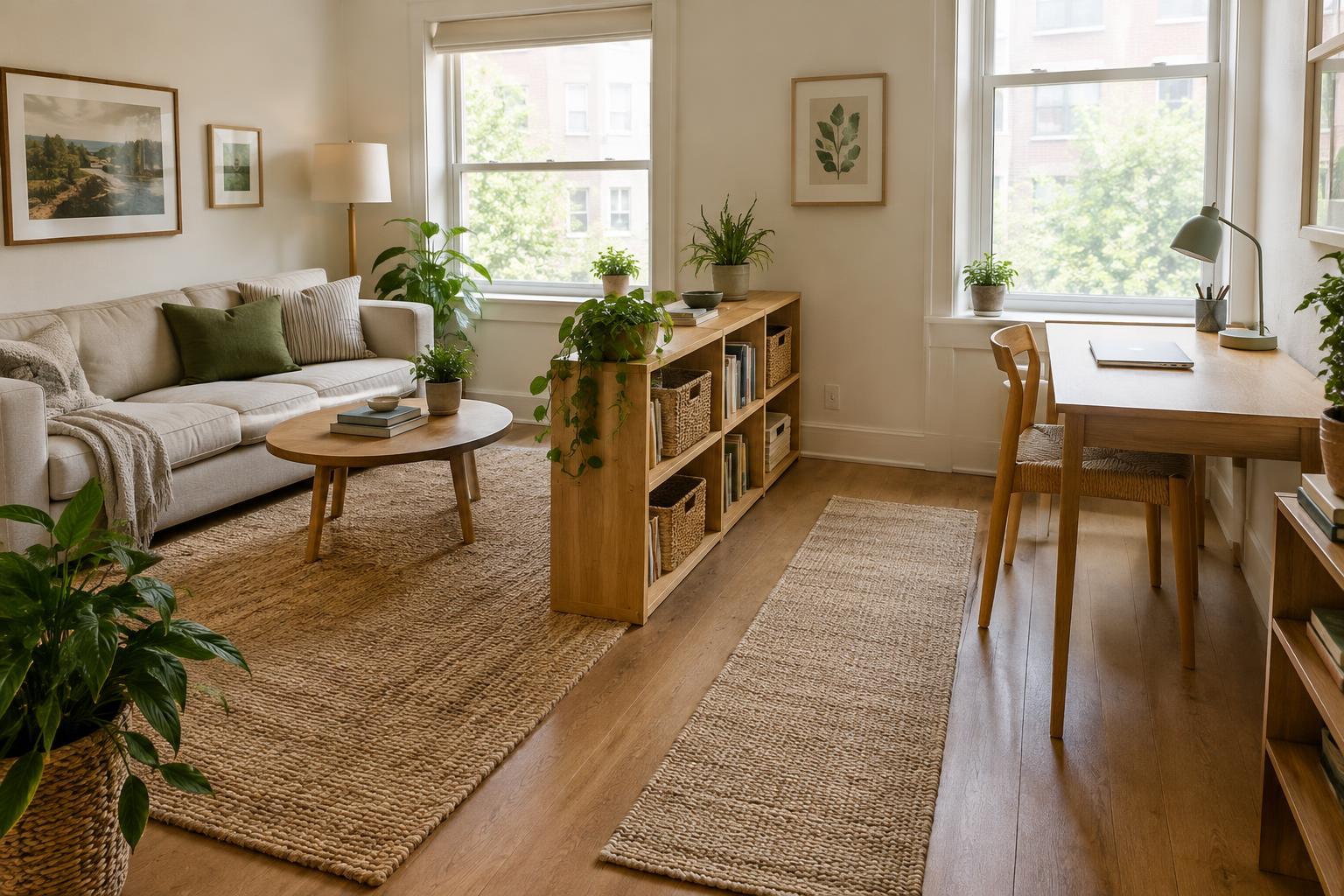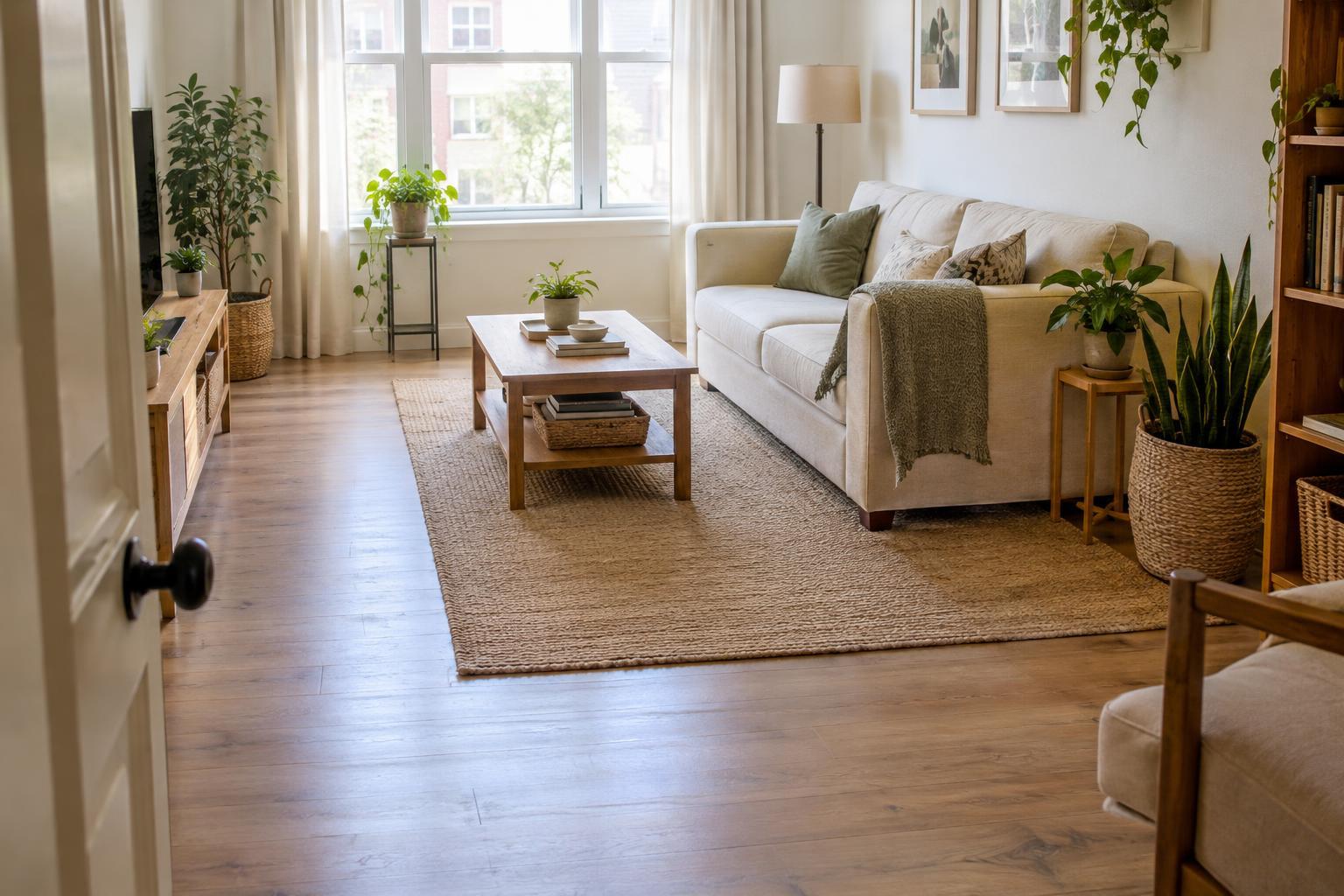
Start with the paths you already use
Before choosing a spot for a plant stand, walk through the room as you normally would. Notice the route from the doorway to the sofa, the path to a window, and any space you cross while carrying laundry, groceries or a cup of tea. A stand that looks neatly tucked away in an empty room may feel awkward once people are moving through it. Pay attention to turns as well as straight stretches; a pot near a corner can catch a sleeve or bag even when its base is out of the way.
Mark the likely location with a box, stool or piece of paper roughly the size of the stand and pot together. Live with that marker for a day before moving a plant there. Can you open doors and drawers fully, pull out a chair, and pass someone without sidestepping? If not, shift the stand toward the edge of the room or choose a smaller one. Leave a wider route wherever someone in the home uses a mobility aid or needs extra room to turn.
Use the edges of furniture, not the middle of the floor
Plant stands often work well beside an existing piece of furniture. The end of a sofa, the side of a bookcase or an unused corner near a cabinet can give a plant a defined place without creating a new obstacle in open floor space. Try to keep the stand within the furniture’s visual footprint rather than letting it project into a walkway. In a compact room, one well-placed stand can feel calmer than several small stands scattered around the perimeter.
Look carefully at working areas, too. A stand beside a desk may be fine until the chair rolls back; one near a dining table may be in the way when guests pull out their seats. Check the full range of movement around furniture, not just its resting position. If floor space is tight, a sturdy console, shelf or windowsill may hold the plant more comfortably than a separate stand, provided the surface is suitable for the pot’s weight and watering needs.
Choose a stand that fits the spot and the plant
Measure the stand at its widest point, including any legs that splay outward. Then consider the mature spread of the plant: leaves can extend well beyond the pot and turn a narrow stand into a broad obstacle. A taller, compact stand can bring greenery above low furniture, but height is only useful if the base is stable and the foliage does not brush a busy route. Avoid placing top-heavy pots where a passing person, pet or opening door could knock them.
Groupings need the same care. Rather than arranging several stands along a corridor or around a doorway, try a small cluster in a quiet corner. Varying heights can make the display feel full while keeping its overall footprint contained. Make sure you can still reach each pot for watering and remove any fallen leaves without moving furniture. A layout that is easy to maintain is less likely to drift into the walking space over time.
Balance light with clear access
The brightest part of a room is not always the best place for a stand. A plant may enjoy the light near a window, but a stand directly in front of it can interfere with curtains, blinds, window handles or a frequently used balcony door. Consider a position to one side, where the plant receives suitable light without occupying the access point. Check the plant’s needs and observe how the light changes through the day rather than assuming every sunny patch is appropriate.
Remember that plants need to be watered where they sit or carried to a sink. Leave yourself enough room to reach the pot without leaning over a sofa or squeezing behind a table. A saucer or suitable outer pot can help protect nearby flooring and furniture, but it still needs checking for spills. If a stand must be pulled into the walkway each time you care for the plant, its permanent location may be too cramped.
Make the final check at everyday pace
Once the stand is in place, walk the room again with the lights on and off. Look from the doorway: are the stand’s legs easy to see, or do they blend into the floor? Notice whether leaves sit near eye level when someone rises from a chair. Open every nearby door and drawer, move chairs as you would during a meal, and carry something bulky past the plant. These ordinary actions reveal conflicts that a quick glance misses.
A good plant-stand position gives the greenery a place in the room without asking everyone to navigate around it. If you keep brushing past a leaf or shifting a pot to get things done, treat that as useful feedback, not a failure of the layout. Move the stand, reduce the size of the display or choose another surface. The best arrangement is one that supports both the plant and the daily life happening around it.