Start with a reason to prune
Indoor plants do not need pruning on a fixed schedule. A healthy plant may grow happily for a long time with nothing more than the occasional removal of a dead leaf. Prune when there is a clear purpose: to take away damaged growth, keep a plant within its space, or encourage a vine or branching plant to grow more densely.
Before picking up the scissors, look at the whole plant. A long stem reaching toward a window may be responding to limited light. Cutting it back can improve its shape for a while, but it will probably stretch again unless its growing conditions improve. Likewise, if many leaves are yellowing, check watering, light and drainage rather than treating pruning as the solution.
Choose the right time
For shaping, a good time to prune is when the plant is actively making new growth. Many indoor plants grow more readily during the brighter parts of the year, though the timing depends on their light and conditions. New growth gives the plant a better opportunity to fill in after a cut. If it is barely growing, postpone a substantial trim.
You can remove a fully dead leaf or broken stem whenever you notice it. If a plant is stressed by pests, soggy soil or a recent move, keep pruning limited to clearly damaged material while you address the underlying problem. For a plant grown for its flowers, check where buds form before trimming; cutting at the wrong time may remove the next display.
Make clean, deliberate cuts
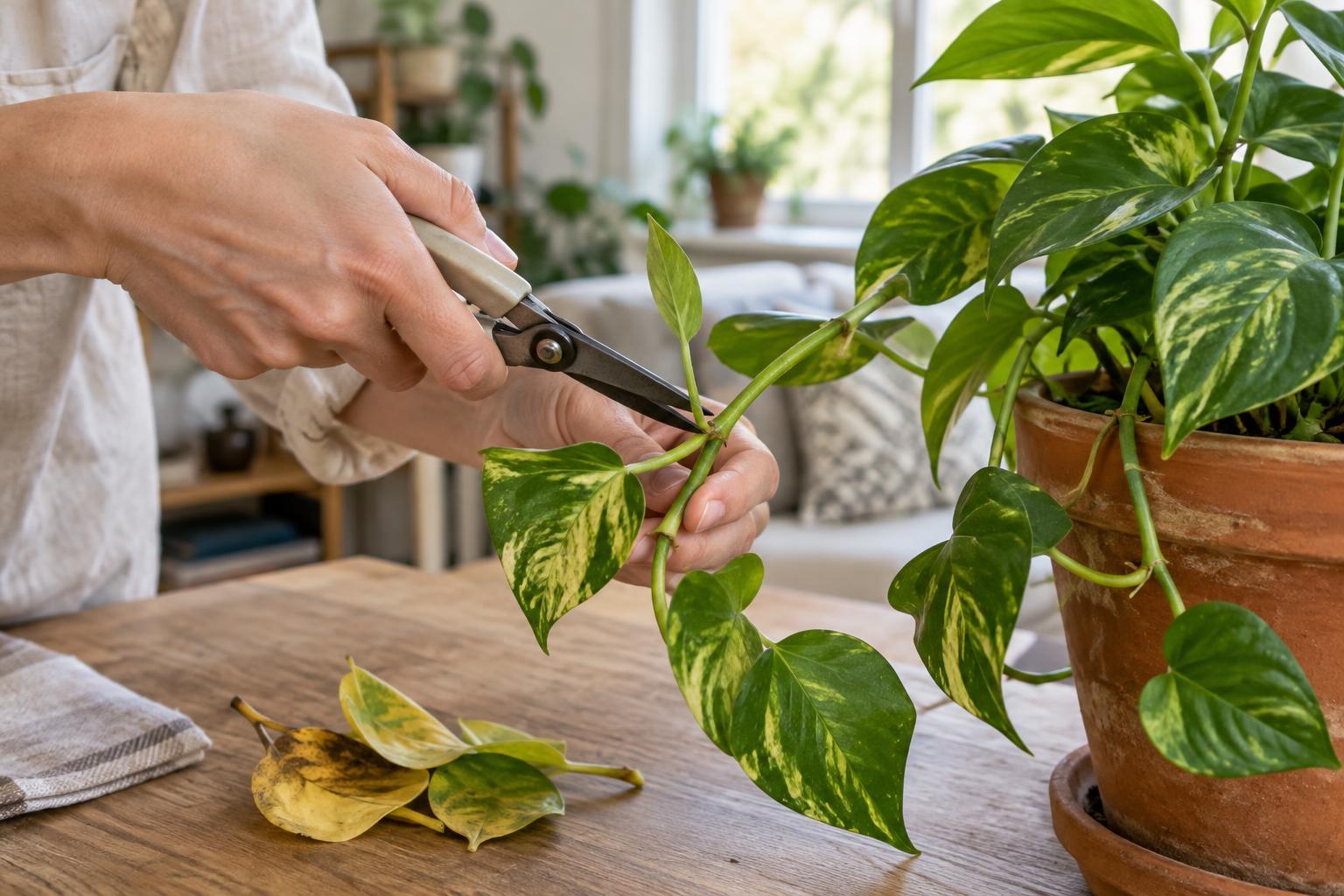
Use sharp scissors or small pruners that fit the stem. Clean the blades before you begin, and clean them again between plants if you suspect disease or pests. Sharp, clean tools make it easier to cut without crushing soft stems. Some plants release sap that can irritate skin or stain surfaces, so gloves and a protected work area are sensible if you are unsure how your plant reacts.
To shorten a branching stem, find a leaf or node, the point where a leaf joins the stem, and cut just above it. This leaves the plant a place from which it may produce new growth. To remove an entire unwanted stem, trace it back to its point of origin and cut without damaging neighboring stems. Take a step back between cuts: it is easier to remove a little more than to undo an uneven trim.
For a first shaping session, be conservative. Remove dead or broken parts, then shorten a few of the longest healthy stems rather than stripping the plant of much of its foliage at once. A bare stem may not regrow where you expect, especially on a slow-growing plant.
Match the method to the plant
Trailing plants, such as pothos and heartleaf philodendron, can become sparse along long vines. Cutting a vine just above a node can help keep its shape compact; healthy cuttings may also be rooted separately and returned to the pot for a fuller look. Pinching the soft tip of a young branching stem is another small adjustment that may encourage side shoots.
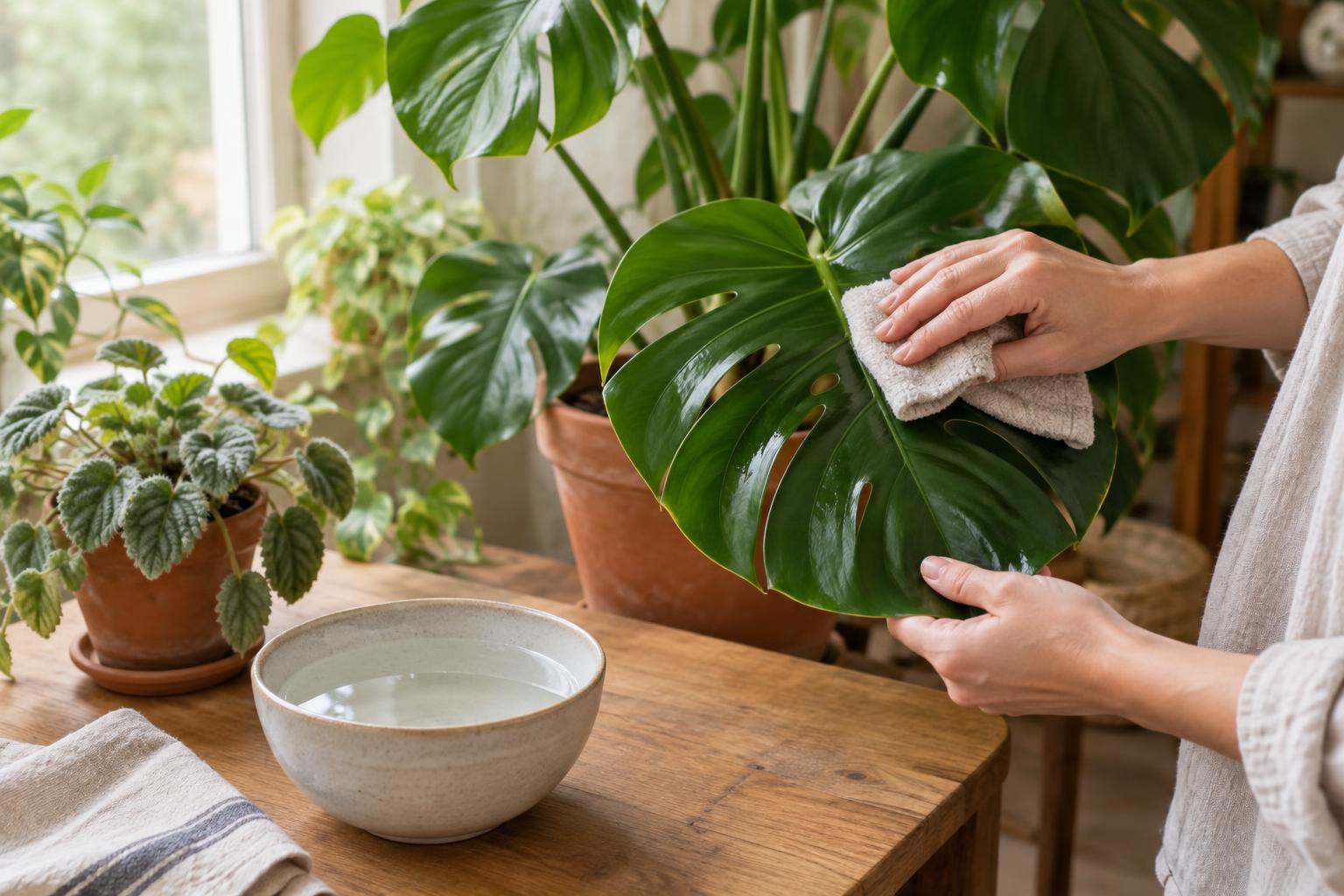
Plants with a central growing point need more caution. On many palms, cutting the main growing tip can stop that stem from producing new leaves. For rosette-forming plants, it is usually better to remove an individual dead outer leaf than to cut into the center. On plants grown for large, distinctive leaves, such as monstera, remove a damaged leaf at its stalk if necessary, but do not expect an old leaf to repair a torn edge.
If you cannot identify the plant or its growth points, begin only with leaves that are completely dead. Observe how it grows before attempting to reshape it.
Give the plant a steady recovery
After pruning, return the plant to a suitable spot and keep its usual care consistent. Water according to the soil and the plant’s needs, not simply because you have cut it back. Avoid combining a major trim with several other changes, such as moving the plant to very different light and repotting it on the same day, unless there is a pressing reason.
Check the plant over the following weeks for fresh growth and for any stems that continue to decline. Pruning is most useful as a small, thoughtful part of plant care: notice what is growing well, remove what is not, and make the next cut only when you can see why it is needed.