Start by Reading the Shade
Shade is not one condition. A courtyard beneath open sky may receive bright, indirect light all day, while a balcony tucked under another floor can be much darker. Watch your space at several times of day before buying plants. Note any brief patches of direct sun, light reflected from pale walls, and corners that remain dim even at midday. In the Northern Hemisphere, north-facing spaces usually get less direct sun; in the Southern Hemisphere, the pattern is generally reversed.
These observations help you match plants to places rather than treating the whole area alike. Reserve the brightest edge for anything you hope to grow for flowers or food. Use the deeper shade for foliage plants, and leave room to move pots if a plant stretches toward the light or fails to settle in.
Build the Garden Around Foliage
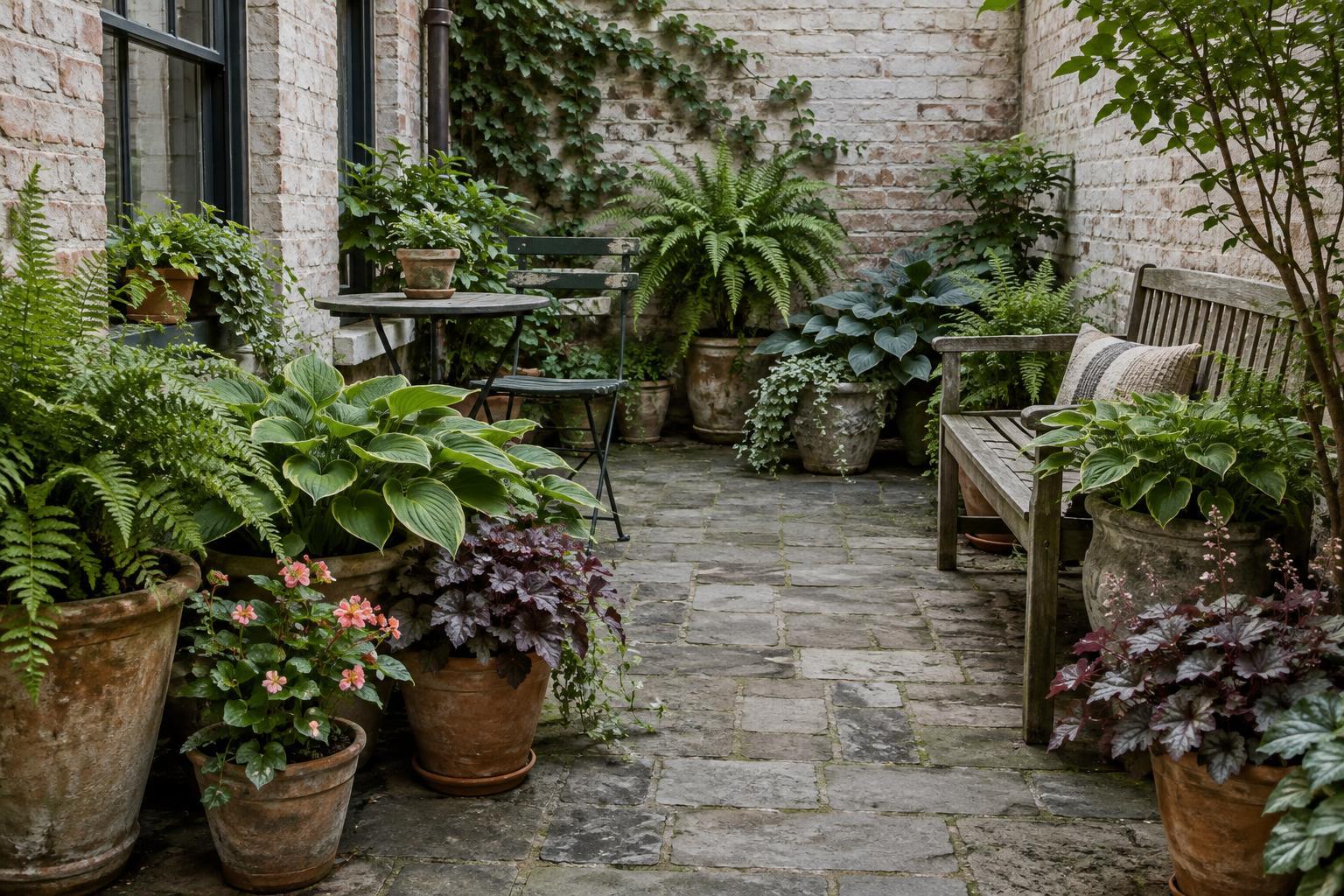
Foliage gives a shady space texture even when nothing is in bloom. Ferns are a natural starting point: their fine fronds soften hard walls and railings. Hostas offer broad leaves in varied greens and patterns, though they may need protection from slugs or snails. Heucheras bring rounded leaves in muted greens, purples and warm bronze tones. Many sedges also tolerate partial shade and add a loose, grassy shape.
Choose varieties suited to your local climate and the amount of shelter your courtyard or balcony provides. A plant described as shade-tolerant may still need more light than a very dark, covered balcony offers. Start with a few pots rather than filling every corner at once. Mixing one upright plant, one mounded plant and one that spills gently over a pot rim creates a layered look without requiring a large collection.
Add Flowers and Edibles Where Light Allows
For seasonal color, look for plants labeled for partial or dappled shade. Depending on your climate, suitable choices may include begonias, impatiens or shade-tolerant fuchsias. Place flowering pots in the brightest available positions and expect fewer blooms if the space receives very little light. A pale container or light-toned wall can make flowers easier to see, but it cannot replace the light a plant needs to grow.
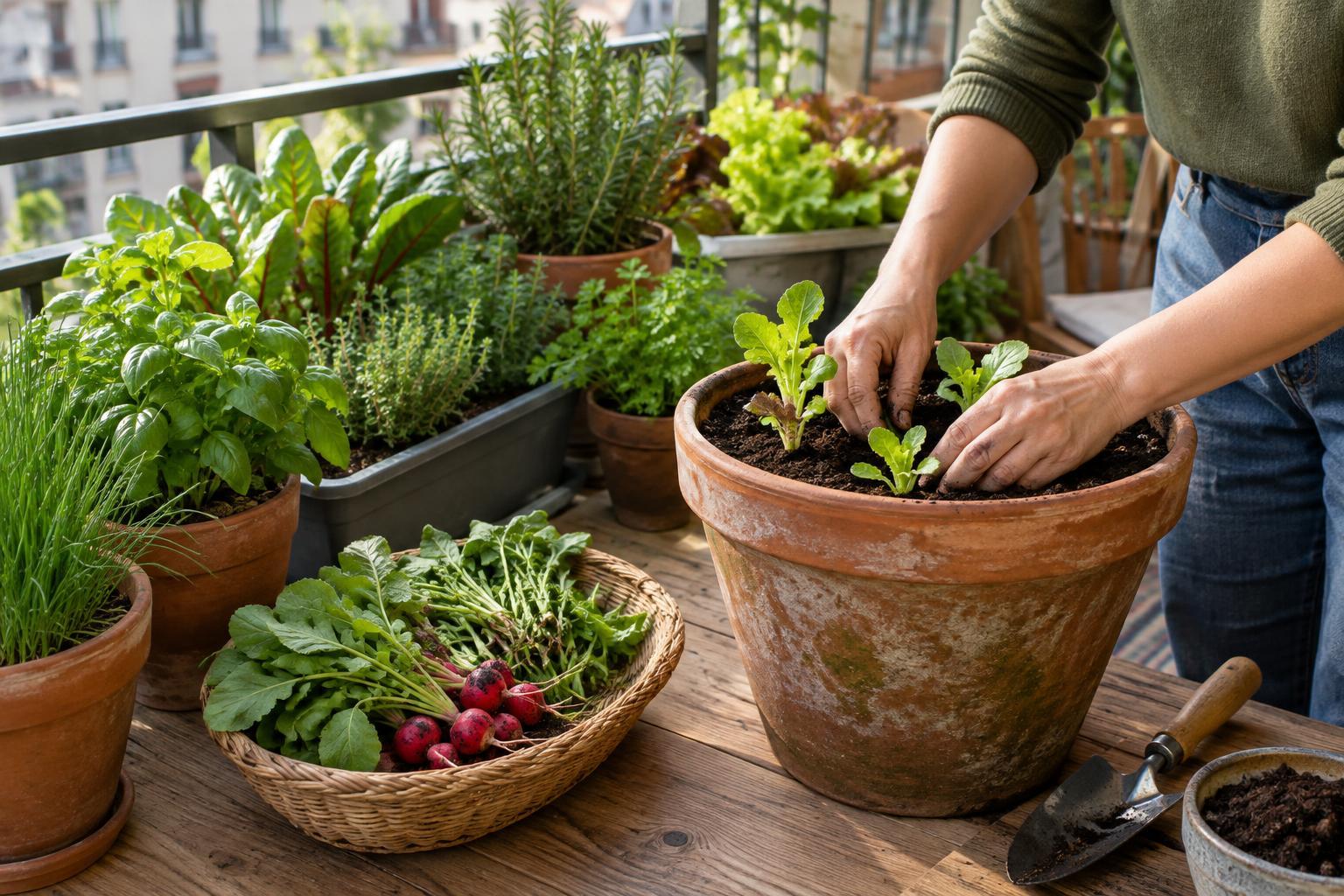
Leafy edibles are often more promising than fruiting crops in a lightly shaded spot. Try small sowings of lettuce, spinach or other greens appropriate to the season, and harvest leaves while they are tender. Parsley, mint and chives may also do well with some indirect light. Keep mint in its own pot so it does not crowd its neighbors. Tomatoes, peppers and most other fruiting crops generally need substantial direct sun, so save those for a sunnier location.
Use Containers That Work With the Space
In shade, potting mix often stays damp longer than it would in full sun. Choose containers with drainage holes, use a potting mix suited to the plants, and empty saucers when water collects. Before watering, feel the mix below the surface rather than relying on a fixed schedule. Shelter from rain does not necessarily mean dry soil, especially in a deep container.
Group pots in a few clusters to make a small area feel intentional. Taller plants can sit at the back, with lower foliage in front and a trailing plant near an edge. Leave enough space to reach every pot for watering and to keep doorways clear. On a balcony, check its load guidance before adding many large, soil-filled containers; lighter pots and smaller groups may be easier to manage. Secure anything placed near a railing so it cannot fall.
Plan for Change Through the Seasons
A courtyard’s light can shift as trees leaf out, and a balcony may receive sun at different angles through the year. Recheck your plants occasionally. Pale, stretched growth can be a sign that a spot is too dim; scorched leaves may mean a plant is getting more direct sun than expected. Move pots gradually when possible, giving plants time to adjust.
For a garden that looks considered year-round, let durable foliage form the base and treat flowers or edible greens as changeable additions. Remove spent leaves, refresh tired seasonal pots and keep a little open floor space. Even a modest shady corner can feel like a garden when its plants have enough light to thrive and there is room to enjoy them.