Start with the space, not the trellis
Vertical gardening uses walls, railings and open air above containers, but the best support depends on what is below it. Measure the available width and height, then leave enough room for doors to open, chairs to move and people to pass. Keep plants clear of vents, lights and frequently used windows. A support that fits on paper may still feel intrusive if it blocks the only comfortable route through a small balcony or patio.
Notice where sun and wind reach the space. A sheltered corner may suit a light freestanding frame, while an exposed railing may need a different approach. Also consider access: can you water the top plants and reach behind the support to check ties, leaves and fasteners? If not, choose a shorter setup or one that can be moved for maintenance.
Match the support to the way plants grow
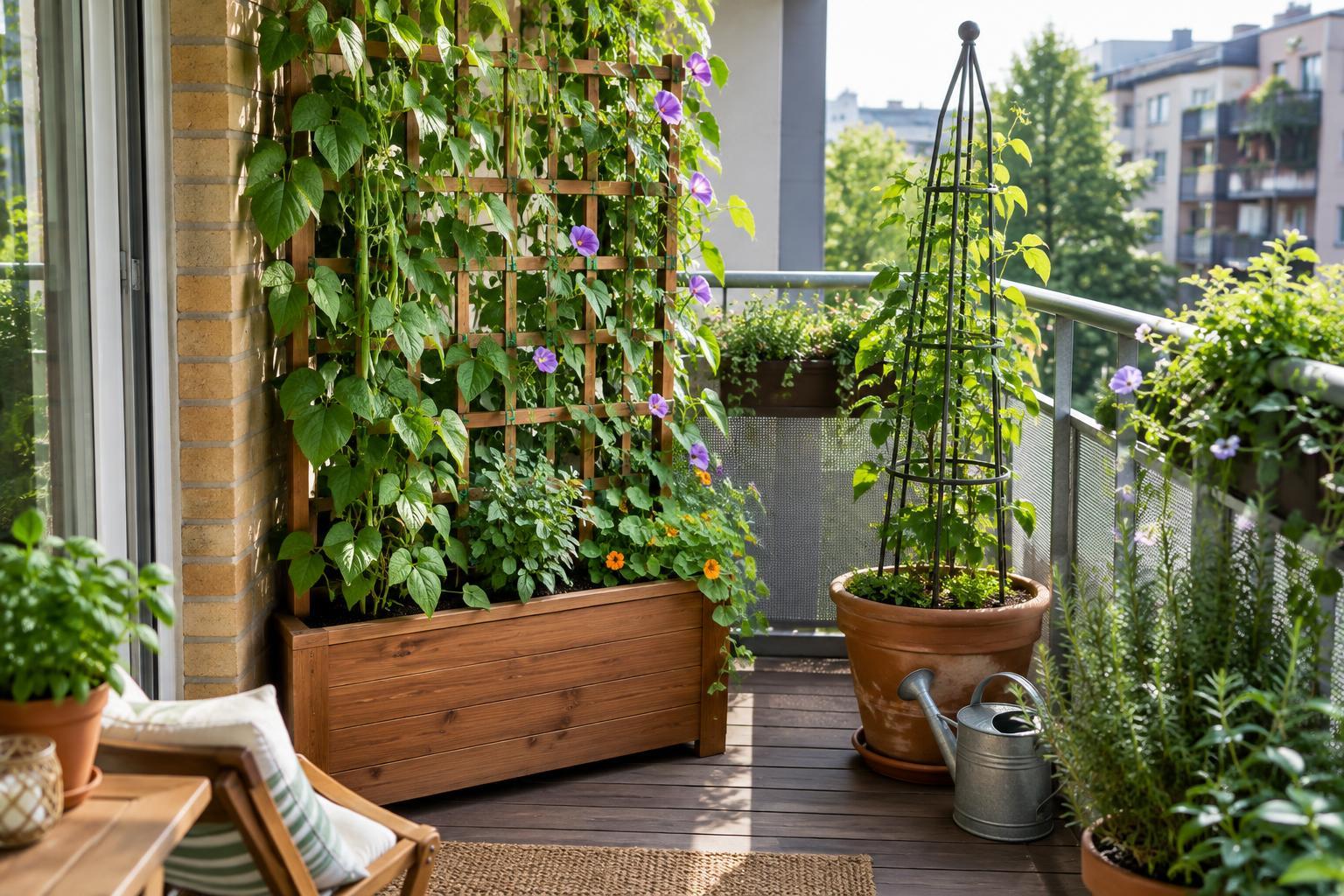
Climbing plants need something they can grip, wrap around or be tied to. A slim trellis or open mesh gives vining plants room to spread without creating a solid wall. Upright stems may do better with individual stakes or a small cage placed in the container early, before roots fill it. For plants that trail rather than climb, a wall-mounted planter or tiered shelf may use height more effectively than a trellis.
Think about the plant at its mature size, not just when you bring it home. Leaves, wet stems and fruit add weight, and vigorous growth can turn a narrow frame into a dense sail in the wind. Check plant labels for expected size and growth habit, and choose a support with enough room to guide stems without forcing them into tight bends. Soft plant ties can hold stems loosely in place; check them as the plant grows so they do not cut into it.
Choose between freestanding and fixed supports
A freestanding trellis set into a broad, heavy container is flexible: you can reposition it as light changes and take it down at the end of a season. It works best when the frame is anchored firmly inside the pot and the container is difficult to tip. A narrow pot with a tall, leafy frame can become unstable, even if the trellis itself feels sturdy when empty. Avoid relying on loose soil alone to hold a large frame upright.
Fixed supports can save floor space, but they require more care in placement. A wall-mounted grid or brackets should be attached with fasteners suited to the wall material and the expected load. If you are unsure what the surface can hold, ask someone qualified to assess it rather than guessing. On a rented balcony, check what you are permitted to attach. Avoid drilling into waterproofed surfaces or fastening anything to a railing unless its use and load limits are clear.
Shelves and hanging planters need the same scrutiny as trellises. Count the weight of containers, damp potting mix, water and mature plants when judging a setup. Keep heavier pots low and avoid positioning containers where a fall could injure someone or damage property below.
Secure the setup without making it hard to care for
Before planting, assemble the support on a level surface and check that joints do not wobble. Position freestanding frames so their bases sit flat, and follow the manufacturer's guidance for any supplied anchors or brackets. Where a structure needs tying back, use appropriate attachment points rather than improvised hooks. Do not assume a privacy screen, drainpipe or decorative trim is designed to carry plant weight.
Allow a small gap between foliage and a wall so air can circulate and you can spot trapped moisture or pests. Put saucers or trays where runoff might stain a surface, but empty standing water when practical. Guide stems gradually as they grow instead of pulling them across a frame all at once. After strong wind, inspect ties, fasteners and the pot's position; small shifts are easier to correct before a plant gets heavier.
Build upward in manageable stages
Start with one container and one support, then watch how they behave through watering and ordinary weather. If the frame stays steady and the plant remains easy to reach, add more height or another planter later. This slower approach helps you learn which parts of the space are genuinely useful without filling every vertical surface at once.
A good small-space garden is not simply the tallest arrangement you can fit. It is one that stays secure, leaves room to live outdoors and lets you care for each plant without a balancing act. Choose supports for the plants you want to grow, give every attachment a reliable foundation and let the greenery fill in over time.