Start with your space and watering routine
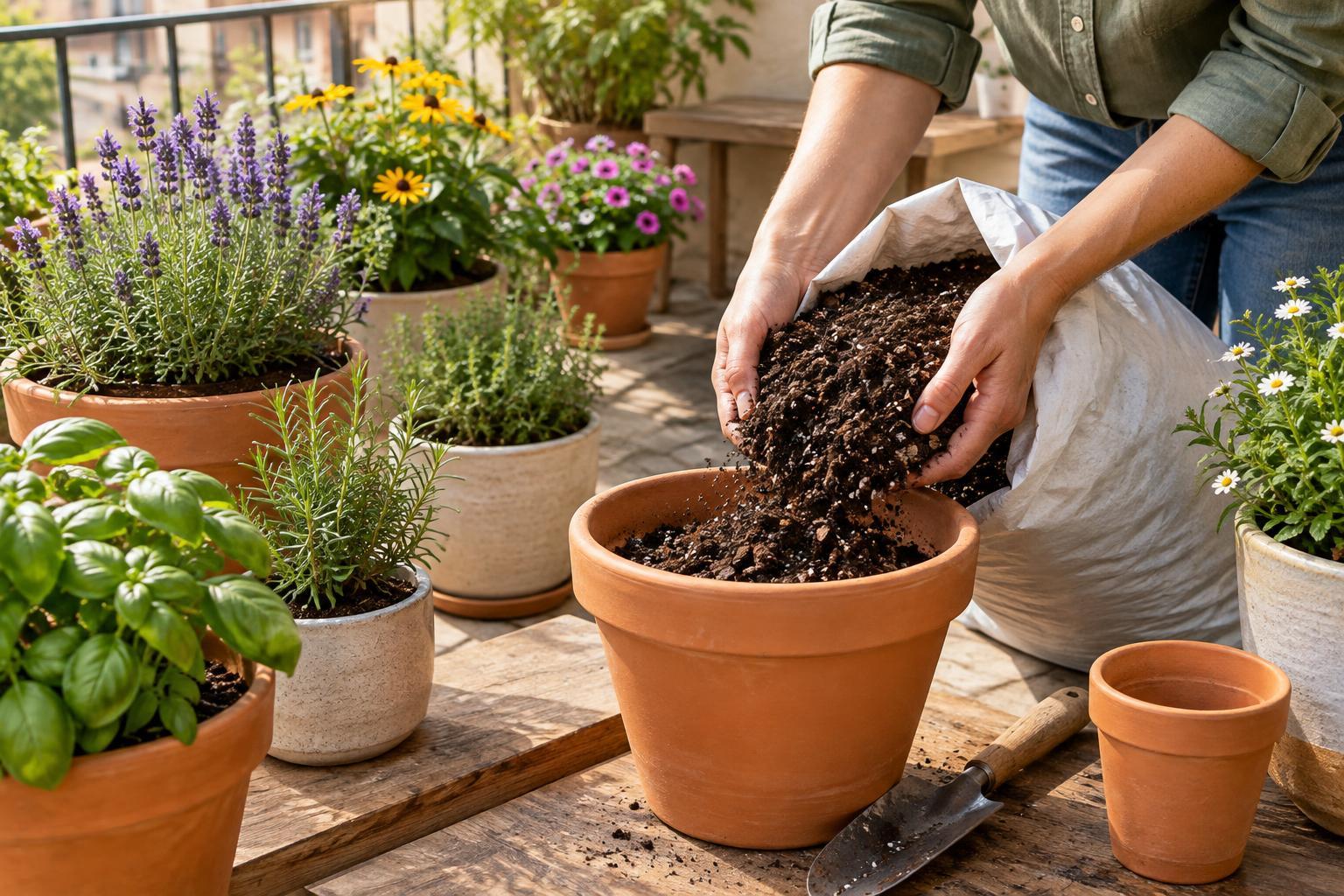
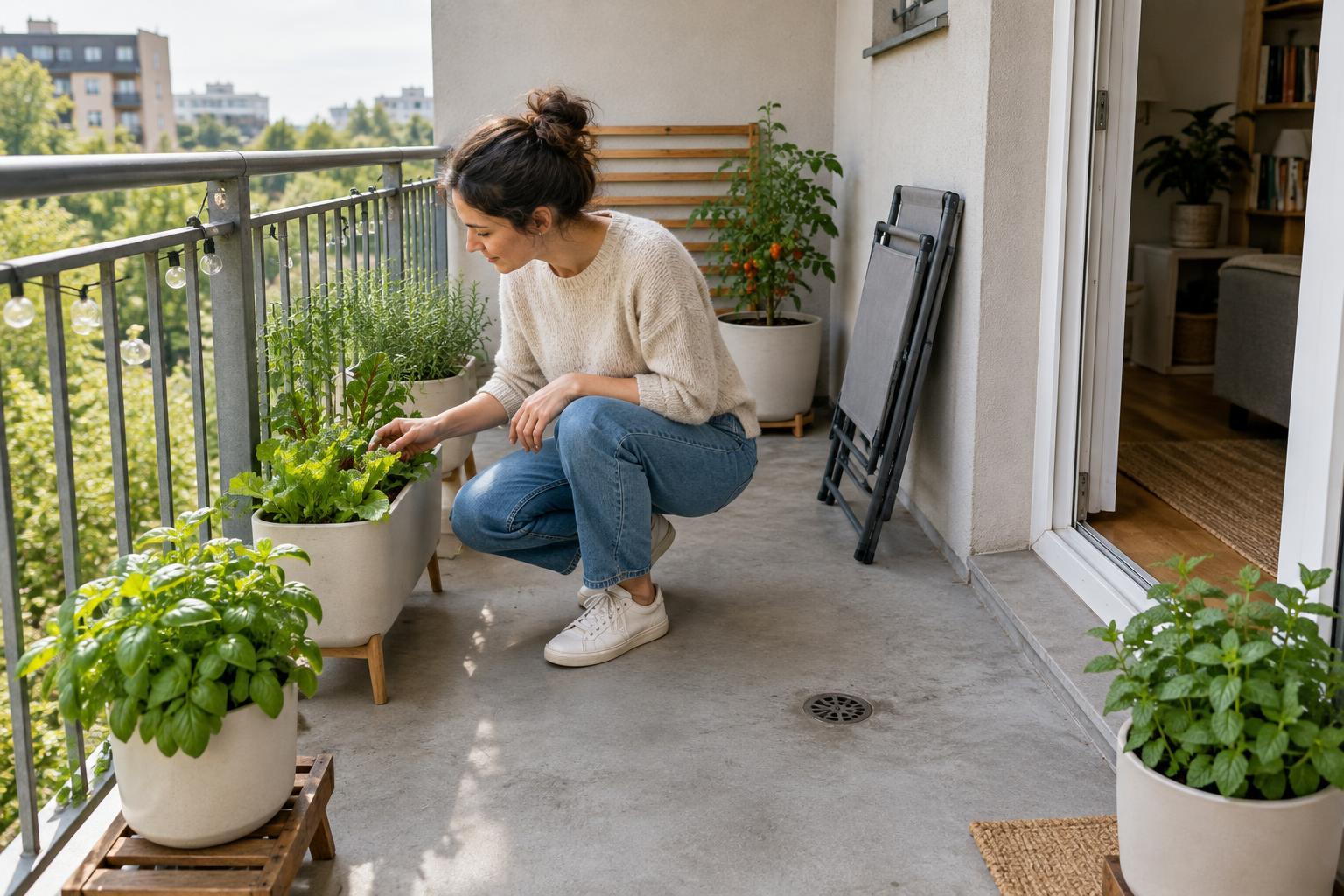
A pot is part of a plant’s growing environment, not just a holder for soil. Its material affects how quickly the potting mix dries, how easily you can move the plant and how much space the container occupies. On a small balcony or patio, those differences become noticeable: a pot that needs frequent watering may be inconvenient, while a heavy one may be difficult to shift when you need the floor space.
Before choosing a material, note how much sun and wind the spot receives and how often you can check your plants. Sun and wind can dry containers quickly. Also think about where excess water will go. Whichever material you choose, the container needs a way for water to drain, and you should be able to water it without leaving puddles where they cause problems.
Terracotta: breathable, sturdy and quick to dry
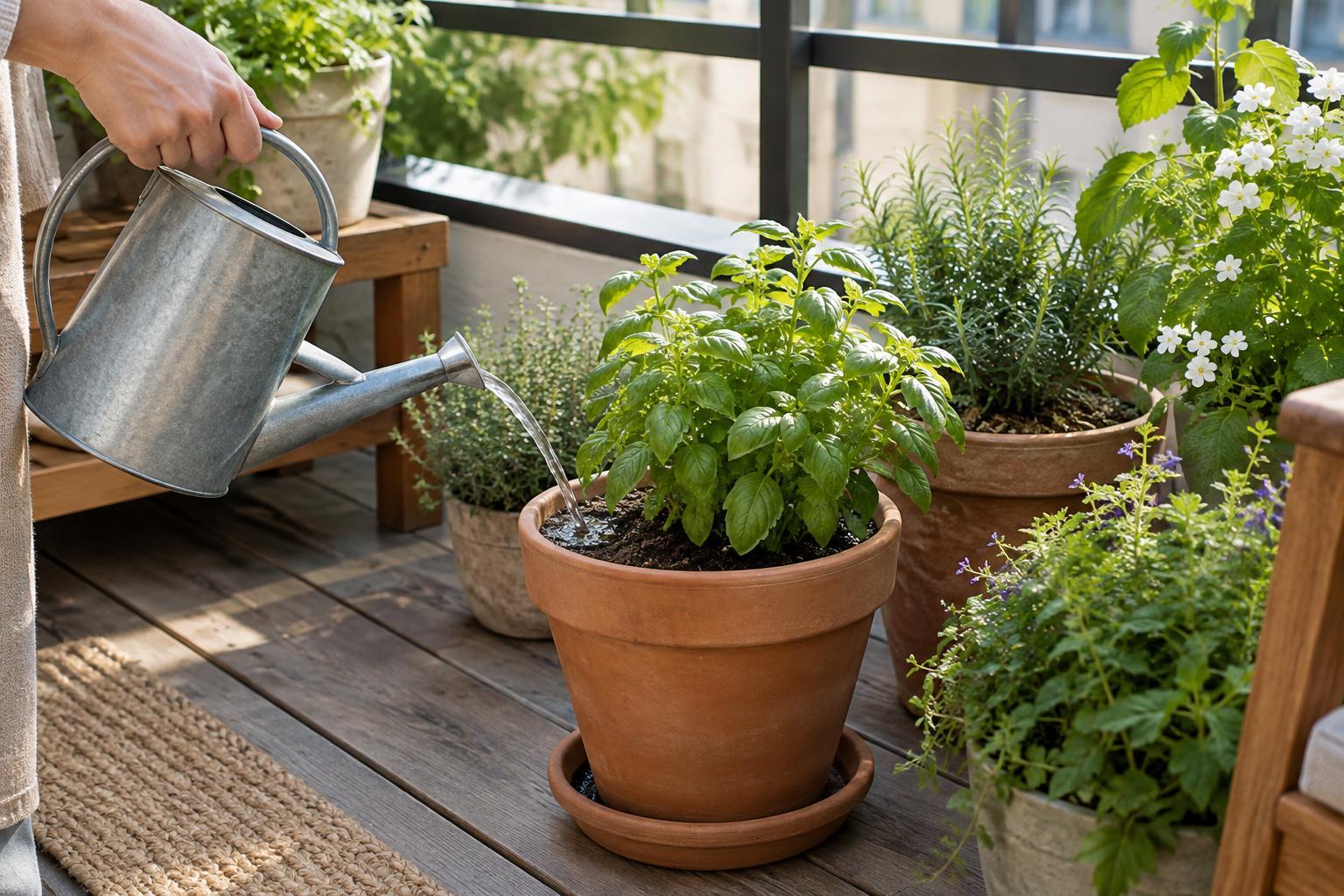
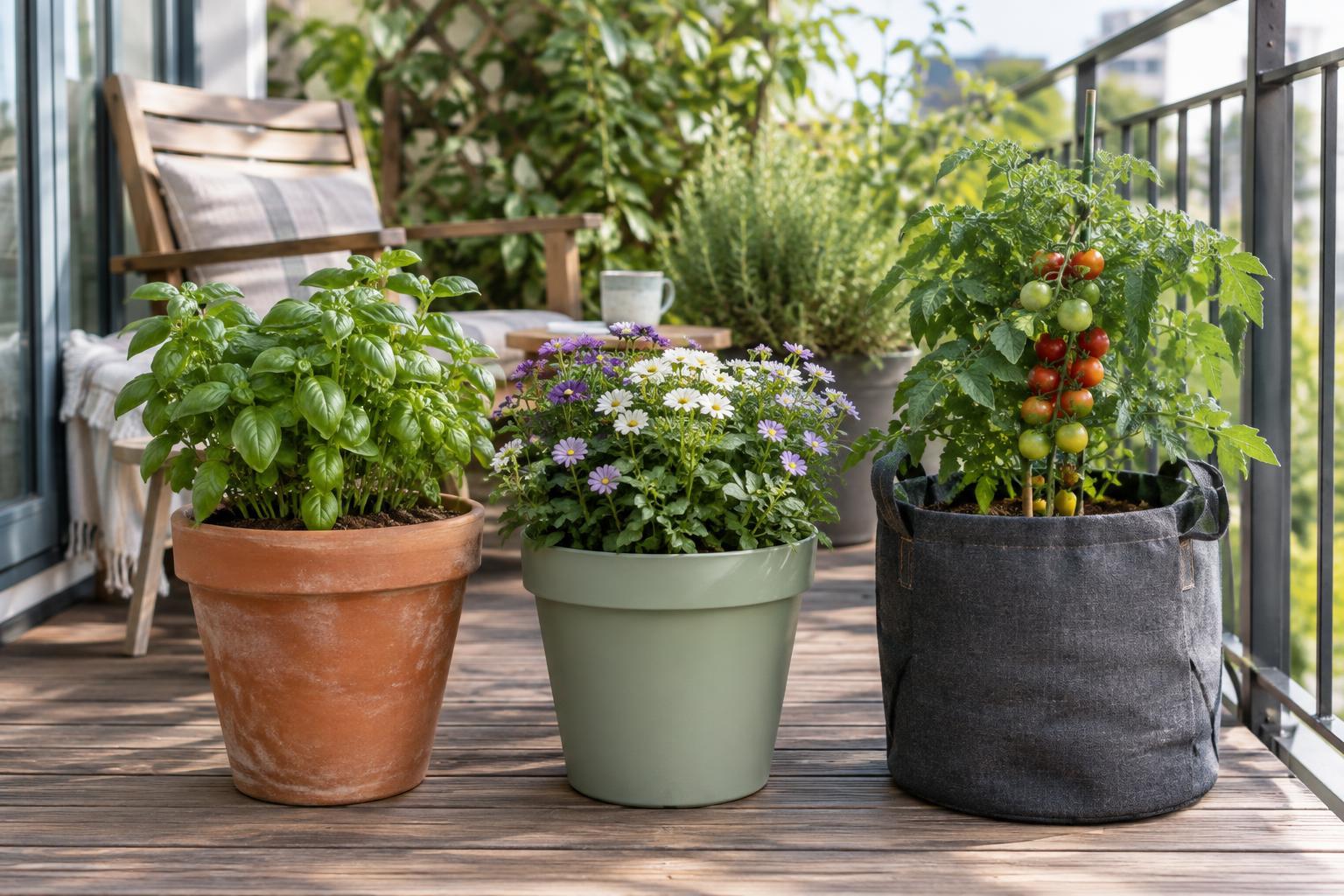
Unglazed terracotta is porous, allowing moisture to evaporate through its walls. That can be useful for plants whose roots dislike staying wet, particularly if your outdoor spot is sheltered or you tend to water generously. It also means the mix may dry faster in hot or windy weather. A small terracotta pot in full sun may need more attention than a similarly sized plastic one.
Terracotta has a warm, natural look and enough weight to feel stable, but larger pots can be hard to move. They may crack if dropped or if wet soil freezes inside them; where freezing is a possibility, check that a pot is intended for outdoor winter use. To make watering more manageable, choose a size that gives roots room to grow, use a suitable potting mix and check the mix with a finger rather than watering by a fixed schedule.
Plastic: light and slow to lose moisture
Plastic pots are easy to carry and are often a practical choice for a balcony, narrow ledge or collection you rearrange through the seasons. Because the sides do not breathe like unglazed terracotta, the potting mix generally holds moisture longer. That can reduce watering demands, but it also makes drainage and careful watering important, especially in a shady position.
Look for a sturdy pot with drainage holes and enough depth for the plant rather than choosing solely by color or price. Thin plastic can become brittle with exposure and may tip more easily when a tall plant catches the wind. Dark pots in strong sun can become warm to the touch, so pay attention to how exposed the container is. A lightweight pot can still work in a breezy spot if it has a broad, stable base and is placed where it cannot fall.
Fabric: flexible, airy and thirsty
Fabric grow bags fold away when not in use, making them appealing for temporary crops or a small garden that changes each season. Their permeable sides let water escape and expose the potting mix to air. This can help prevent a container from remaining soggy, but it also means fabric bags may dry rapidly in sun and wind. They suit gardeners who can check moisture regularly more than those who need a low-attention setup.
A filled fabric bag can be awkward to lift even though the empty bag weighs little. Set it in its final position before filling, and keep the sides accessible if you want the benefit of airflow. Water may seep from the sides as well as the base, so consider what sits beneath or beside it. Choose a bag that holds its shape well enough for the plant you intend to grow, and inspect it between seasons for wear.
Make the choice plant by plant
For a sunny, windy balcony where you cannot water often, a well-draining plastic pot may be the easiest starting point. For a plant that benefits from the mix drying between waterings, terracotta may be helpful if you can keep an eye on it. For seasonal vegetables or flowers in a space where frequent watering is realistic, a fabric bag offers a flexible option. These are starting points, not rules: pot size, plant needs, weather and potting mix all affect the result.
Whatever you choose, give roots enough room without placing a tiny plant in an unnecessarily huge container. Confirm that drainage openings stay clear, and check moisture below the surface before watering. If you use a saucer to protect a floor, empty standing water rather than letting the pot sit in it for long periods. The best outdoor container is one that keeps the plant comfortable and fits the way you actually use your space.