Start by understanding your tile
Terracotta’s warm colour and slight variations make it a natural fit for rooms with wood, linen and greenery. Not every terracotta floor needs the same care, though. Some tiles are unglazed and absorbent; others have a glaze or a factory-applied finish. Older floors may also have layers of wax or sealer. Before buying a cleaning or sealing product, find out what is already on the floor. Product information from the tile supplier or installer is the best place to start.
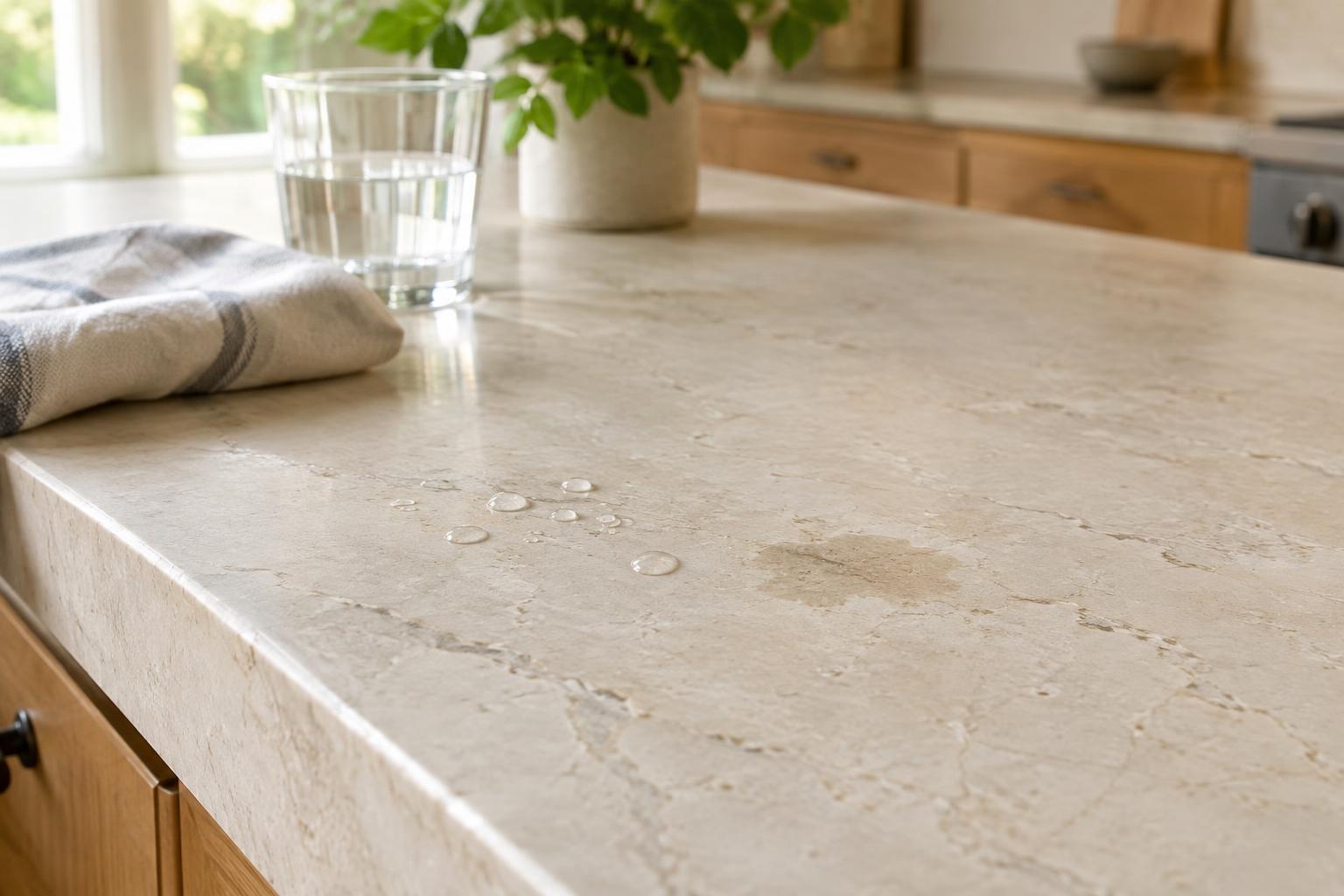
If that information is unavailable, examine a clean, inconspicuous tile. A few drops of water that darken the surface quickly may suggest an absorbent finish, while water that stays on top suggests some protection. This is only a rough check: residue, wear and previous treatments can affect the result. Test any cleaner or sealer in a hidden spot and let it dry fully before judging how it changes the colour or sheen.
Seal only when the floor is ready
Sealing can help limit how quickly spills soak into porous terracotta, giving you more time to wipe them up. It does not make the floor stain-proof. Choose a product labelled as suitable for your particular tile and its location, especially if the floor is near an exterior door or another damp area. Sealers may leave a natural-looking finish or deepen the colour; a small test patch makes that difference easier to see.
Follow the tile, grout and sealer manufacturers’ instructions for preparation, application and drying. A newly laid floor needs the required curing time, and any floor should be clean and thoroughly dry before sealing. Applying a sealer over moisture or dirt can leave an uneven result. Remove old coatings only with a method appropriate for the tile and finish rather than assuming a stronger chemical will solve the problem. If you do not know what is on an older floor, ask a tile-care specialist before stripping or resealing it.
Work in manageable areas, using the recommended applicator and wiping away excess product as directed. Keep the floor free of foot traffic and spills for the specified time afterward. Reapplication is not a fixed annual chore: the right interval depends on the product, traffic and how the floor wears.
Make routine cleaning gentle and consistent
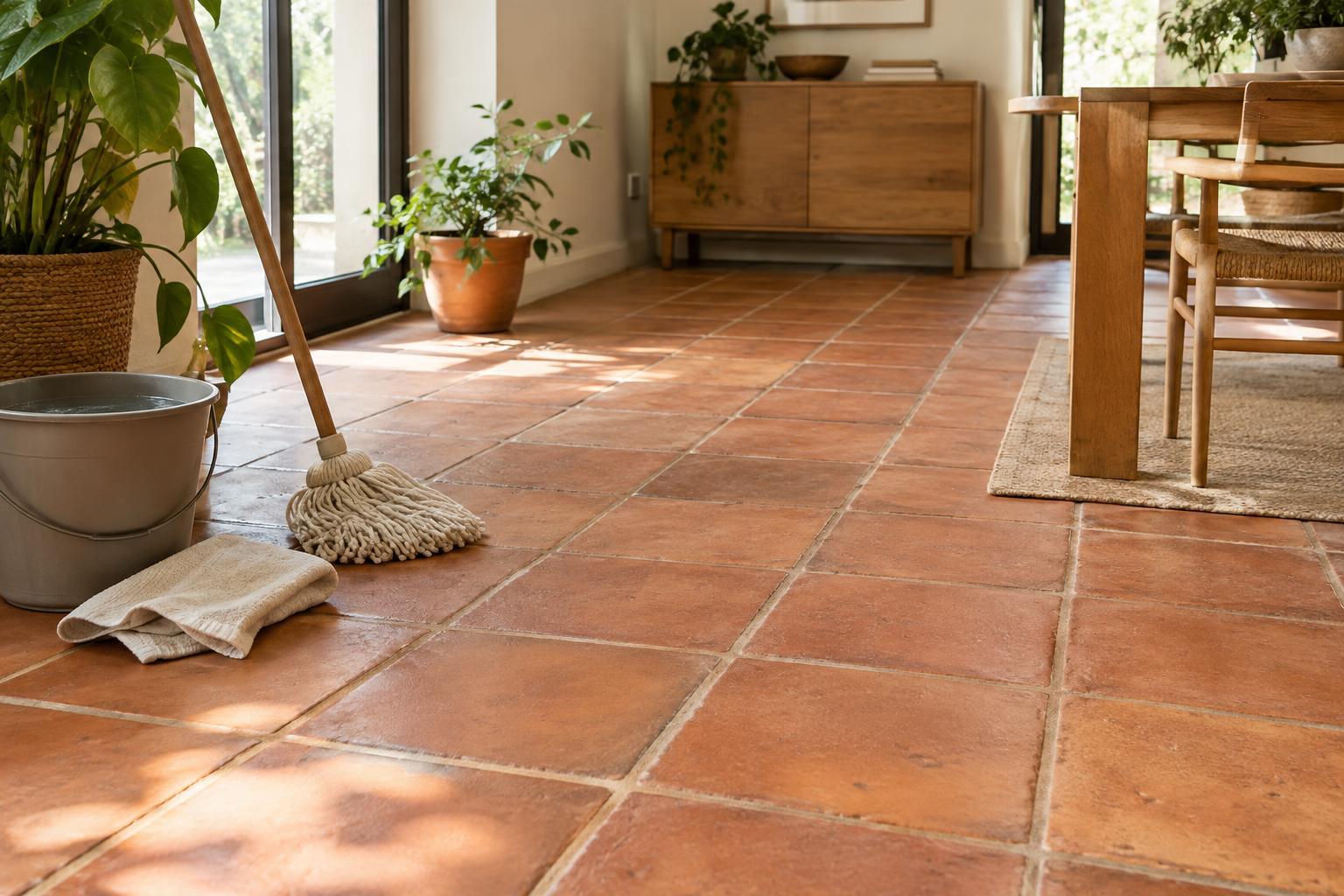
Grit is one of the simplest threats to a terracotta floor. Sweep or vacuum regularly with a floor-safe attachment, paying attention to entrances and the edges of kitchen work areas. This keeps small particles from being dragged across the surface under shoes or chair legs. Use a soft mop for routine washing, with a cleaner recommended for terracotta or a compatible pH-neutral floor cleaner diluted according to its label.
Use a damp mop rather than flooding the floor, and change the cleaning water when it becomes dirty. If the cleaner calls for rinsing, rinse with clean water, then allow the floor to dry. Avoid abrasive pads and cleaners unless the tile or finish manufacturer specifically approves them. Acidic products, including vinegar, are a poor default for terracotta floors: they may affect grout, coatings or the tile surface. Steam and harsh degreasers can also be unsuitable for some finishes, so check compatibility before using them.
Deal with spills before they settle
The most useful stain-prevention habit is prompt cleanup. Blot a spill with a clean cloth instead of spreading it across more tiles or into grout lines. For a lingering mark, start with the gentlest compatible cleaner and test it in a discreet place. Different substances may need different treatment, and a stubborn mark is not a reason to scrub harder or combine cleaning chemicals. If a stain remains, seek guidance specific to the tile, sealer and type of spill.
Place washable mats near doors and in other splash-prone spots, but lift them periodically so trapped moisture can dry. Add protective feet to furniture, and put saucers or waterproof trays beneath indoor plant pots rather than resting them directly on the floor. Check under pots after watering; slow leaks can be harder to notice than a sudden spill. In dining areas, wiping up oil or food promptly is more reliable than expecting a sealer to do all the work.
Watch for signs that need a closer look
A dull or uneven patch may be ordinary wear, residue from cleaning, or a change in the existing finish. A white powdery deposit can sometimes be associated with moisture moving through masonry materials. Neither sign should automatically be covered with another coat of sealer. First, identify what is on the surface and whether moisture has a route into the floor.
Terracotta rewards simple, attentive care: keep grit down, use compatible products, clean spills quickly and check the floor before resealing. Those habits preserve the character of the tiles without trying to erase every variation that makes the material appealing.