Start with the construction, not the label
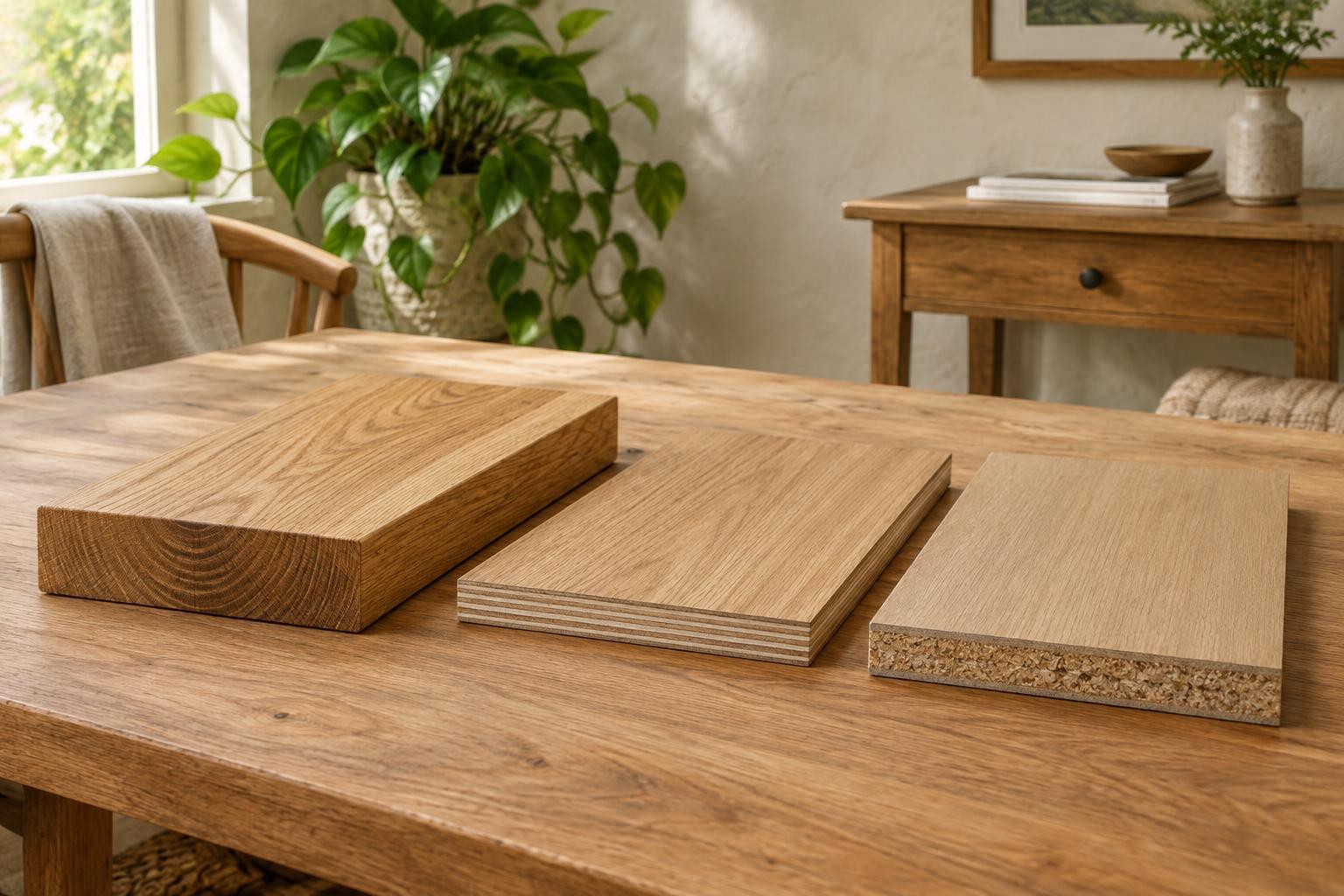
Furniture descriptions can make wood sound like a simple either-or choice, but three different ideas often overlap. Solid wood is timber used through the thickness of a component. Veneer is a thin sheet of real wood applied to a surface. Engineered wood describes a manufactured core, such as plywood, medium-density fiberboard (MDF) or particleboard. A veneered tabletop may therefore be both real wood on the outside and engineered wood underneath.
A single piece of furniture can combine all three. A cabinet might have solid wood legs, veneered plywood doors and an MDF back. Rather than asking whether the whole piece is “real wood,” ask what each visible or hard-working part is made from. That question is more useful when you are comparing durability, appearance, weight and the kinds of repairs you could make later.
Look for clues in solid wood
On a solid wood board, the grain belongs to the material all the way through. Look at an exposed end or an unfinished underside: grain lines should relate to the pattern on the face, though the end will look different because the fibers are cut across. On a tabletop assembled from several boards, you may also see changes in grain and color where the boards meet. Those joins are normal, not necessarily signs of poor quality.
Solid wood can be sanded and refinished, but how much work is possible depends on the design, finish and condition. It also responds to changes in humidity by expanding and contracting, which is why wide panels may be built with room to move. A heavy feel or a high price is not proof of solid construction; dense engineered panels can be heavy too. Inspect the actual edges and ask which components, specifically, are solid.
Recognize veneer without dismissing it
Wood veneer provides the appearance and texture of a chosen wood species while the core supplies a broad, stable panel. It is common on large, flat surfaces such as cabinet doors, shelves and tabletops. A well-made veneered piece can be a sensible choice, especially when you want a consistent surface across a wide area. The important distinction is that its wood face is thin, so deep scratches cannot be sanded away as freely as they might be on thick solid wood.
Check an accessible edge, a drawer opening or the underside for a change between the surface layer and the core. Edges may be finished with veneer or solid wood edging, so one neat edge will not reveal everything. Repeated grain patterns across several doors can suggest that matching sheets of veneer were used; that is a design choice, not a defect. If the surface shows a printed pattern with no natural grain variation, it may instead be laminate or another wood-look finish. Ask for the material description rather than relying on a photograph.
Identify the core of engineered wood
Engineered wood is not one material. Plywood is built from bonded layers of wood, which may be visible as stripes along an unfinished edge. MDF is made from fine wood fibers and tends to show a fairly uniform interior. Particleboard is made from larger wood particles and may have a visibly coarse interior. Paint, veneer or laminate can hide any of these cores on the finished faces.
Core choice affects how a piece is designed and used, but the label alone does not tell you its quality. Look at the thickness of shelves, how drawers run, whether joints feel secure and whether exposed edges are cleanly finished. If a corner is chipped, it may offer a clue to the core, but avoid damaging furniture to investigate it. Product specifications or a seller’s answer are better ways to confirm what lies beneath the finish.
Choose for the way you live
For a table likely to collect marks, think about how you would maintain its surface. Solid wood may offer more refinishing options, while a veneered or painted engineered top may suit you if you are comfortable protecting it from standing water and using gentle cleaning methods. For a tall bookcase, pay attention to shelf support and assembly as well as material. For any piece placed near plants, use saucers or trays, wipe spills promptly and leave enough airflow around pots to help protect the finish.
Before buying, read the materials list part by part: top, frame, drawers, back and shelves may differ. Inspect an underside or interior edge when possible, and ask how the surface should be cleaned and whether replacement parts are available. Solid wood, veneer and engineered wood can each belong in a welcoming home. Knowing which is where helps you choose with clearer expectations.