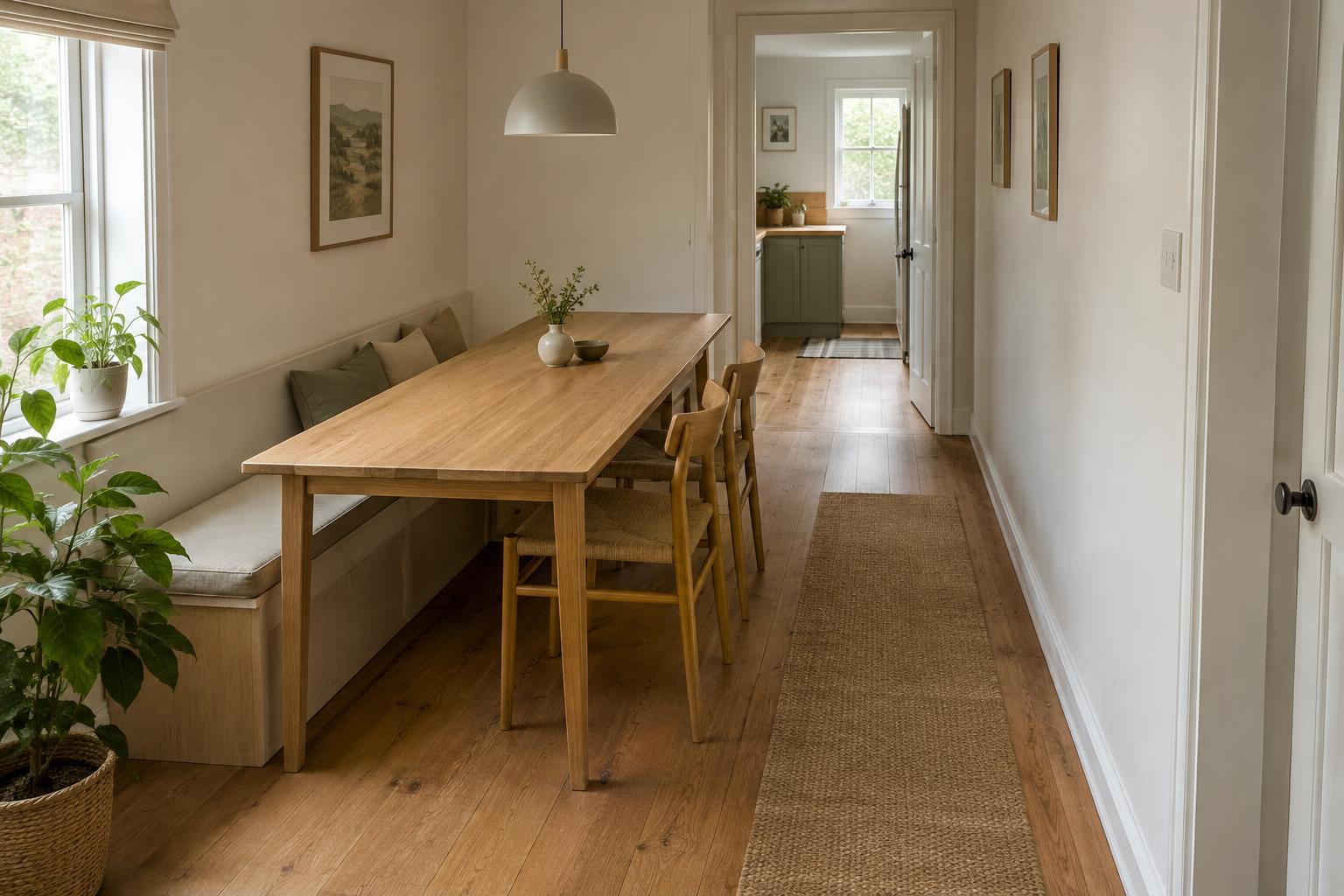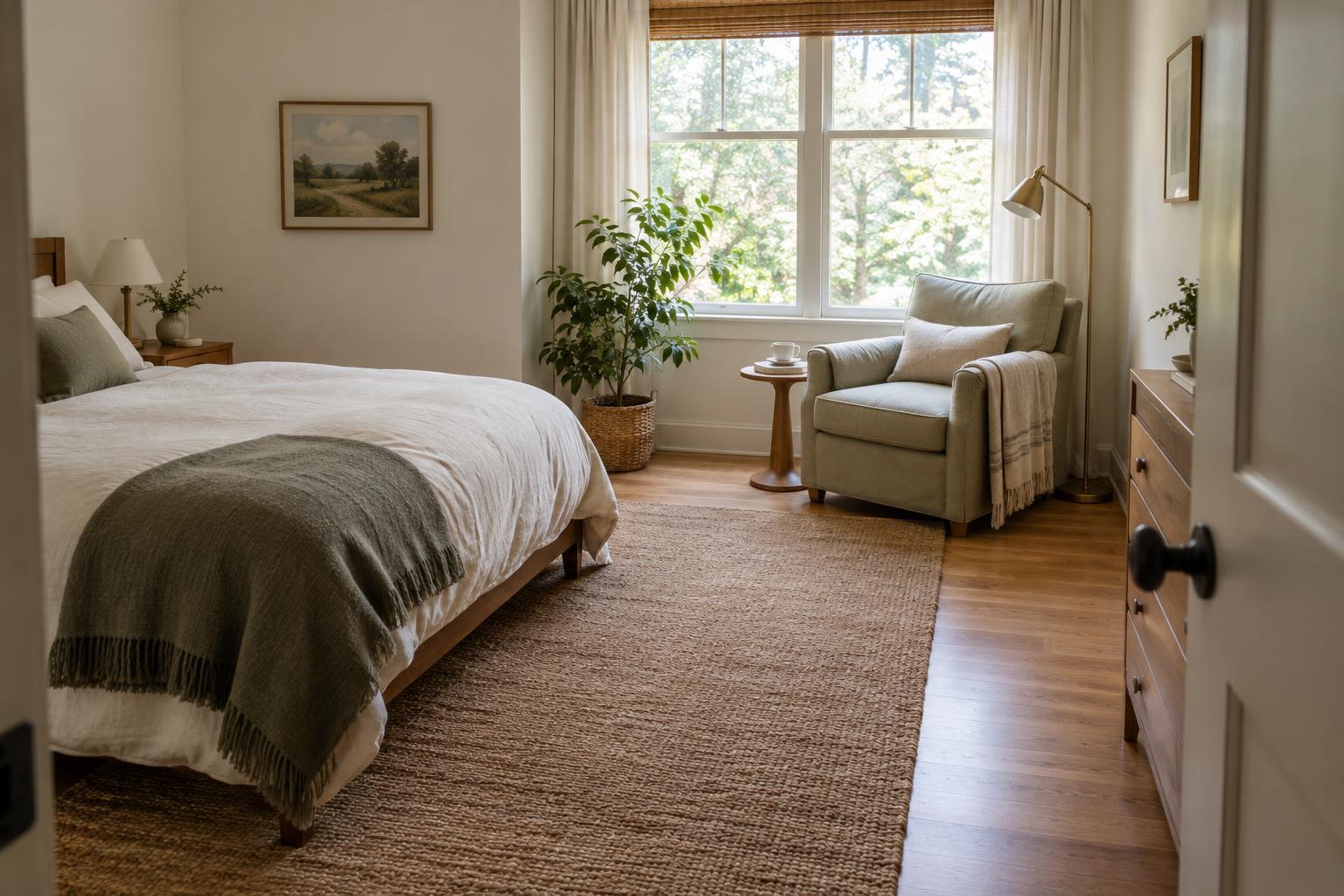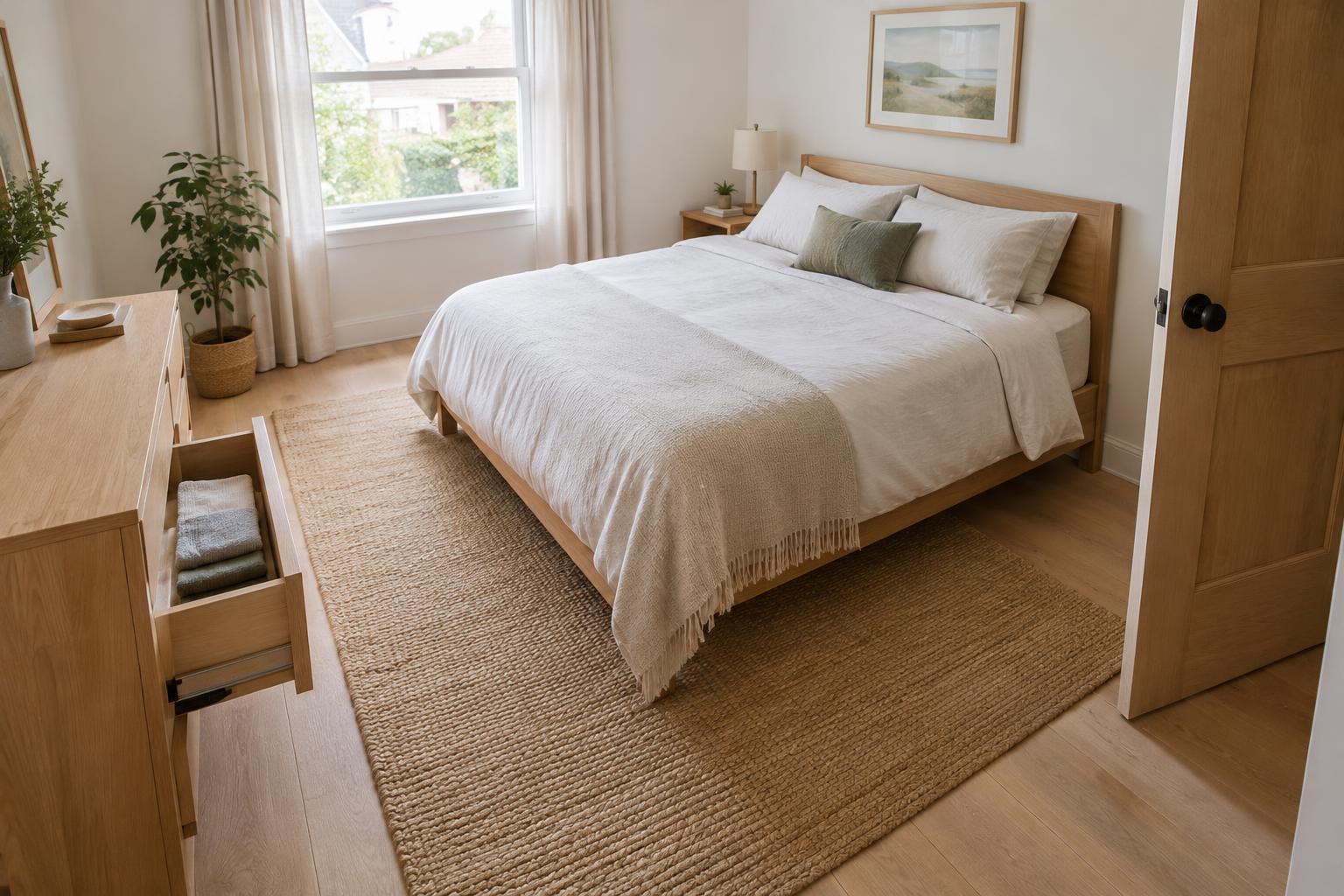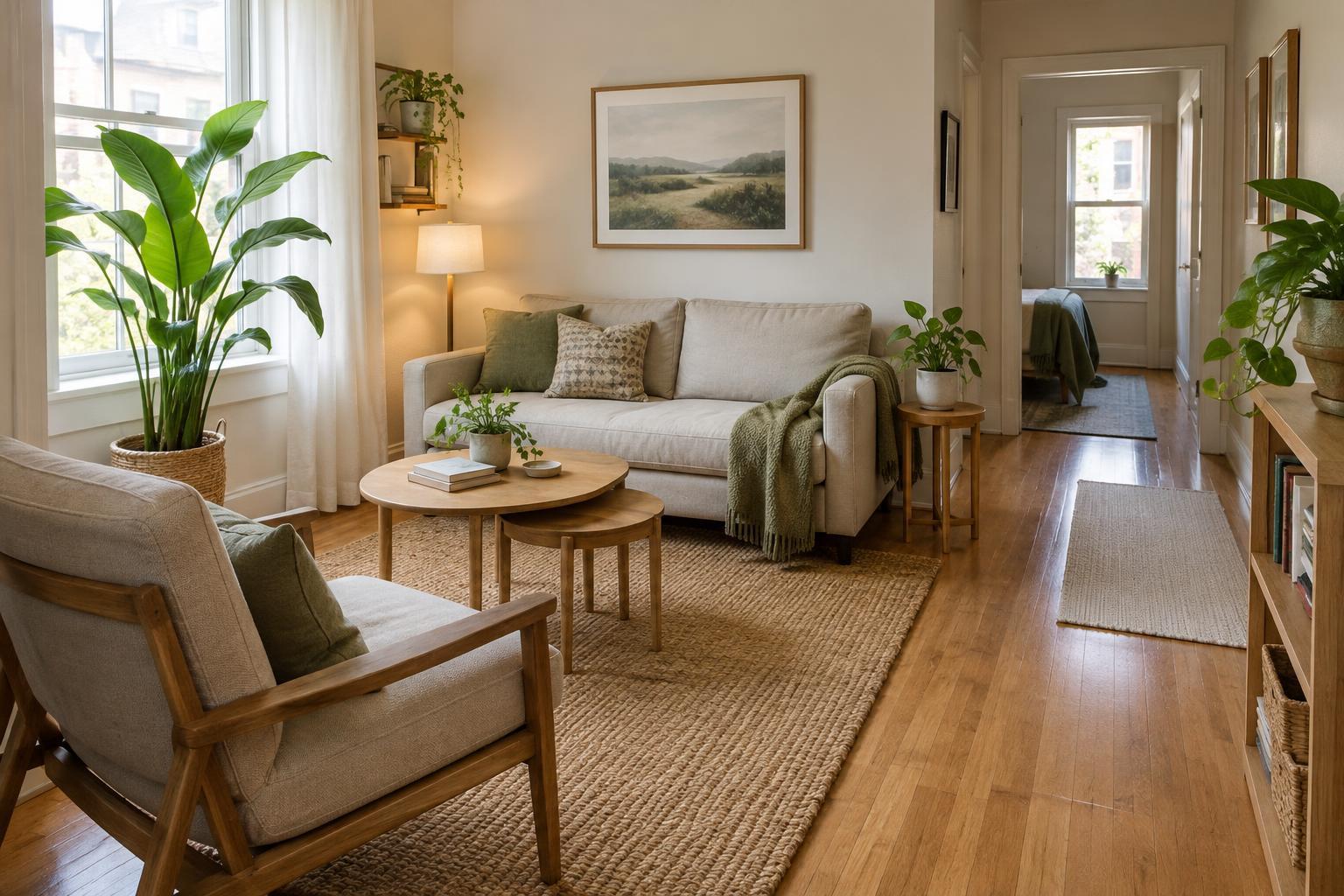
Plan the path through the room first
Before moving furniture, notice how people enter the living room and where they go next. The route to a doorway, window or frequently used cabinet should feel easy to follow. In a small room, one clear path usually works better than several narrow gaps between chairs and plant stands. Try marking the footprint of larger pieces with paper or painter’s tape before committing to a layout.
Look at the room from each entrance. If the back of a sofa blocks the view and makes the space feel tight, try placing it against a wall or choosing a lower-backed seat. Leave enough room to sit down, open storage and tend plants without shifting furniture each time. The right amount of space depends on the people using the room, so test the layout by walking through it rather than relying only on a floor plan.
Choose seating for the way you gather
For a room used mostly by one or two people, a compact sofa paired with a movable chair can be more flexible than a large sectional. The chair can face the sofa for conversation, turn toward a window for reading or move aside when guests need floor space. An ottoman can serve as an occasional seat or a place to rest a tray, provided it does not interrupt the main walking route.
If you often host conversations, try placing two smaller seats across from a sofa instead of lining every piece along the walls. Bringing seating slightly inward can make it easier to talk and may free a corner for a taller plant. In a particularly narrow room, keep the larger seat on one long wall and use a lightweight chair opposite it. Whatever arrangement you choose, check that everyone can reach a seat without squeezing past leaves or stepping over a table.
Give plants useful spots, not leftover spots
Plants need a position that suits both the room and their care needs. Observe where light falls during the day, then choose plants suited to those conditions rather than assuming every green corner will work. A spot near a window may be useful, but direct sun can be too strong for some plants, while a dim corner may not offer enough light for others. Check the needs of each plant before settling on its place.
Use vertical space when the floor is busy. A sturdy shelf, a narrow plant stand or a hanging planter can add greenery without taking the footprint of another chair. Keep pots away from door swings and places where shoulders or bags might brush past them. If children or pets use the room, consider plant selection and placement carefully, and keep unstable stands and trailing cords out of reach.
Pair plants with furniture to save floor space
Grouping a plant with an existing piece of furniture often looks more intentional than adding a stand in the middle of an open area. A small pot might sit on a side table beside a reading chair, while a larger floor plant can soften the end of a sofa without becoming an obstacle. A low shelf behind a sofa may hold a few plants if it is secure, accessible and suited to the available light.
Think about watering before filling every surface. Pots need stable bases, and surfaces may need protection from moisture. Leave room to lift a plant out for care and to clean around it. One healthy, well-placed plant can have more impact than several pots crowded into inconvenient positions, especially when the room already has multiple seating pieces.
Test the layout before adding more
Live with a simple arrangement for a few days: the main seat, one secondary seat, a table if you need one, and your favorite plants. Notice where people put drinks, where they naturally walk and whether anyone has to move a pot to open curtains or reach an outlet. Small adjustments, such as rotating a chair or moving a plant to the other side of a window, can improve the room without requiring new furniture.
Add pieces only when they solve a specific problem. If guests need another seat, a lightweight stool may be easier to store than a permanent armchair. If plants are competing for window space, a carefully placed shelf may help more than another floor stand. The goal is not to fill every corner; it is to make seating comfortable, plants easy to care for and the room pleasant to move through.