Start with the shade you actually need
On a small balcony, shade has to do more than block sunlight. It must leave room to walk, sit, open the door, and care for plants. Before choosing between shade cloth and a patio umbrella, notice when direct sun reaches the space. Morning sun may be welcome, while strong afternoon sun can make a chair or container garden less comfortable. Your goal might be to shade one seat for an hour or to soften light across most of the balcony.
Measure the balcony floor, the door swing, and the height above any proposed shade. Note railings, overhead structures, and the route you use to move around. Sketch the spot you want shaded rather than assuming the whole balcony needs coverage. This simple plan helps you compare the usable shade each option provides, not just its advertised dimensions.
When shade cloth makes sense
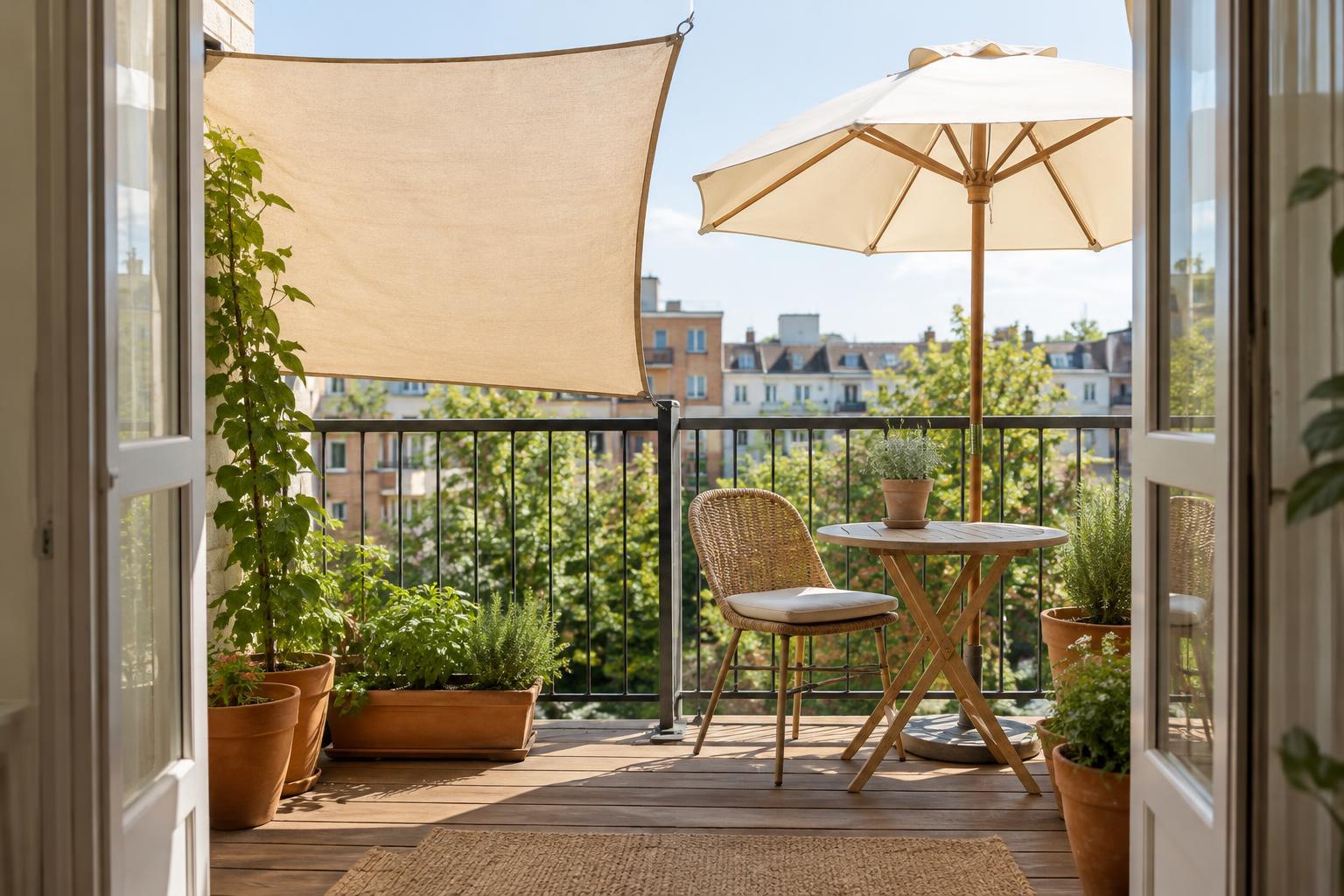
Shade cloth is a flexible fabric that can soften direct sunlight without necessarily making the balcony feel enclosed. It can be useful when the sun hits a broad area or arrives from the side. Depending on where it is placed, cloth may shade both a chair and nearby plant pots while keeping the floor free of an umbrella base. Different fabrics allow different amounts of light through, so consider whether you want a cooler-looking retreat or a bright place to grow sun-loving plants.
The main challenge is attachment. Shade cloth needs suitable, secure support and enough tension to avoid flapping. A small balcony may not have appropriate anchor points, and tying fabric to a railing or shared structure may not be permitted. Check building rules before buying hardware or making holes. Do not assume a roof, railing, or light fixture can bear the load. If safe attachment is uncertain, choose a removable option rather than improvising.
Think about what happens when conditions change, too. Fabric can catch wind and may hold rainwater if it sags. Follow the product’s installation and removal guidance, and take it down when the weather calls for it. If you want shade only for part of summer, plan where the clean, dry cloth will go when stored.
When a patio umbrella works better
An umbrella is often the simpler choice for shading a single chair or compact table. You can open it when needed, close it when you want more light, and sometimes shift its position as the sun moves. That flexibility is helpful on a balcony shared by people and plants: a pot that enjoys direct light need not sit under permanent shade.
An umbrella does, however, use valuable floor space. Include its base in your measurements, not just the canopy. Check whether the open canopy will clear the door, walls, and any balcony above. A tilting canopy may help with low-angle sun, but its reach and the space needed to adjust it vary by model. A railing-mounted design may free up floor space, provided the railing and building rules allow that specific use.
A stable base and a clear path around it matter more than squeezing in the widest canopy. Even a well-positioned umbrella should be closed when unattended or in windy conditions, according to its instructions. If you cannot store the closed umbrella without blocking an exit or walkway, a smaller design—or another approach—may be more comfortable to live with.
Compare the options in your actual layout
Try marking out each option before you buy. Use a chair to represent an umbrella base and a piece of string to visualize the edge of a proposed cloth panel. Sit in your usual place, open the door, and reach the plants you water most often. If either option forces you to sidestep furniture or lean over a railing to tend a pot, revise the plan.
Consider the view and the room just inside the balcony door. A cloth panel may reduce glare but also dim an interior space; an umbrella offers more control over when that happens. Neither choice automatically provides privacy, and coverage will change as the sun moves. If your plants depend on several hours of direct light, observe their position before putting shade above them. You may find that shading the seat, rather than the entire balcony, gives everyone the space they need.
Choose the shade you will use and maintain
Choose shade cloth if you have approved, suitable attachment points and want to soften light over a wider, predictable area. Choose an umbrella if you need movable shade for a small sitting spot and have room for a stable base and closed storage. For a narrow or exposed balcony, neither may be a good fit without a change to the furniture layout.
Keep the final arrangement modest. Leave clear access to the door, avoid placing heavy items where they could fall, and make it easy to close or remove the shade. The best summer setup is not the one that covers the most space; it is the one that makes the balcony pleasant while remaining practical to use every day.