Start with the courtyard, not the planter
A tiny courtyard may have room for a raised bed, a collection of pots or both. The best choice depends less on its total area than on how you use it. Walk through the space as you normally would: open the door, pull out a chair, carry a watering can and reach any gate or storage area. A planter that looks compact on paper can feel enormous if it interrupts those movements.
Notice where direct sun falls and for how long. Walls can shade one side while reflecting heat onto another. Also check where water goes after rain. If it pools against a wall or runs toward a doorway, planters need careful placement. Sketching the courtyard and marking clear walking routes, sunny patches and existing drains gives you a more useful starting point than choosing plants first.
When a raised bed makes sense
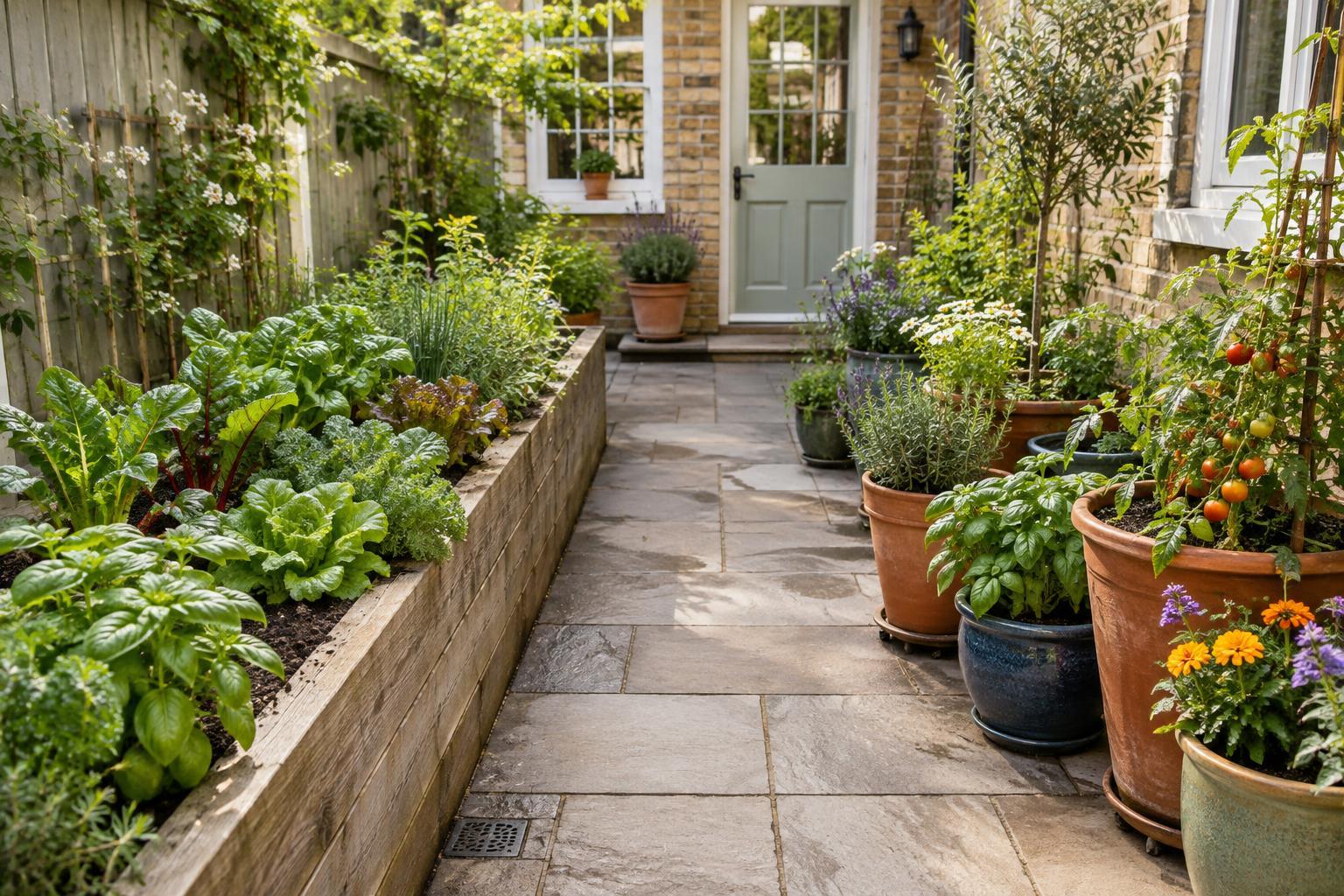
A raised bed gives a small courtyard one defined growing area. It can bring herbs, flowers or compact vegetables together instead of spreading pots across the paving. Its broad surface also makes it easy to arrange plants by height, with taller choices toward the back and lower ones near the edge. If a bed is open to soil beneath it, roots may have more room to grow than they would in a typical pot.
In a paved courtyard, however, a raised bed usually sits on a hard surface. It then behaves more like a very large container: it needs a way for excess water to leave, enough growing medium for the chosen plants and a surface that can bear its weight when wet. Do not assume water can drain harmlessly through paving joints. Keep access to drains clear and avoid directing runoff toward the building.
A bed is also a relatively fixed commitment. Before filling one, check that you can reach its centre comfortably from at least one side and still move around it. A narrow bed along a sunny wall may work better than a square one in the middle. If you rent or are unsure about surface load limits, get permission or appropriate guidance before installing a large, heavy structure.
Where containers have the advantage
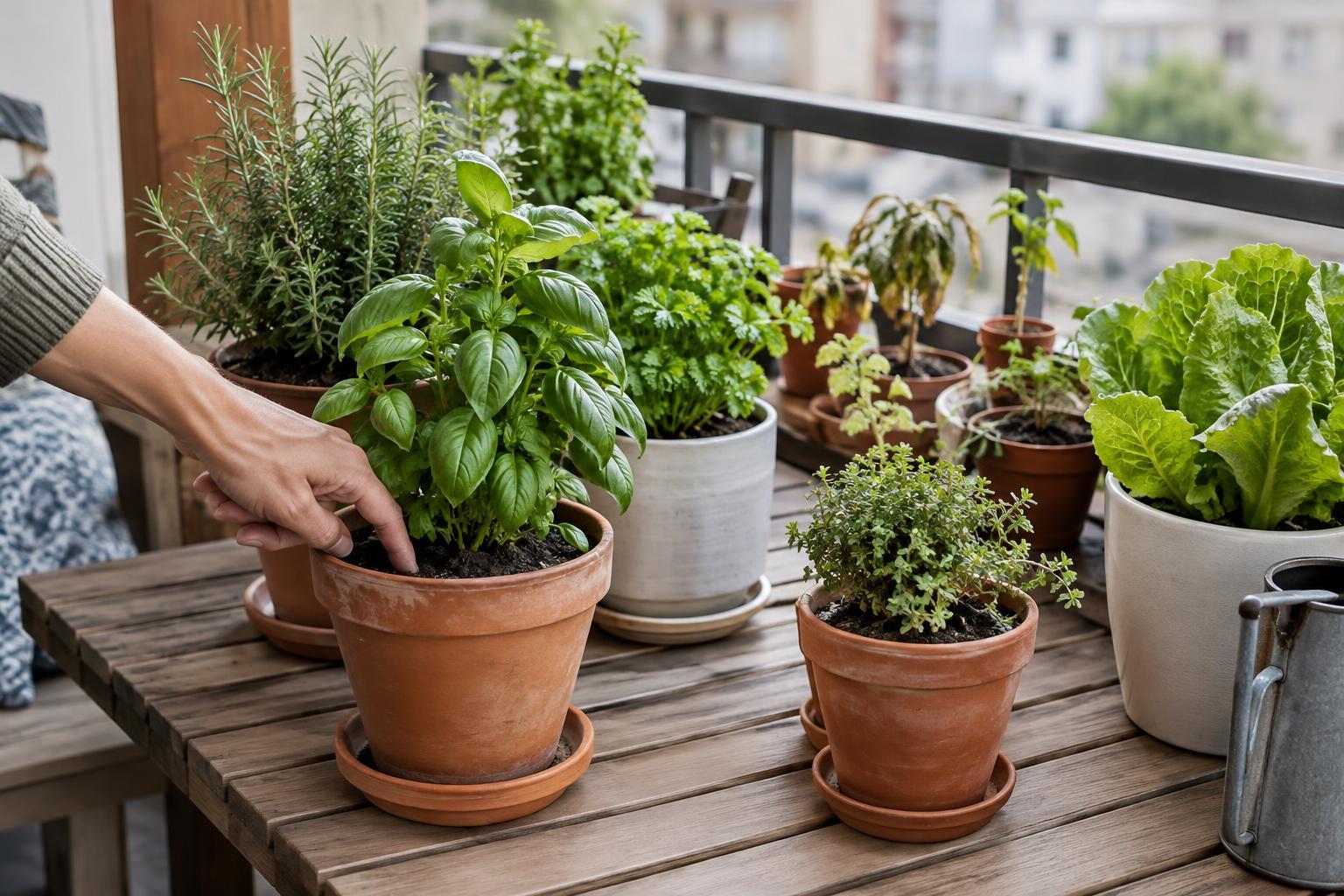
Containers are useful when the courtyard has several small pockets of light rather than one obvious planting spot. You can move a pot to test a location, shift plants as shadows change or clear space for a gathering. Separate containers also let you give plants different growing mixes and watering routines. A thirsty leafy plant need not share a bed with an herb that prefers conditions on the drier side.
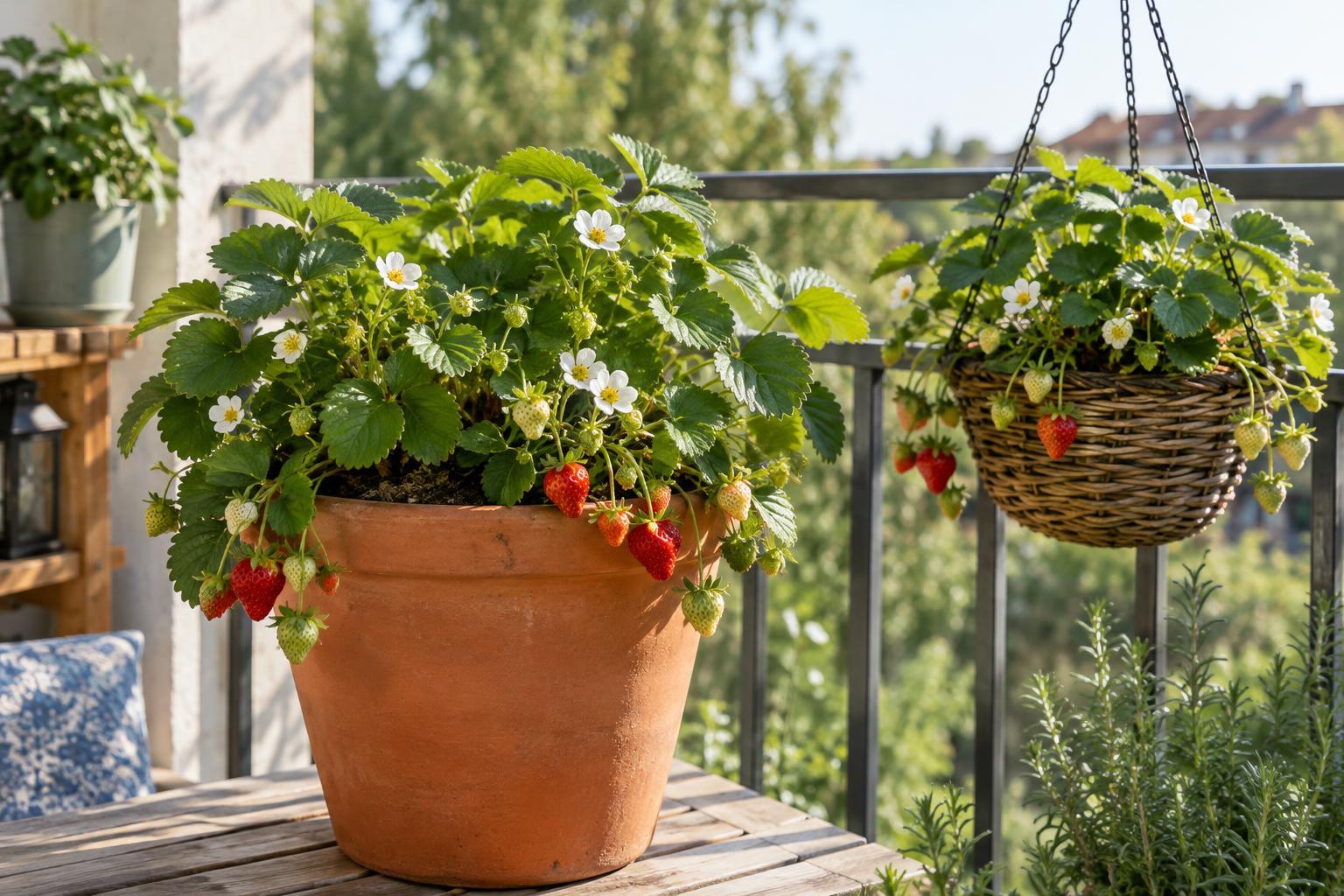
Their flexibility comes with a little more day-to-day attention. Small pots have less room for roots and moisture, so they may need checking more often in warm or windy weather. Choose containers with drainage openings and place them so runoff can escape without staining a valued surface or collecting by a wall. Larger pots can provide more stable growing conditions, but they become difficult to move once filled.
For a courtyard that needs to serve several purposes, try a small number of generously sized containers rather than many tiny ones. Grouping them along an edge keeps the walking area clear and makes watering simpler. Leave enough space between pots and walls to clean behind them and notice any dampness.
Match the choice to what you want to grow
Think about mature plant size, not just the size of a seedling. A compact herb or annual flower may be comfortable in its own container, while a group of leafy plants may be easier to manage in a shared bed. Plants with deeper or wider roots need a planter that can accommodate them. Whatever you choose, match plants with similar light and watering needs when they share growing space.
Light is often the deciding factor. If only one corner receives enough sun for the plants you want, a bed placed elsewhere will not make up the difference. Containers let you use that bright corner without committing the whole courtyard to it. In a mostly shaded space, select plants suited to shade rather than relying on a raised bed to change the conditions.
Make a small trial before committing
If you are undecided, mark the proposed bed’s outline on the paving and live with it for a few days. Move chairs, open doors and imagine reaching every planting spot. You could also begin with a few containers in the same location. They will show you how convenient it is to water there and whether the plants receive the light you expected.
A tiny courtyard does not need an all-or-nothing plan. One modest raised bed can provide a settled focal point, with a pot or two where flexibility matters. Choose the arrangement that leaves the space comfortable to use and the plants straightforward to care for.