Start with the wood’s job
A finish can deepen the color of wood, change its sheen and make everyday cleaning easier. It cannot, however, make a delicate surface immune to spills or scratches. Before choosing a product, picture a normal week for the piece. A bedroom shelf may only need dusting, while a dining table has to cope with cups, crumbs and frequent wiping. That difference matters more than whether one finish sounds more natural than another.
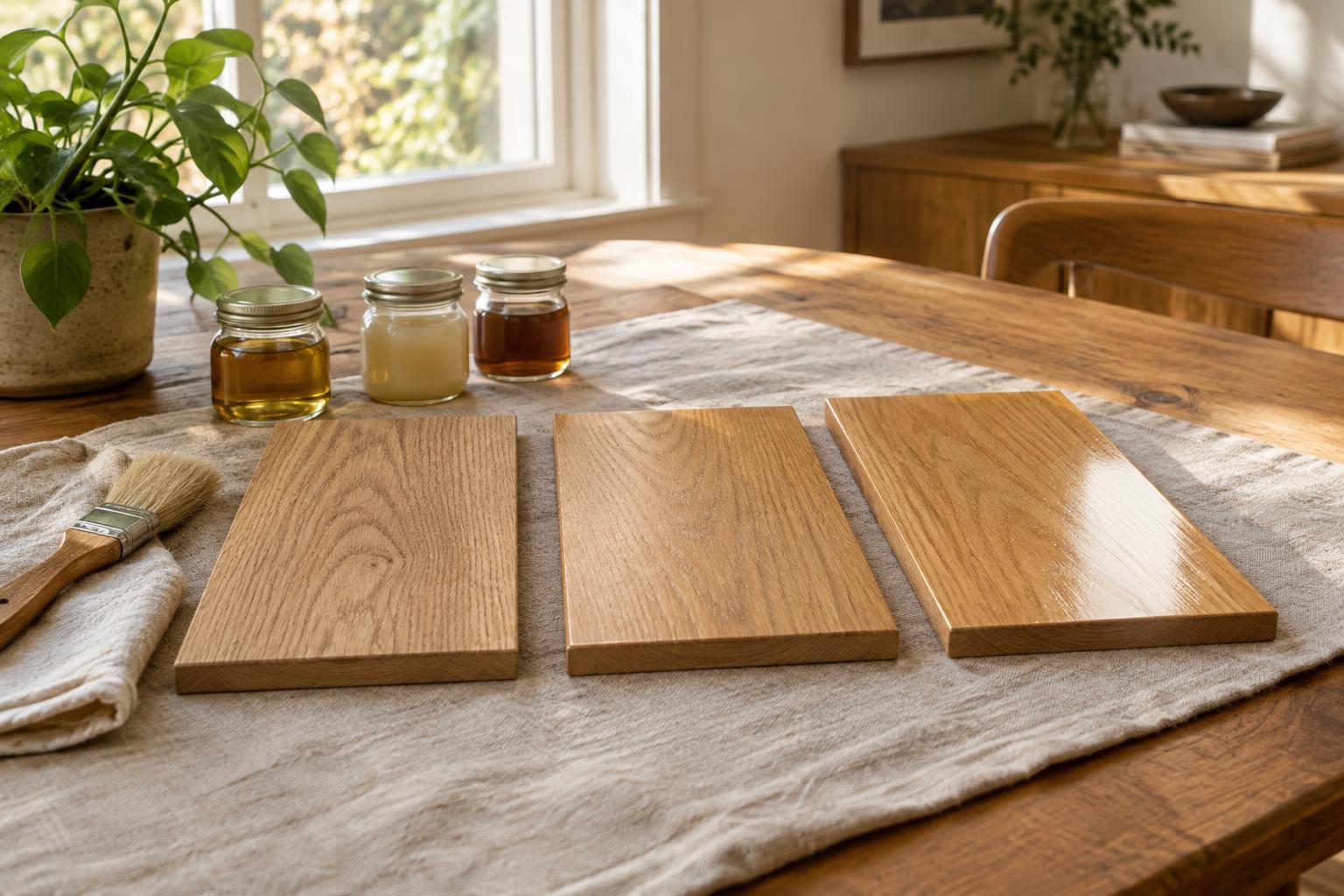
Think about the look you want, too. Do you want to feel the grain under your hand, keep a pale wood looking light or give an older piece a richer tone? Test candidates on an offcut of the same wood or a discreet area. The wood species, its sanding and any existing stain can all change the result. Let the test finish dry and cure as directed before judging its color and sheen.
Oil: a close-to-the-wood feel
Oil finishes tend to bring out the grain and leave a relatively natural-looking surface. They can be appealing on a side table, a shelf or a piece you enjoy touching. “Oil” is a broad label, though: drying oils, oil-and-resin blends and products sold as hardwax oils do not offer identical protection. Check the particular product rather than assuming they will behave alike.
Many oil-finished surfaces benefit from attentive cleaning and occasional renewal. On a frequently used tabletop, a drink left standing may still mark the wood, depending on the product and how fully it has cured. The advantage is that some worn areas can be refreshed without stripping the whole piece, provided you follow the finish maker’s repair guidance. If easy spot maintenance appeals to you, oil is worth testing; if you want to wipe up spills with less worry, compare it with a more protective film finish.
Wax: soft sheen, lighter protection
Wax can give indoor wood a gentle sheen and a pleasant feel. It is often used on decorative objects, low-use furniture or over a compatible existing finish. On its own, it generally offers less resistance to water and wear than a durable varnish. That makes a waxed display shelf easier to live with than a wax-only kitchen table.
Wax also asks for realistic upkeep. It may need buffing or reapplication as the surface dulls, and heat or moisture can leave marks. If you are refinishing an older piece, identify what is already on it as well as you can: wax residue can interfere with the adhesion of a later coating. When in doubt, try your proposed cleaning and finishing steps on a hidden spot first.
Varnish: a tougher surface for busy pieces
Varnish forms a protective film over the wood. For a desk, dining table or frequently handled cabinet, that film can offer a useful barrier against routine wear and brief spills. Products vary in appearance, from low-sheen to glossy, and in how much warmth they add to the wood. A clear-looking sample on the tin may not look the same on your particular board.
The trade-off is in application and repair. A smooth result usually calls for careful surface preparation, thin coats and patience between coats. If the film is deeply damaged, a small patch may remain visible, and a larger area may need refinishing for an even look. Also distinguish water-based and solvent-based products by their actual label directions, including ventilation, cleanup and drying times. Dry to the touch does not necessarily mean ready for heavy use; allow the full recommended cure time before putting objects back on the surface.
Make a choice you can maintain
For a low-use piece where texture is the priority, start by testing an oil or wax. For a hard-working surface that you want to clean regularly, test a suitable varnish alongside an oil product rated for furniture. There is no universal winner: the best finish is the one whose appearance, protection and maintenance routine fit the piece. If children, pets or food contact are relevant, use a product whose stated intended use fits the project, and follow its directions for application and curing.
Whatever you choose, prepare the wood as the product instructs, remove sanding dust and keep the work area ventilated. Read the label for compatible applicators and disposal guidance. In particular, rags soaked with drying oils can heat up if left bunched together; handle and dispose of them exactly as the manufacturer directs. A small test and a little extra curing time are easier than redoing an entire tabletop.