Start with the room, not the stone name
A natural stone countertop can give a kitchen a lasting connection to the outdoors. Its color and pattern may be quiet or dramatic, but the surface also has to work where you chop, pour and clean every day. Before choosing between marble, granite and soapstone, think about how you use the counter. Is it the main preparation area, a place where drinks often sit, or a lightly used island? The answer matters as much as the look.
Consider the rest of the room, too. A strongly patterned slab can become the focal point beside simple cabinet fronts. A subdued stone may leave more room for wood grain, plants and other natural textures. Look at samples near your cabinets in daylight and under your evening lights. A pale stone can brighten a compact kitchen, while a dark surface can add depth if the room has enough light.
Marble: graceful pattern with visible wear
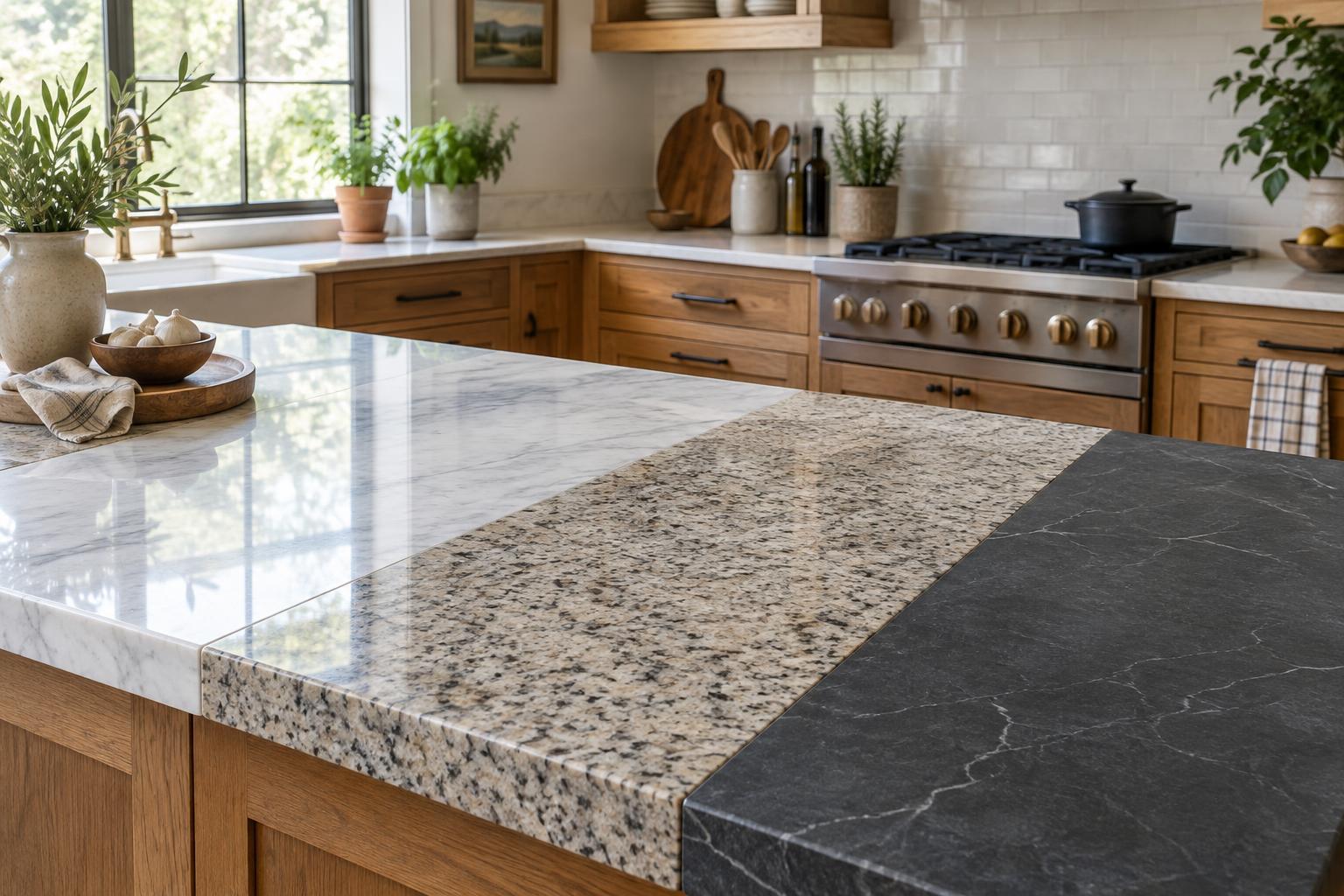
Marble is often chosen for its soft veining and luminous appearance. No two slabs are identical, so it can bring movement to a room without adding another material. It may be especially appealing on an island or a section of counter where its pattern has space to be seen.
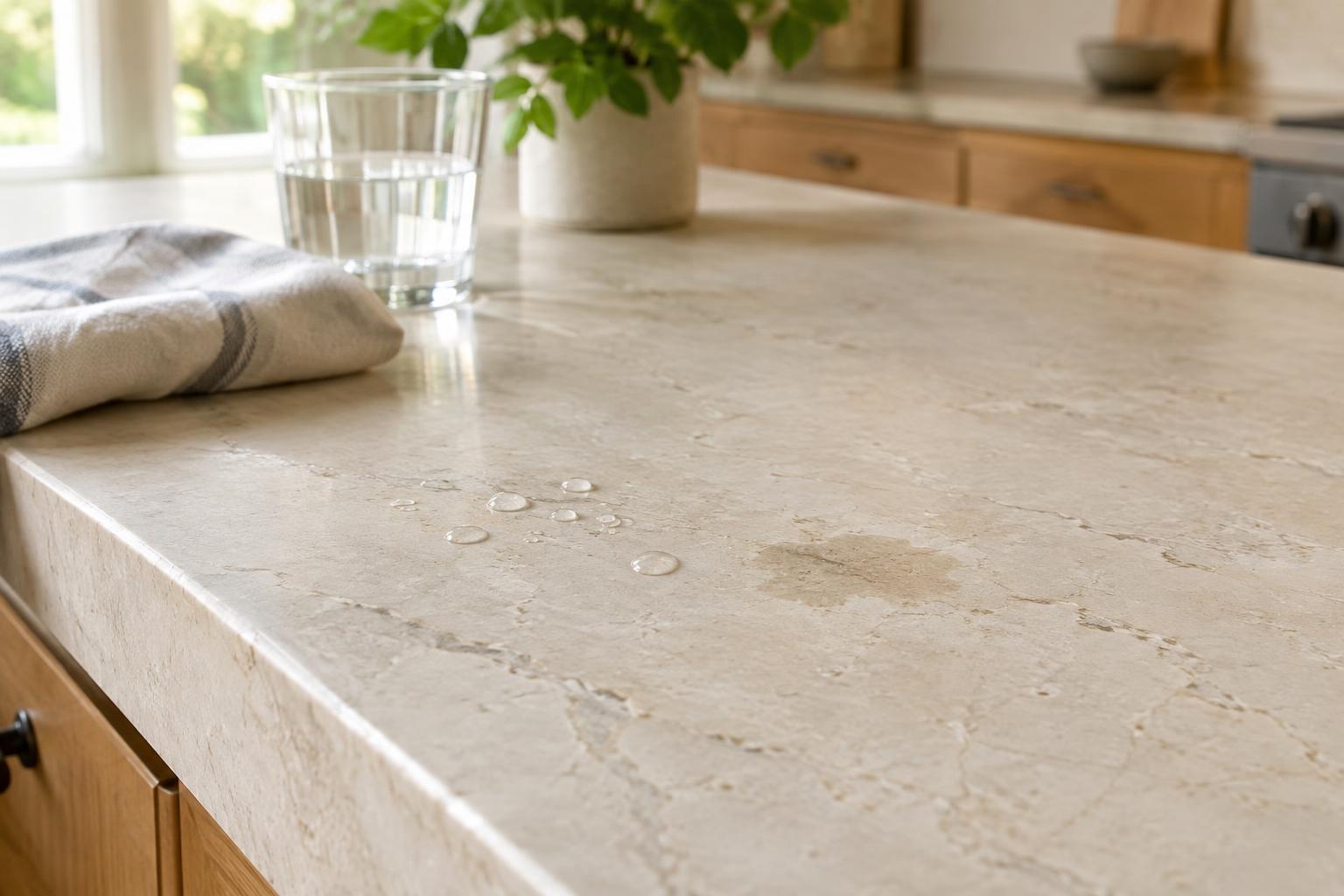
The trade-off is sensitivity to acids. Lemon juice, vinegar and some cleaners can dull the finish, leaving marks called etching. Marble can also stain, depending on the stone and how it is maintained. A sealer may help limit absorption, but it will not prevent etching. If you enjoy a surface that develops signs of use, those changes may feel at home in your kitchen. If every mark would bother you, consider marble for a less busy spot rather than your main worktop.
Granite: varied color and a practical work surface
Granite offers a wide range of colors and patterns, from fine, even speckles to bold movement. It is generally hard and stands up well to ordinary kitchen use, making it a useful option for a busy preparation area. Its visual character varies greatly, however; the word granite alone tells you little about how a particular slab will look with your flooring or cabinets.
Some granite benefits from sealing to reduce the chance of stains, while other slabs absorb very little. Ask the supplier about the specific stone you are considering rather than assuming every granite needs the same routine. Like other stone countertops, it can chip at an edge if struck hard. An edge profile with a slightly softened corner may be a sensible choice in a household where pans and dishes are moved around quickly.
Soapstone: a quiet surface that changes character
Soapstone usually has a smooth feel and a restrained palette of grays, sometimes with pale veining. It pairs naturally with timber, painted cabinetry and greenery when you want texture without a busy pattern. Because it is dense and does not readily absorb liquids, it is commonly used without a sealer.
Soapstone is softer than granite, so scratches and small dents are part of the decision. For some people, those marks create a comfortable, lived-in surface; for others, they will be a distraction. Mineral oil or a product intended for soapstone can deepen its color, but this is mainly an appearance choice, not a requirement for making the stone usable. If you prefer the lighter, uneven tones of untreated stone, ask to see how both finishes look before deciding.
Choose the actual slab and plan for daily care
Small samples are useful for narrowing your options, but visit the full slab if you can. Check how the pattern will run across long counters and around openings for a sink or cooktop. Ask where seams are likely to fall, particularly if you have an L-shaped layout or a large island. Finish matters as well: a polished surface reflects more light, while a honed or other low-sheen finish gives a softer look. Each can show fingerprints, water spots or wear differently.
For routine care, wipe spills promptly with a soft cloth and a cleaner suitable for your chosen stone. Avoid assuming that a household cleaner is safe for every natural surface, especially marble. Use boards for cutting and trivets for very hot cookware; they protect the counter from more than just scratches. When comparing quotes, confirm that measurement, cutouts, edging, delivery and installation are included so the options are easier to judge.
There is no single best stone for every home. Choose marble if you love its appearance enough to accept etching, granite if you want a hard-working surface with many visual choices, or soapstone if you welcome its soft feel and evolving finish. The right countertop is one whose everyday behavior fits your habits as comfortably as its color fits the room.