What “low light” really means
A low-light houseplant is one that can tolerate limited daylight, not one that can live indefinitely without it. A room may feel bright to us because its walls are pale or its lamps are on, while offering little light for a plant. The useful question is whether daylight reaches the spot where you want the pot to sit.
Look at the room during the day with the electric lights off. A place near a window but outside direct sun may suit many foliage plants. A corner several steps back, behind heavy curtains or across a deep room is a tougher location. Window size, nearby buildings and the season can all change how much light reaches a particular shelf. In lower light, even tolerant plants often grow more slowly, produce smaller leaves or lose some of their color.
Reliable choices for a dimmer spot
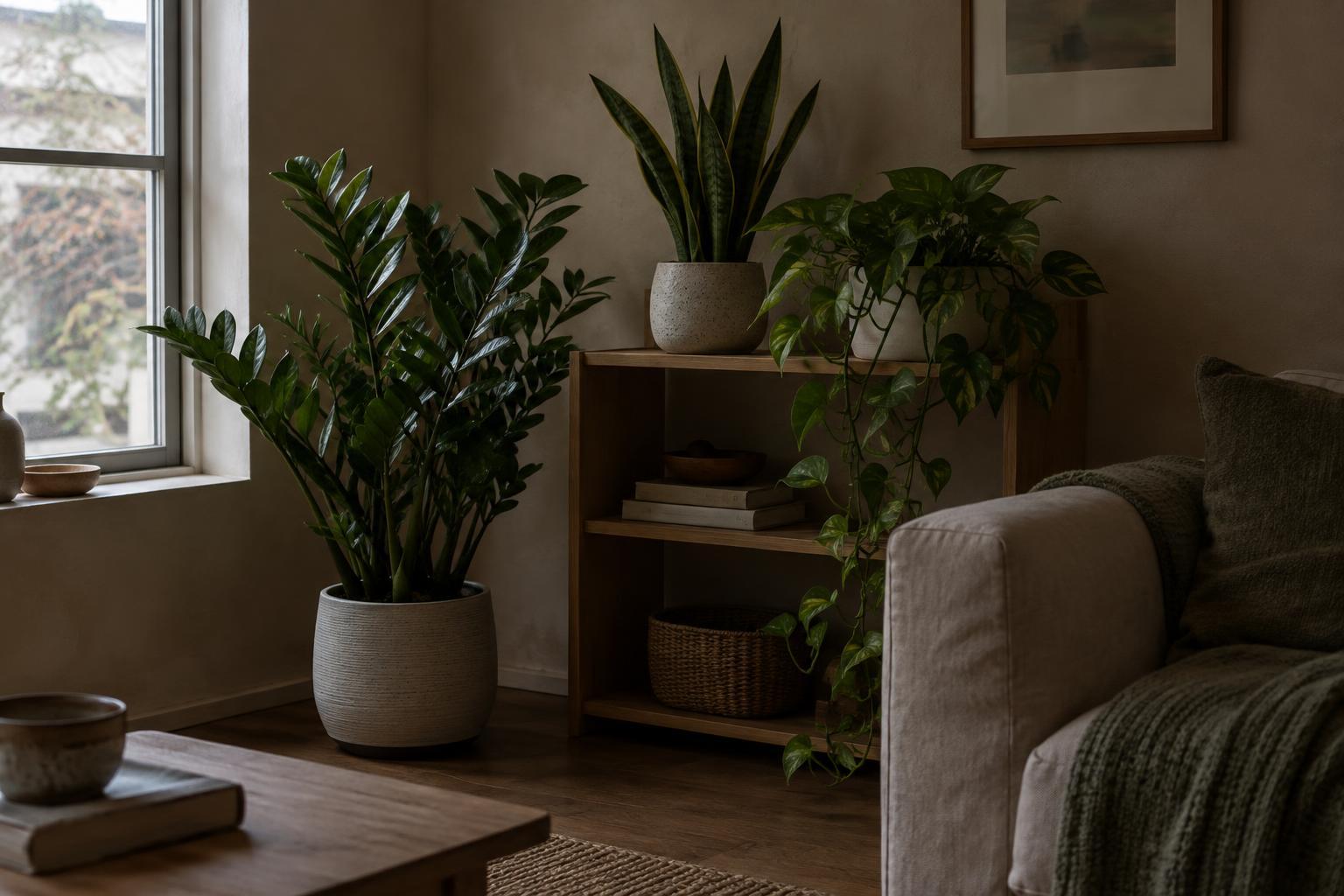
ZZ plant is a useful choice when you want upright, glossy foliage and an undemanding shape. Its thick stems store water, so it generally prefers the potting mix to dry between waterings. Snake plant is similarly adaptable and fits narrow floor spaces or shelves, though it may grow very slowly away from a window. Neither is a good candidate for a windowless room.
Cast iron plant has broad, dark green leaves and can suit a shaded position where more delicate foliage struggles. It is slow-growing, so choose a size you already like rather than expecting it to fill a corner quickly. Chinese evergreen is another option for indirect light; varieties with mostly green leaves are often a better starting point for a dim room than strongly patterned ones.
If you prefer a trailing plant, try a green pothos or heartleaf philodendron. Their vines can soften the edge of a bookcase or hang from a shelf close to a window. In low light, they may become sparse or stretch toward the glass. Move them nearer the light if the gaps between leaves grow noticeably longer. Plant suitability also matters beyond light: if children or pets may handle or chew foliage, check a plant’s safety before bringing it home.
Place the plant where daylight can reach it
Small changes in position can make a meaningful difference. Try a plant stand beside the window rather than a high shelf across the room, or set a trailing plant where its leaves face the glass instead of hanging in the shadow of a cabinet. Keep foliage away from cold glass and from the direct blast of heating or air-conditioning vents.
If a spot receives no natural daylight, choose a suitable grow light rather than relying on an ordinary room lamp. Follow the light maker’s placement guidance and observe how the plant responds. You can also rotate a pot occasionally for more even growth, but leave it in a location long enough to judge its condition before moving it again.
Water for slower growth, not by the calendar
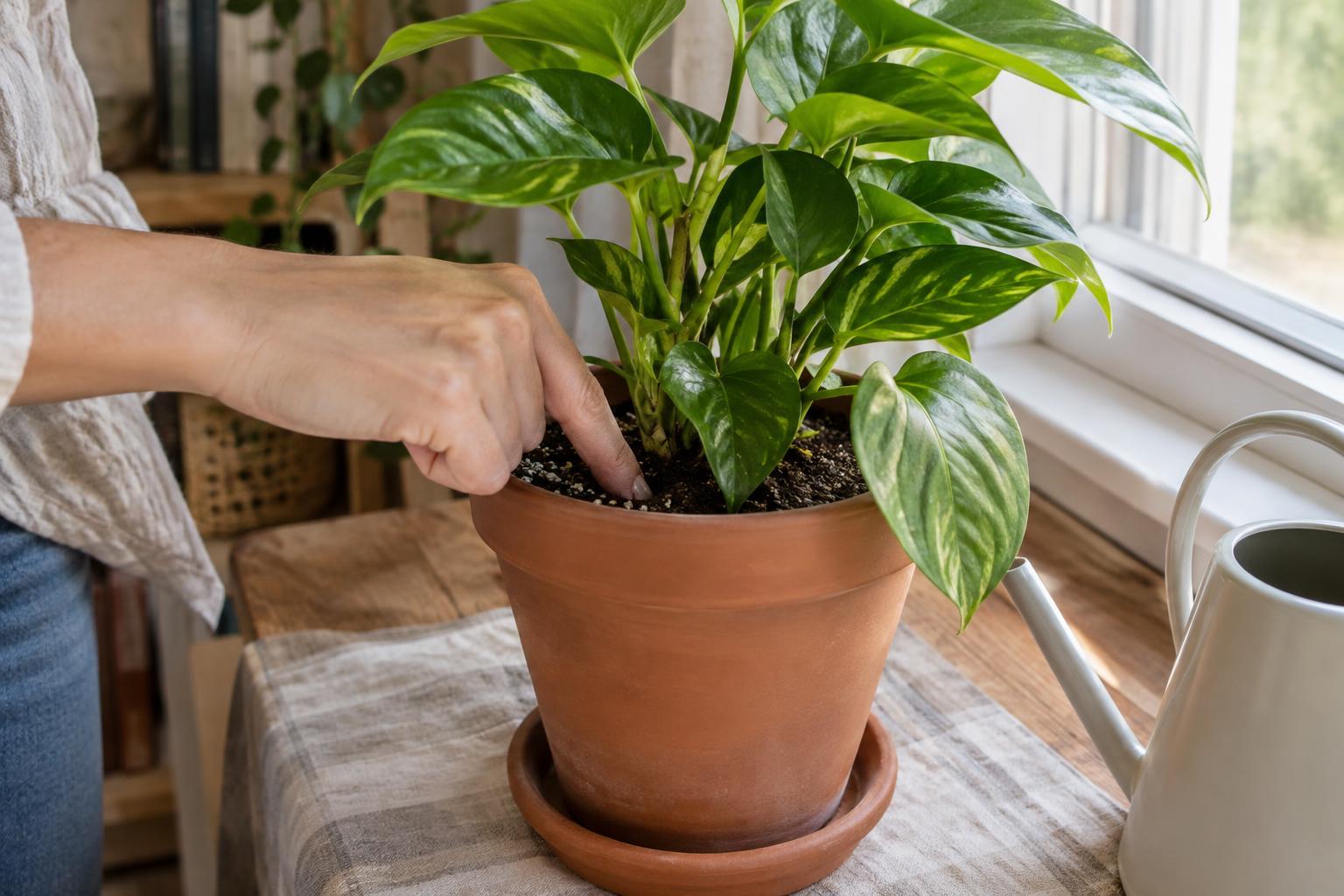
Plants in dimmer conditions commonly use water more slowly than the same plants in brighter locations. A fixed weekly watering routine can therefore leave their roots in persistently wet mix. Check the soil first: feel below the surface, notice the pot’s weight and learn how quickly that particular plant dries. ZZ plants and snake plants usually benefit from drying more thoroughly between waterings than many leafy tropical plants.
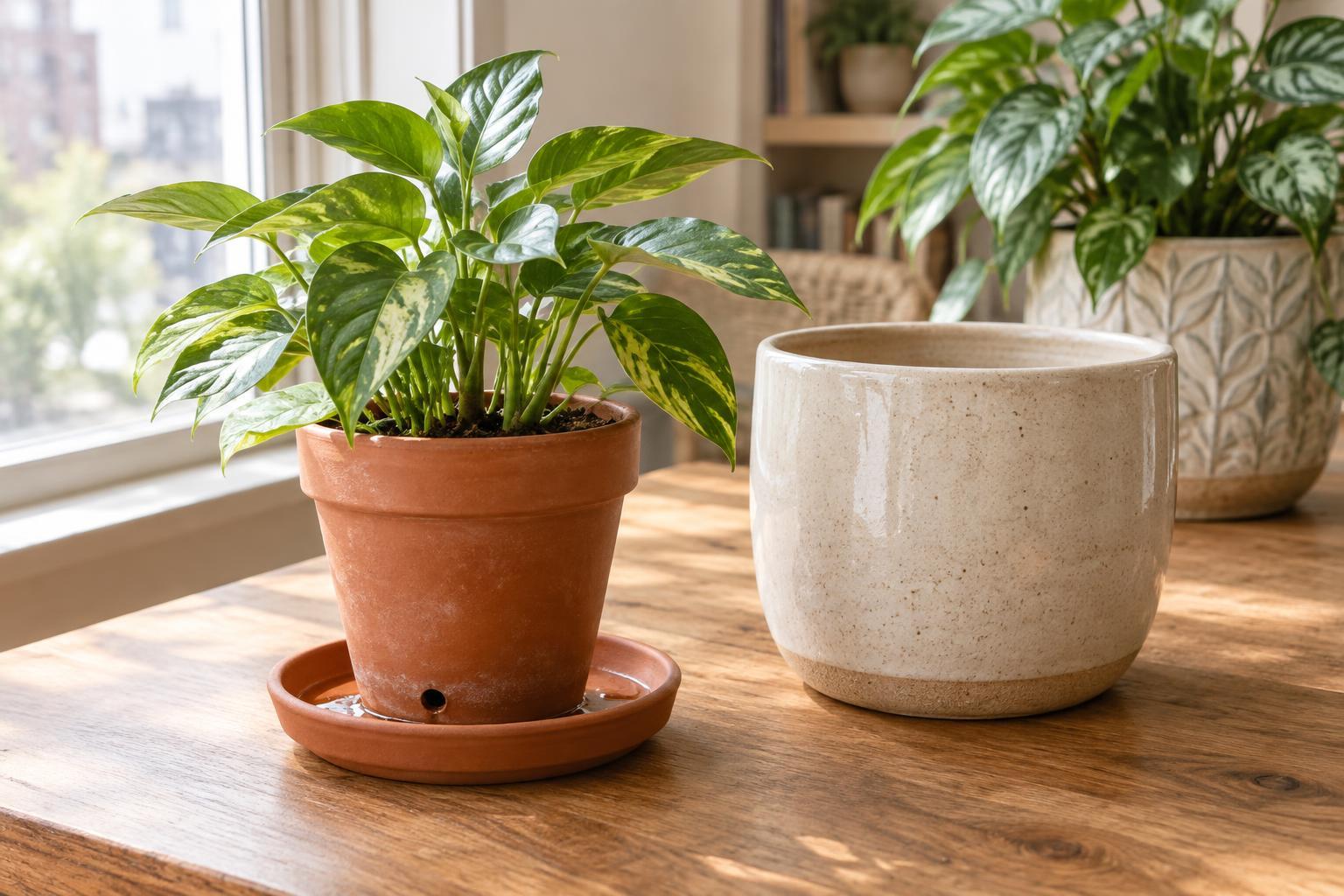
Use a pot with drainage holes and empty any water left in a saucer or decorative outer pot. Drainage helps, but it does not compensate for watering too often. Dust can also collect on leaves indoors; wiping broad leaves gently with a damp cloth helps keep them clean and makes it easier to spot changes.
Read the signs and adjust
Some adjustment is normal after a plant moves into a new room. Watch for a pattern rather than reacting to one older leaf. Long, thin growth, smaller new leaves or fading variegation can suggest that a spot is too dark. Soft stems, yellowing leaves and soil that stays wet for a long time may point to overwatering, especially in limited light. Dry, crisp leaf edges can have several causes, so check the soil and the plant’s surroundings before changing your routine.
Start with one plant and a spot that receives visible daylight. If it holds its shape and produces healthy new growth over time, you have found a workable match. If it steadily declines despite careful watering, moving it closer to a window is usually a better first step than searching for a plant that needs no light at all.