Start with the look you want
Linen and cotton are both plant-based fibers, yet they often give a room different moods. Linen commonly has a textured surface and a relaxed, slightly irregular hang. Cotton is available in a wider range of finishes, from crisp and smooth to soft and casual. Neither fiber has one fixed appearance: the weave, fabric weight, finish and construction matter as much as the label.
Think first about what the curtains need to do. Are they there to soften a window, reduce glare, provide privacy or darken a bedroom? A light, unlined panel may be lovely in a living area but frustrating where you want to sleep past sunrise. Set those priorities before choosing between two attractive swatches.
Compare drape at the window
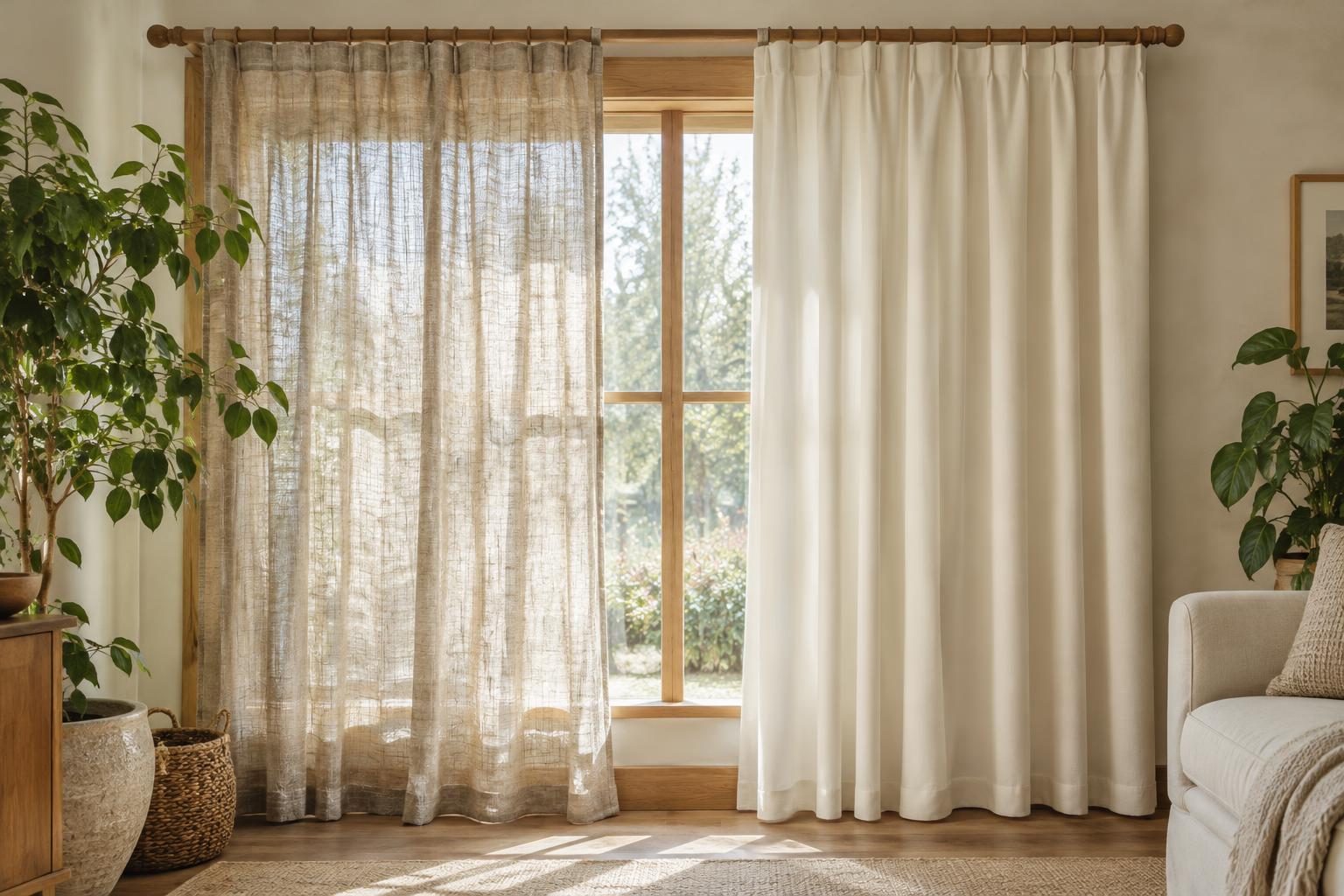
Linen curtains often fall in loose folds that suit rooms with wood, stone, baskets and other natural textures. Creases are part of that informal look, and the fabric may soften further with use and washing. If you want evenly pressed folds, linen can take more upkeep than its effortless appearance suggests.
Cotton gives you more options for a structured look. A lightweight cotton voile can hang softly, while a heavier cotton twill or canvas may form firmer folds. A tightly woven cotton panel may also look smoother than an open-weave linen one. For either fiber, a full-length panel with enough width to gather will generally look more generous than a narrow panel pulled nearly flat.
Before buying, hold a sample upright rather than judging it only on a table. Let it fold over your hand and notice whether it springs out, collapses softly or holds a crease. If you are ordering ready-made curtains, check both the panel dimensions and the recommended fullness for your curtain track or rod.
Judge light filtering and privacy together
Fiber type alone does not determine how much daylight comes through. An open-weave linen can create a soft glow while leaving shapes visible from outside. A thin cotton can do much the same. Denser weaves, heavier fabric and linings usually reduce light more effectively, though results depend on the particular curtain and window.
For a bright room where you mainly want to temper glare, consider an unlined fabric and test a sample against the window during the day. For a street-facing room, check it again after dark with the interior lights on; daytime privacy can be misleading. If privacy or room darkening is essential, look at lined or blackout-backed options rather than assuming a natural fiber will do the job on its own.
A lining can also change the way a curtain hangs. It may add body and help a light face fabric form steadier folds, but it can make the panel less airy. Allow for gaps around the edges, too: even an opaque curtain may let light in at the sides or above the rod.
Plan for washing, wrinkles and wear
Check the care label for the finished curtain, not just the fiber content. Some linen and cotton panels are machine washable; others call for gentler cleaning because of their lining, trim or finish. Both fibers can shrink, especially if they have not been prewashed, so avoid cutting or hemming fabric before following its intended laundering method.
Linen tends to wrinkle visibly, which may be an advantage if you like an easy, lived-in room. Cotton wrinkles too, although its appearance varies considerably by weave and finish. If crisp panels matter to you, consider how often you would realistically wash, steam or press them. Hanging curtains while slightly damp may help some washable fabrics settle, but follow the label and avoid letting heavy wet panels strain the hardware.
Sunlight can affect the color and condition of curtains over time, particularly at a window with strong direct exposure. A lining or shade may help protect the face fabric. For everyday maintenance, occasional gentle vacuuming or shaking can remove dust between washes. Keep long panels clear of damp floors and frequently opened doors.
Make the choice room by room
Choose linen when you welcome visible texture, soft folds and a little creasing. It can be a good match for a relaxed living room or dining space where filtered daylight is part of the appeal. Choose cotton when you want a particular finish, from a breezy sheer to a more tailored, substantial panel, and can find a weave that meets your practical needs.
You do not have to make the same choice throughout the house. A lined cotton curtain might suit a bedroom, while unlined linen softens a daytime sitting area. If you are undecided, compare samples at the actual window against your walls and flooring. Watch how they look in morning and evening light, then check the care instructions. The best curtain is the one whose appearance and upkeep both feel comfortable in your home.