Start with the difference you can see and feel
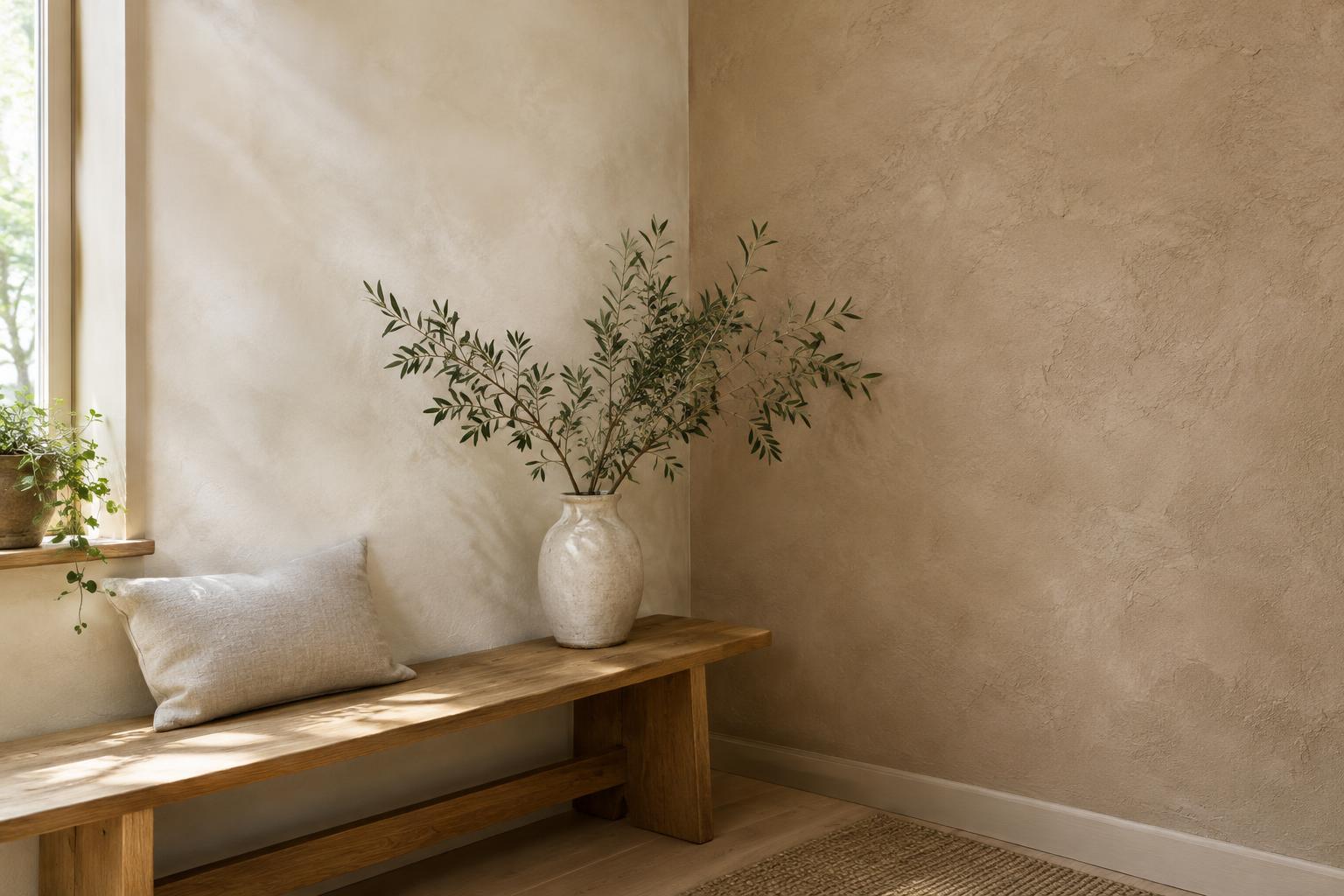
Limewash is a thin, mineral-based coating traditionally made with lime and water. It is brushed onto a wall in overlapping strokes, creating a soft, slightly cloudy appearance as it dries. The wall beneath remains largely responsible for its shape and texture. If you want gentle color variation without substantially changing the surface, limewash may be the closer match.
Clay plaster is a wall coating applied in a thicker layer, usually with a trowel. It can create a smooth, subtly mottled finish or a more visibly textured one, depending on the product and application. It is a way to give a wall both color and a tactile surface. Neither finish is perfectly uniform, which is part of its appeal: shifts in tone and hand-applied marks give a room depth without a bold pattern.
Let the existing wall guide the choice
Before falling for a sample color, find out what is already on your wall. Traditional limewash bonds best with suitable porous mineral surfaces. A previously painted wall may need a compatible primer or a limewash-style product formulated for that surface; brushing traditional limewash straight over ordinary paint may not give a reliable result. Follow the finish maker’s instructions rather than assuming that every product labeled limewash works the same way.
Clay plaster also needs an appropriate base. Depending on the wall and product, preparation may involve cleaning, repairing loose areas and applying a specified primer or base coat. A textured plaster will not necessarily hide every problem underneath: movement cracks, dampness and failing paint should be addressed before finishing. If you are unsure what a wall is made of, test a small area or ask an experienced installer to assess it.
Think about daily contact, not just appearance
Picture how the room is used. A quiet bedroom wall or an accent wall behind a sofa is less likely to be bumped, splashed or scrubbed than a hallway or the wall beside a dining table. Many limewash finishes can mark when rubbed or splashed, and repairs may remain visible because the original brushwork and color variation are difficult to repeat exactly. Clay plaster can also scuff or chip, particularly at exposed corners. Its texture may make spot cleaning less straightforward than wiping conventional paint.
Neither material should be treated as automatically suitable for a shower enclosure, a regularly splashed backsplash or a wall with an unresolved moisture problem. Some systems include protective coatings, but those can change the appearance and care requirements. Product guidance matters here. Both finishes are often chosen for their mineral or earth-based ingredients, yet ingredients and additives vary by manufacturer, so check the specific product if its composition is important to you.
Compare the work involved
Limewash is commonly applied in several thin coats with a brush. The strokes are visible in the result, so a small test area helps you find a rhythm you like. As the coating dries, its color and variation can change noticeably; judge a sample only after it has dried according to the product instructions. Protect floors, trim and nearby furniture, and check the handling guidance for the product you choose.
Clay plaster involves mixing or preparing material, spreading it evenly and working the surface before it sets. Keeping a consistent finish across a large wall takes practice, and the extra thickness makes preparation around edges, outlets and corners more noticeable. Material quantities, required primers and labor can differ substantially between products. Rather than assuming one option will cost less, price the complete system for your wall and decide whether you want to do the application yourself or hire help.
Make a sample that answers your real questions
Choose the room first, then compare samples in its actual light. A pale finish may look warm beside timber and linen but cooler next to a white ceiling; a deeper shade may show its brushwork or trowel marks more strongly. If possible, make a generous sample on the intended wall or on a prepared board that matches its surface. Look at it beside your furniture during both bright and low light, and touch it to decide whether the texture feels right.
For a subtle shift in color on a sound, compatible wall, start by exploring limewash. For a more tactile finish that reshapes the wall’s surface, look at clay plaster. If the room sees frequent knocks or needs regular scrubbing, compare both with a more washable conventional finish before committing. The best choice is not simply the most natural-looking sample; it is the one whose preparation, character and upkeep fit the way you live in the room.