Start with how the room is used
A natural-fiber rug can soften a room without hiding the floor beneath it. Jute and sisal both offer earthy color and visible texture, but they are not interchangeable. The best choice depends less on which one looks better in a photograph and more on what happens on that floor each day. Is it a path between rooms? A place to sit on the floor? Somewhere drinks are carried? Those questions will narrow the choice quickly.
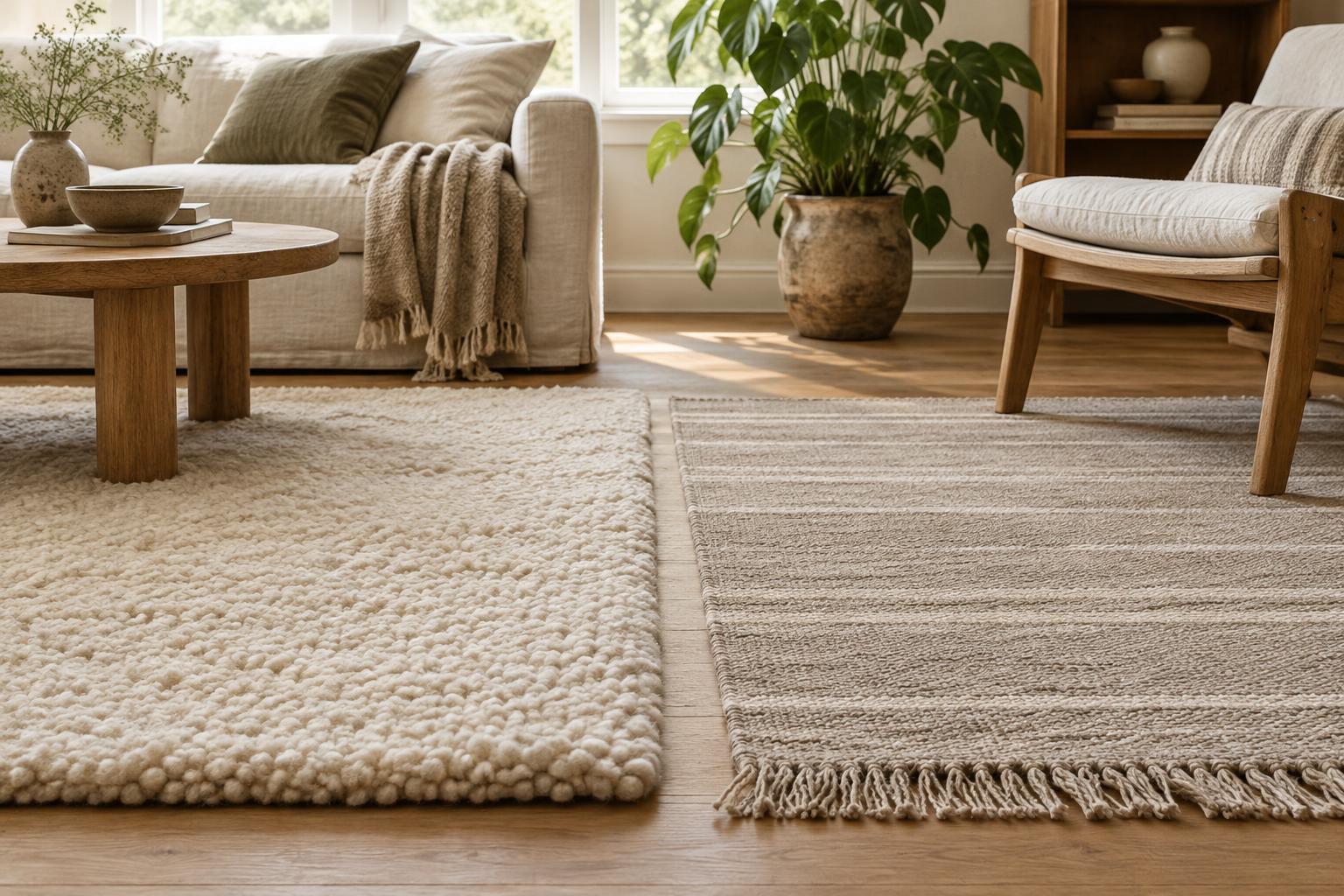
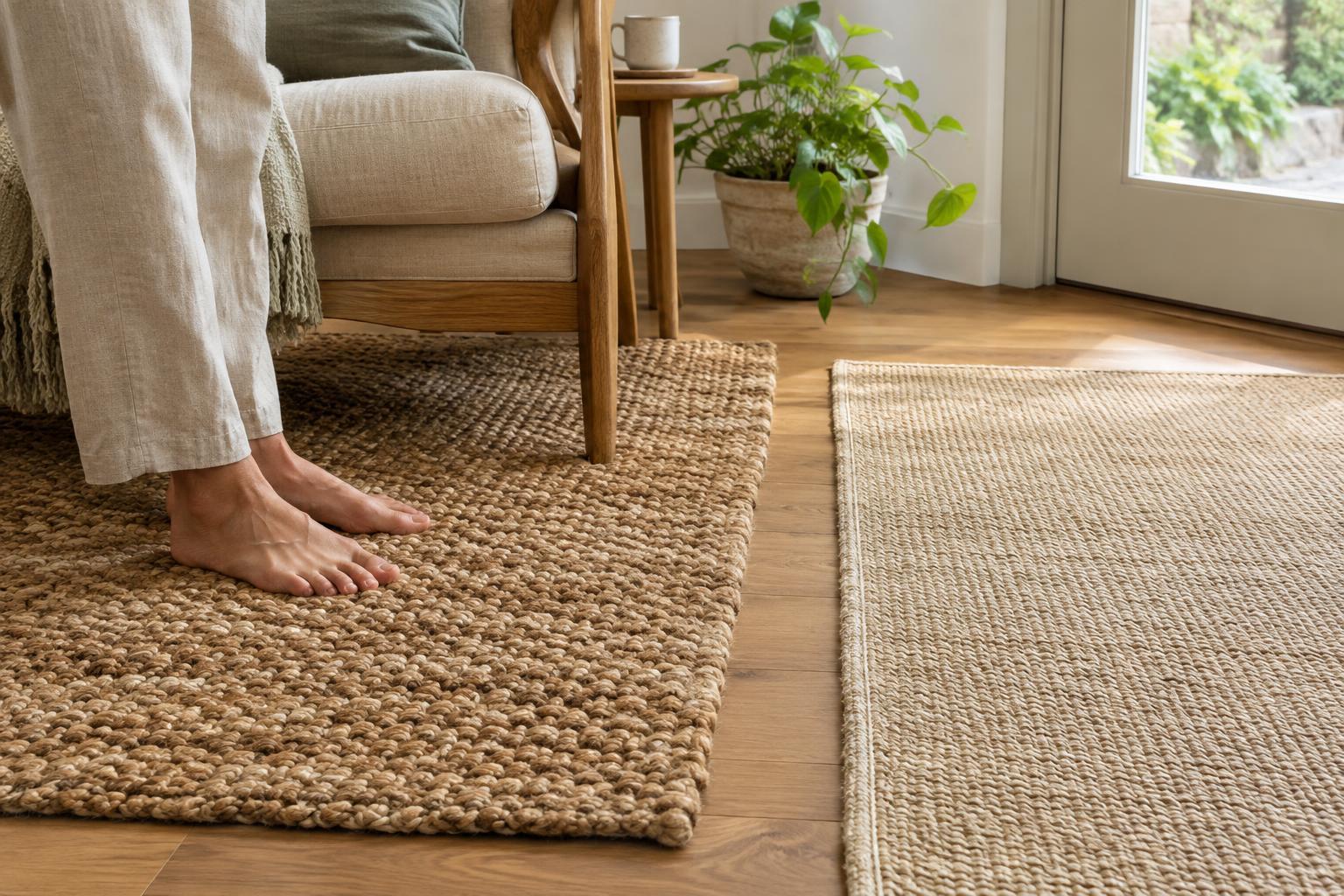
Jute generally has a softer, more relaxed feel. Sisal is typically firmer, with a tighter, more structured surface. Construction matters too: a chunky jute weave will behave differently from a flat one, and a sisal rug with a soft backing or blended fibers may feel different from a plain sisal weave. If possible, handle a sample before committing to a large rug.
For foot traffic, favor structure and placement
Sisal is often the more practical choice for a frequently used living-room route or home office because its firm fibers tend to hold up well to regular walking. Its crisp texture also gives a room a neat, tailored look. Jute suits calmer areas, such as beside a bed or under a coffee table, where fewer feet cross the same spot all day. In a busy walkway, a loose jute weave may show wear or shed fibers sooner.
Look beyond the fiber name when comparing rugs. A dense, even weave can be easier to live with than a loose, heavily textured one. Check the rug’s thickness against doors that swing over it, and consider how chair legs will move across its surface. A suitable rug pad can help keep either rug steady and reduce bunching; choose one intended for your floor finish and the rug’s backing.
Neither rug is ideal for every hard-working spot. At a muddy entrance, or anywhere shoes regularly bring in rain, a washable or moisture-tolerant mat may be easier to manage. You can still bring jute or sisal into a drier part of the home.
For spills, plan for quick cleanup
Both jute and sisal are plant fibers that can absorb liquid. Spills left to soak in may leave marks, and too much water during cleaning can cause discoloration or changes in texture. That makes either one a cautious choice beneath a dining table used by young children or beside a spot where drinks are often set on the floor. A rug advertised as treated or stain-resistant may offer different care options, so follow its specific instructions rather than assuming it can be washed.
For a fresh spill, blot promptly with a clean, dry cloth instead of rubbing it farther into the weave. Remove any solids gently, then consult the maker’s care guidance before using a cleaner. Avoid saturating the rug, and allow any damp area to dry thoroughly. If a stain persists, a rug-cleaning professional familiar with natural fibers may be a better option than repeated home treatments.
For bare feet, texture is the deciding factor
If you walk barefoot at home, jute will often feel more welcoming. Its fibers tend to have a softer touch, making it a good candidate for a bedroom or a quiet reading area. Sisal has a more pronounced, sometimes scratchy texture. Some people enjoy that firm feel; others would rather not step onto it first thing in the morning. The thickness and weave of a particular rug can make a noticeable difference, so a small sample is more useful than a fiber label alone.
Think about how you use the rug, not just how you cross it. A living room where people stretch out, play games or sit on the floor may call for softer jute or a different floor covering altogether. If you like sisal’s orderly look but want a gentler place to land, put it where you usually wear slippers, or use a softer rug in the part of the room where people settle.
Make the choice easier to live with
Before buying, mark the proposed rug size on the floor with painter’s tape. Walk the route, open nearby doors and check whether furniture legs will sit securely. In a seating area, a rug that reaches under the main furniture can feel more settled than a small one floating between pieces. Leave enough exposed floor around the edges to make the arrangement feel intentional.
For routine care, vacuum regularly using the setting recommended for the rug; an aggressive rotating brush may catch a textured weave. Rotate the rug occasionally if one side gets more sun or foot traffic, and check underneath for trapped dirt. Choose jute when softness and a casual look matter most in a relatively quiet, dry room. Choose sisal when you want a firmer surface for regular use and do not mind a rougher feel. If spills or wet shoes are part of daily life, let ease of cleaning take priority over either natural fiber.