Check the pot before you reach for the watering can
Outdoor containers need closer attention than garden beds because their limited soil can dry quickly. But a dry-looking surface does not always mean the roots need water. Push a finger a few centimetres into the potting mix, away from the stem. If it feels damp below the surface, check again later. If it feels dry at that depth, the pot may be ready for a drink. For a deep container, check a little farther down as well.
Get to know the weight of smaller pots by lifting them when freshly watered and again when the mix is dry. A noticeably lighter pot is a useful clue, especially when the top is covered with mulch. Leaves can offer hints, but wilting is not a reliable test on its own: a plant may droop in strong afternoon sun even when its roots have moisture. Use the soil and the pot’s weight to guide your decision.
Water slowly enough to reach the roots
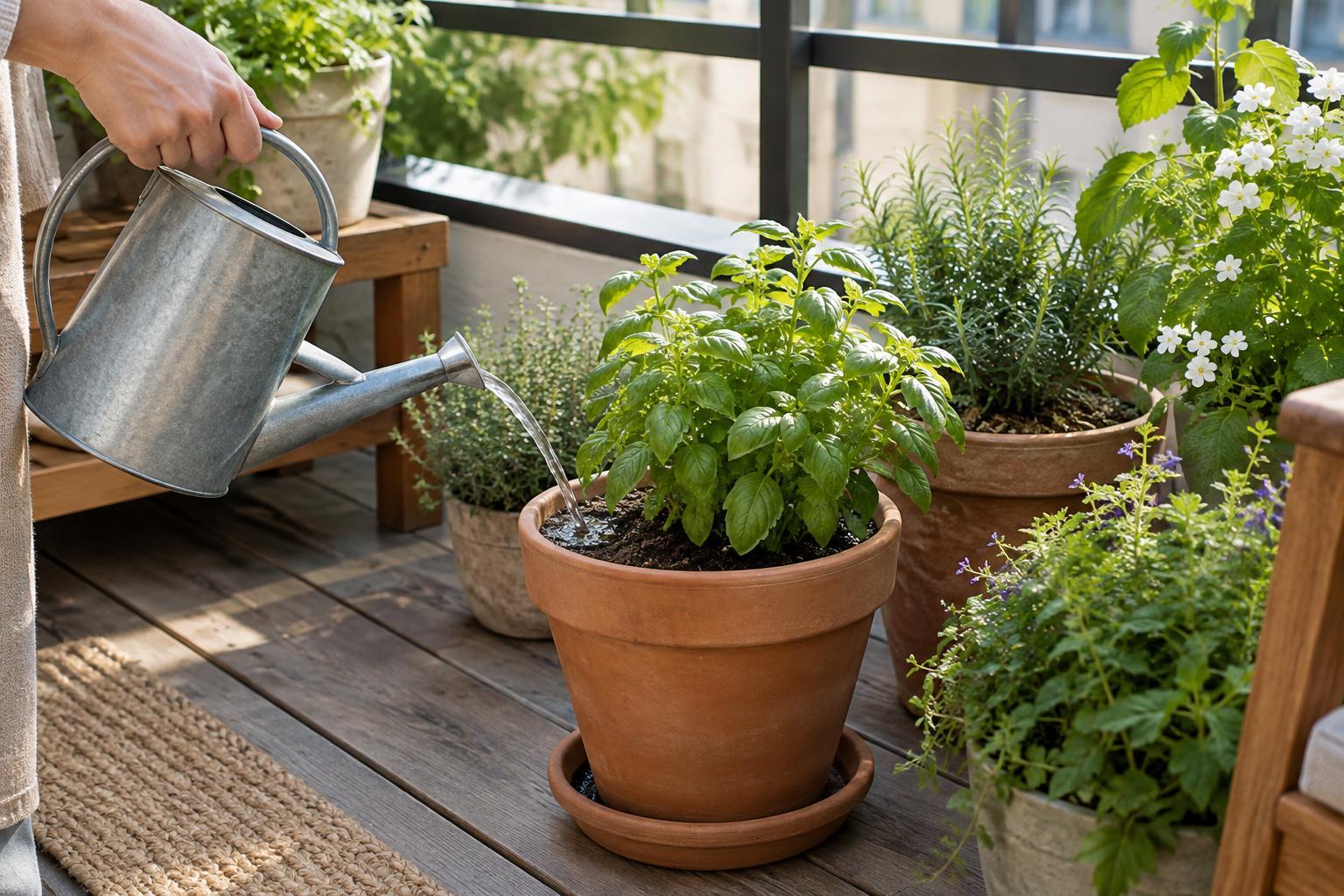
When a container needs water, apply it slowly across the whole soil surface rather than pouring a little beside the stem. Continue until water begins to leave the drainage holes. This helps moisten more of the root zone instead of wetting only the top layer. If water rushes straight through a very dry pot, pause for a few minutes and water again; dry mix can initially resist absorbing water.
Let the excess drain away. A saucer can protect a balcony floor or patio, but empty it after watering so the pot is not left standing in water for long periods. Make sure every outdoor container has an open drainage route. If a decorative pot has no hole, use it as a cover for a smaller, draining pot and remove the inner pot when you water.
Match your routine to the container
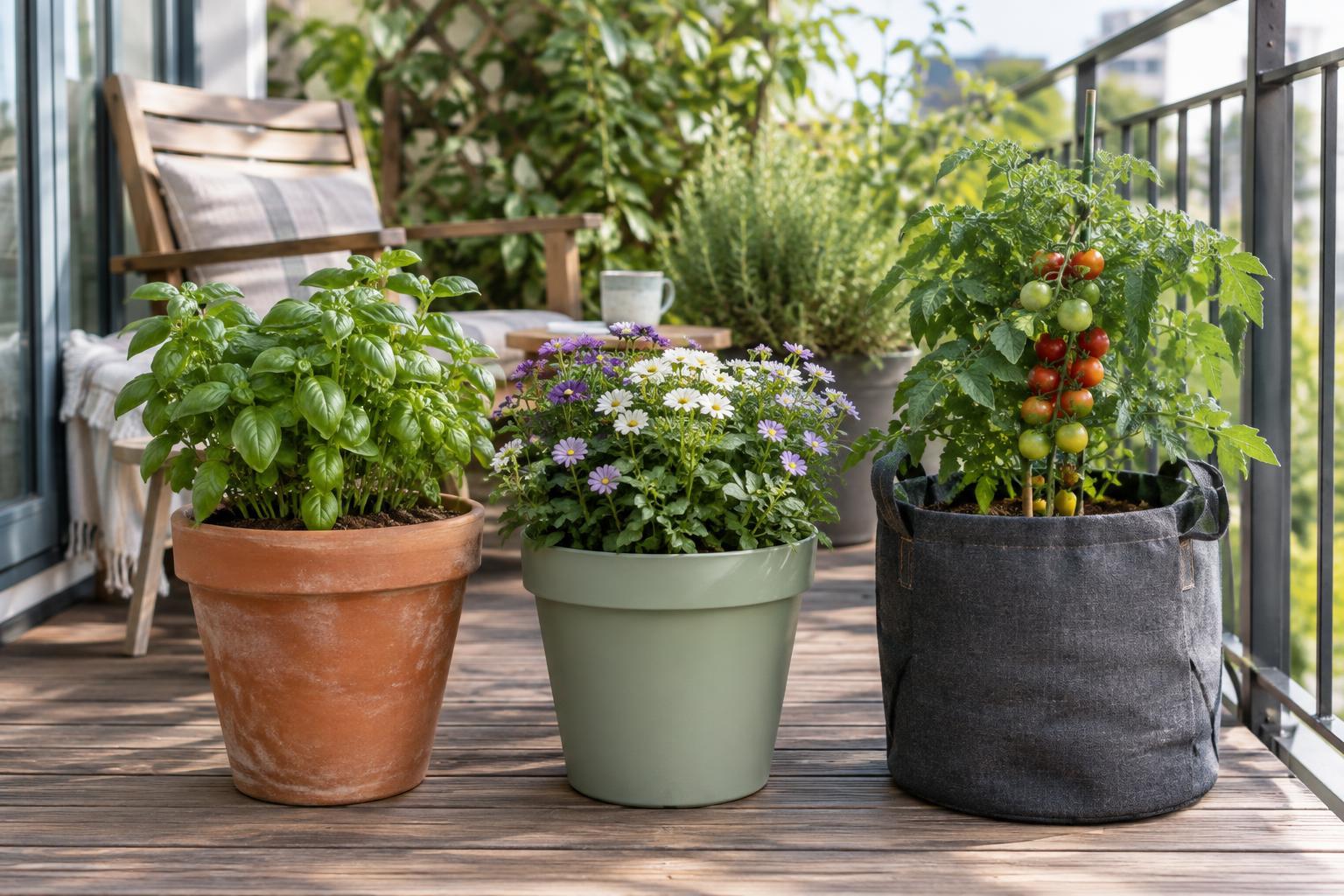
There is no single schedule that works for every pot. Small containers, porous terracotta, exposed balconies, and crowded root systems may dry faster than large pots in sheltered spots. Wind can increase drying even when the air does not feel especially hot. Rain may water an open container well, but leaves, walls, or an overhang can keep much of it out. Check the mix after rain rather than assuming every pot received enough.
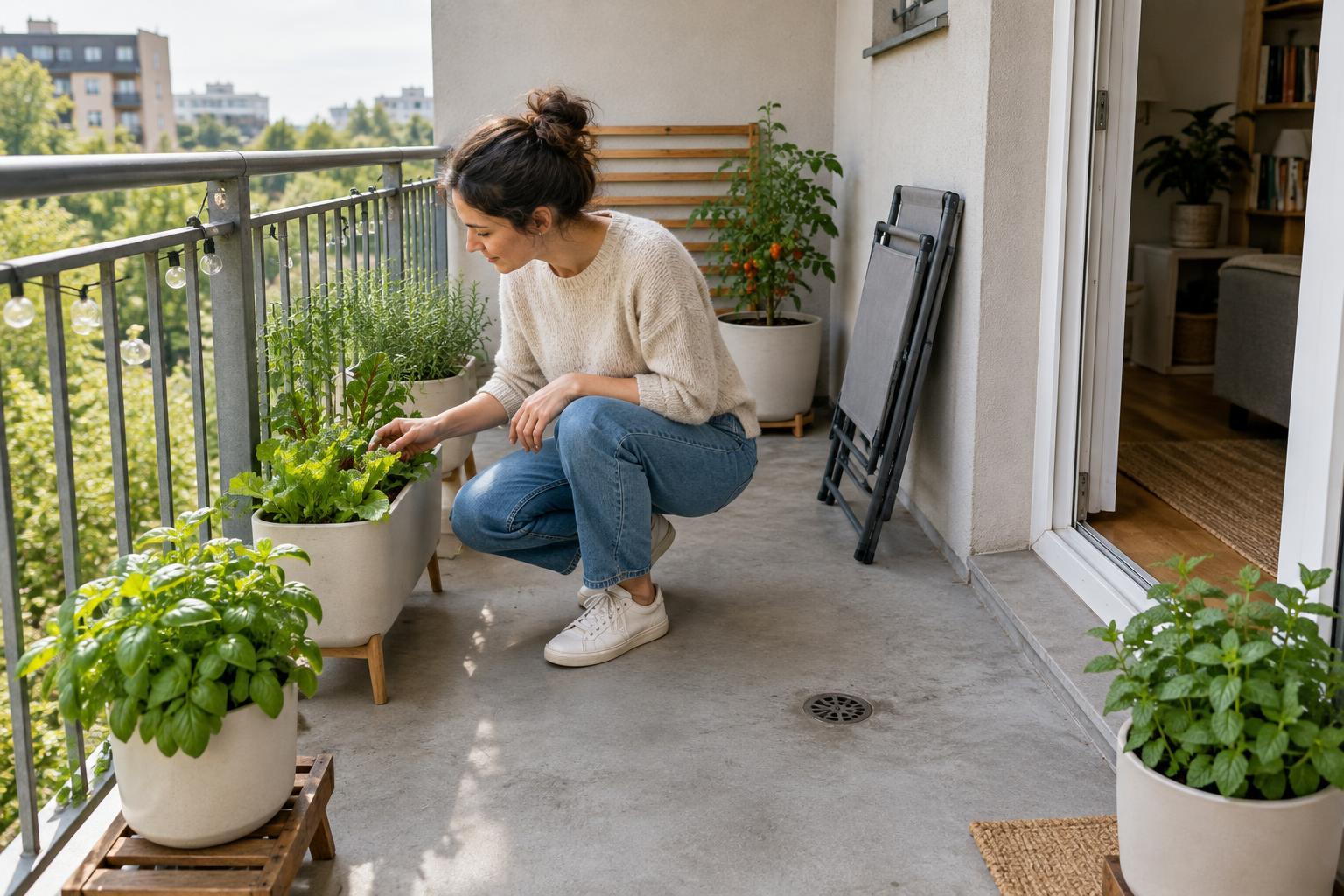
Plants matter too. Herbs that prefer a drier mix may need a different routine from leafy vegetables or moisture-loving flowers. Group pots with similar needs where you can check them together, but test individual containers before watering. A quick daily check during warm or windy spells does not mean you must water daily; it simply helps you notice when conditions have changed.
Set up the pot to make watering easier
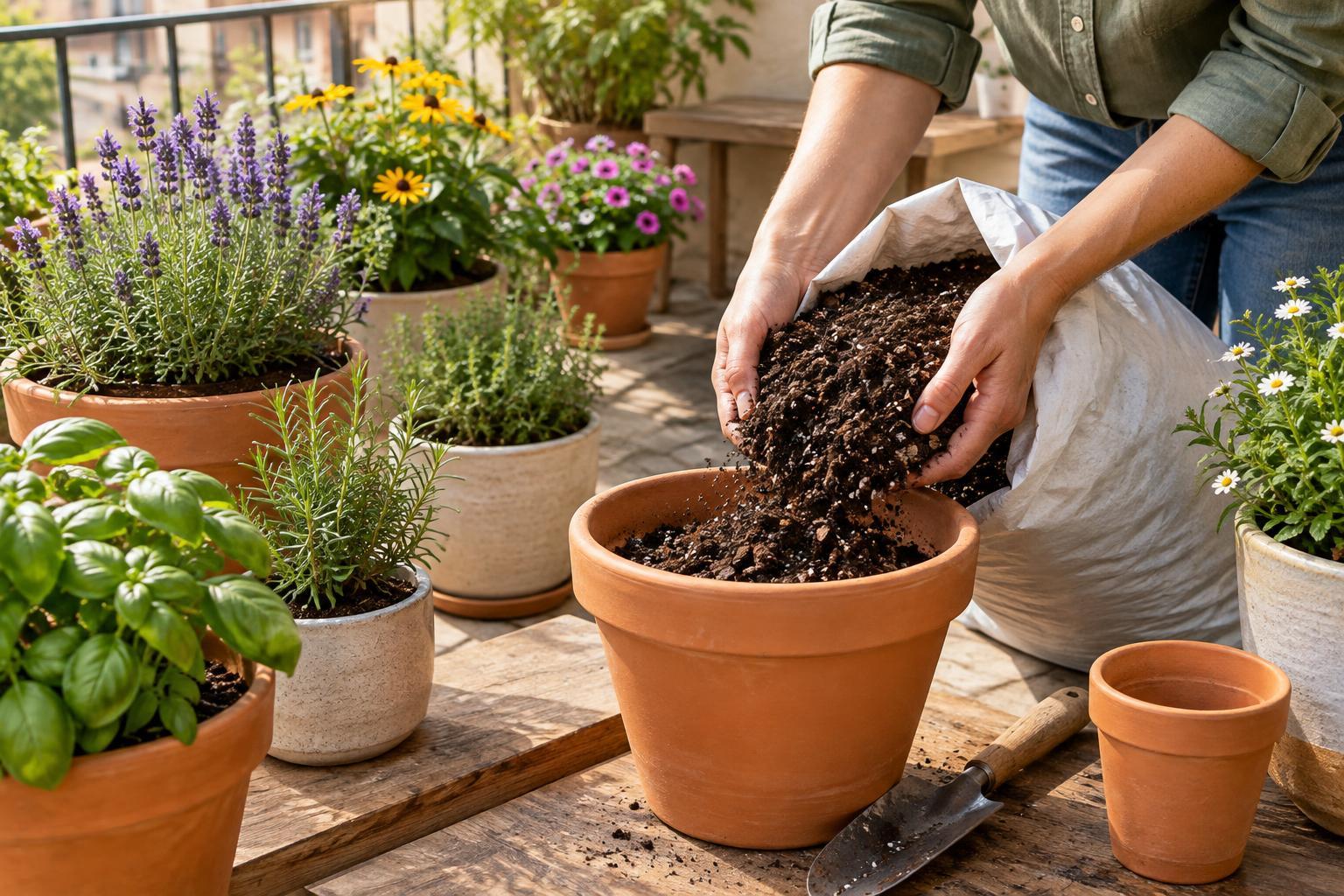
Use a potting mix intended for containers rather than dense garden soil, which can compact in a pot and make moisture harder to manage. Choose a container with enough room for the plant’s roots and clear drainage holes. A very small pot can be difficult to keep evenly moist, while an oversized pot of wet mix may take longer to dry around a small plant.
A thin layer of mulch on the surface can slow evaporation, particularly in sunny spots. Leave a little space around stems and keep checking beneath the mulch so it does not hide soggy soil. If one pot dries out much faster than its neighbours, consider moving it out of harsh afternoon sun, shielding it from wind, or repotting it into a slightly larger container when appropriate for the plant.
Adjust when the weather or plant changes
A morning check gives you time to water before the hottest part of the day, but a dry plant should not be left thirsty just because morning has passed. Water the soil rather than spraying the foliage when you can, and take another look after a spell of heat, wind, or heavy rain. As growth slows in cooler weather, pots often use water more slowly; keep testing instead of following a summer timetable.
If a pot stays wet for days, check whether its holes are blocked, water is collecting in a saucer, or the container is getting less sun than expected. If it dries out soon after a thorough watering, inspect the root space and the mix. Treat these observations as prompts to adjust your setup, not as reasons to add water automatically. The most dependable routine is a simple cycle: check, water thoroughly when needed, let the pot drain, and check again.