Start with the care label and a quick sort
Linen brings an easy, lived-in texture to a room, but it can shrink when heat and moisture are combined with washing or drying. Some textiles have been prewashed or preshrunk; others may change size during their first wash. Before cleaning a tablecloth, napkin, cushion cover or curtain, check its care label. A “dry clean only” instruction, decorative trim or a linen blend may call for different treatment from a plain, washable piece.
Sort washable linen by color and by weight. Dark or strongly colored pieces are best kept away from pale napkins, especially on early washes. A heavy tablecloth can twist delicate covers if the machine is crowded, so leave enough space for the fabric to move. Check pockets, close fasteners and turn embellished covers inside out. If a cover fits tightly over a cushion or a curtain hangs to an exact length, measure it before washing so you can notice any change while it is still damp.
Wash gently, without chasing a perfectly crisp finish
For machine-washable linen, a cool or lukewarm wash is a cautious starting point unless the label specifies otherwise. Choose a gentle cycle and a modest amount of mild detergent. Too much detergent can be difficult to rinse from dense fabric, while a heavily packed drum increases rubbing and creasing. Treat visible spots before washing rather than relying on a hotter cycle: blot a fresh spill, test any stain treatment on an inconspicuous area, and follow the product directions.
Hand washing can be useful for small, lightly soiled items that need a gentler approach. Swish the fabric in water with a little detergent, then rinse thoroughly. Avoid hard scrubbing or wringing, which can distort seams and leave stubborn creases. Whether washing by hand or machine, do not assume that a single method suits every linen textile. The fiber, weave, finish and construction all affect how a piece responds to water.
Make drying the priority for avoiding shrinkage
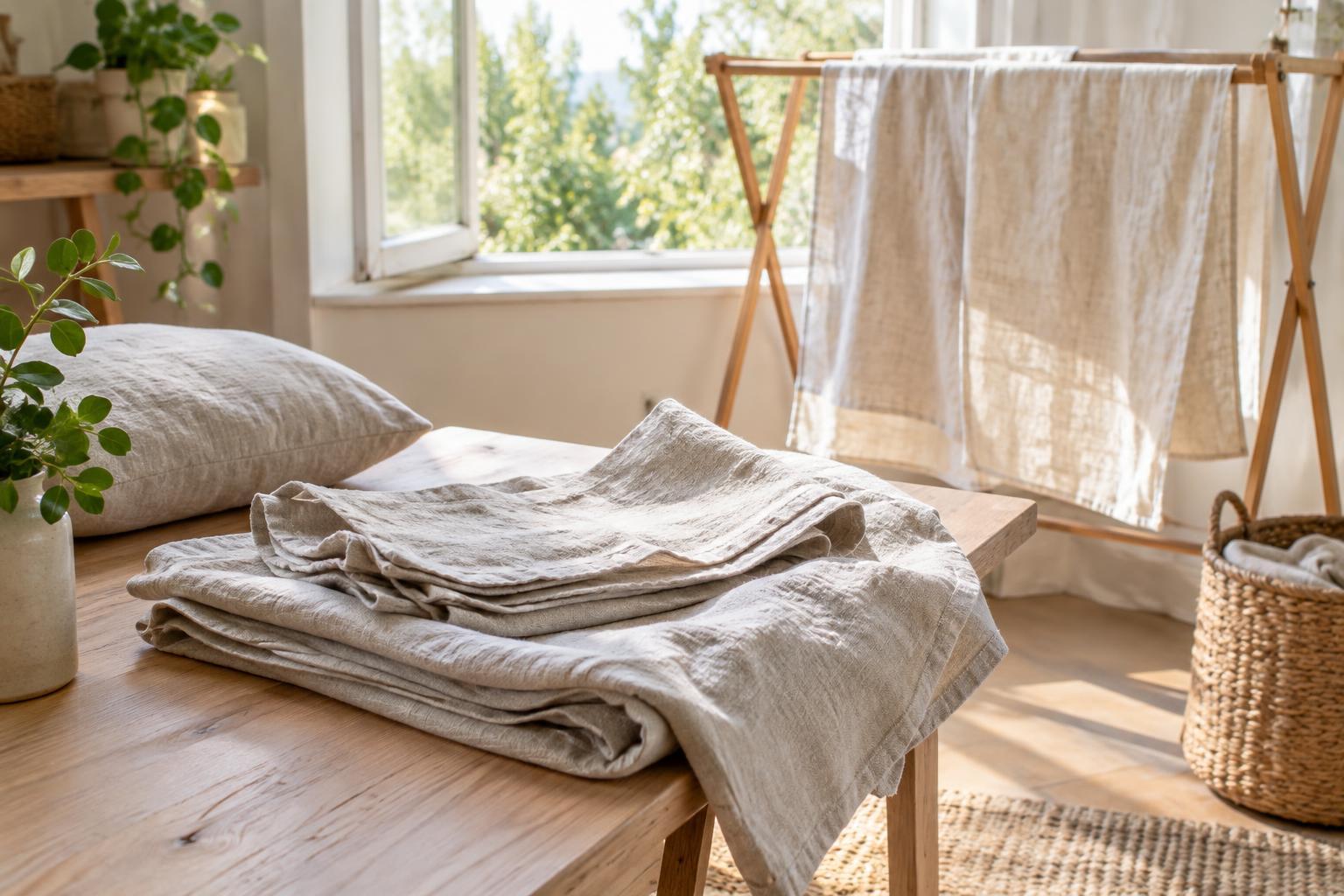
High dryer heat is an avoidable risk when you want linen to retain its size. After washing, remove pieces promptly, shake them out and smooth hems and corners with your hands. If the care label permits, air-dry them on a line or rack with room for air to circulate. Support large, wet textiles evenly rather than hanging all their weight from one narrow point, which may pull them out of shape.
If you use a tumble dryer, check the label first and choose a low-heat setting. Take linen out while it is still slightly damp, then smooth it and finish drying it in the air. Do not put damp pieces straight into storage. Air-drying is not a guarantee against shrinkage—some size change may occur in the wash, particularly with new linen—but avoiding excessive heat gives you more control over the result.
Smooth, press or leave the relaxed texture
Linen wrinkles readily, and that is part of its character. For a casual table or sofa, smoothing the fabric while damp may be all it needs. For a sharper finish, consult the care label before ironing and press while the textile is slightly damp. Work in sections without stretching edges or pulling seams. A pressing cloth can help protect details such as embroidery, while lined or blended items may require extra care.
Let pressed textiles cool and dry fully before folding them. If a washed cover feels a little snug, do not force it over its insert or pull hard on the seams. Gently reshape it while damp and let it dry flat; if it still does not fit, the change may be permanent. Measuring fitted pieces before laundering makes it easier to choose a cautious method next time.
Store linen clean, dry and loosely folded
Wash or otherwise clean linen before putting it away for a season, since residue from food, skin oils or spills can become harder to remove later. Make sure every layer is dry, including thick hems and corners. Fold pieces loosely and keep them in a clean, dry cupboard away from direct sunlight. A breathable cotton bag or a shelf lined with clean fabric can help protect rarely used items without sealing in moisture.
Avoid compressing a stack beneath heavy objects, and refold large tablecloths or curtains occasionally if they will be stored for a long time. Keep matching napkins and covers together so they are easy to find when needed. With a little space in the wash, a restrained approach to heat and dry storage, linen can stay practical and inviting for everyday rooms as well as special occasions.