Start with the furniture, not the rug
A rug works best when it gives the seating group a shared footprint. Before choosing a size, arrange the sofa and chairs where they make sense for conversation, views and movement through the room. Then look at the floor between them. The rug should connect the main seats rather than sit as a small island beneath the coffee table.
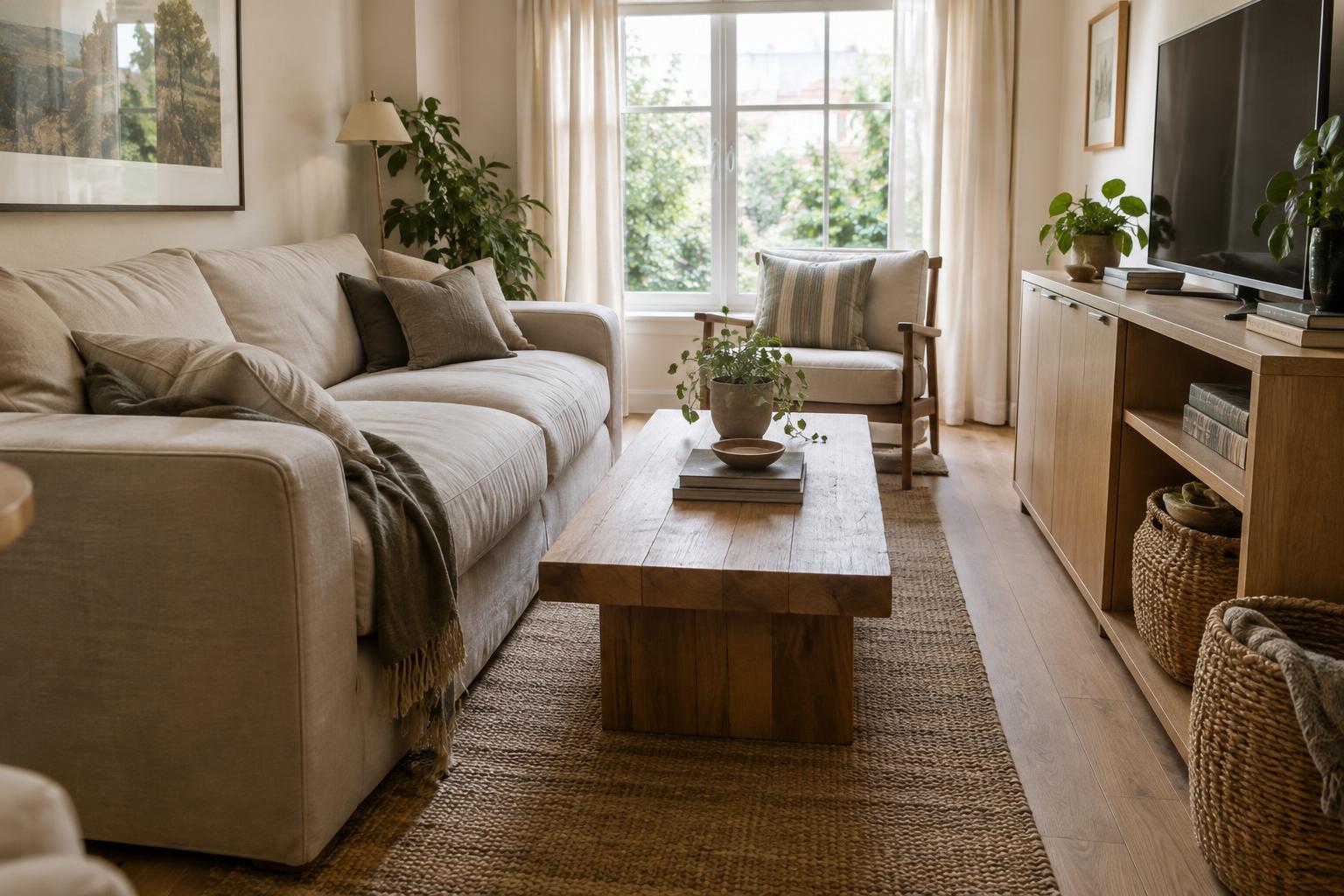
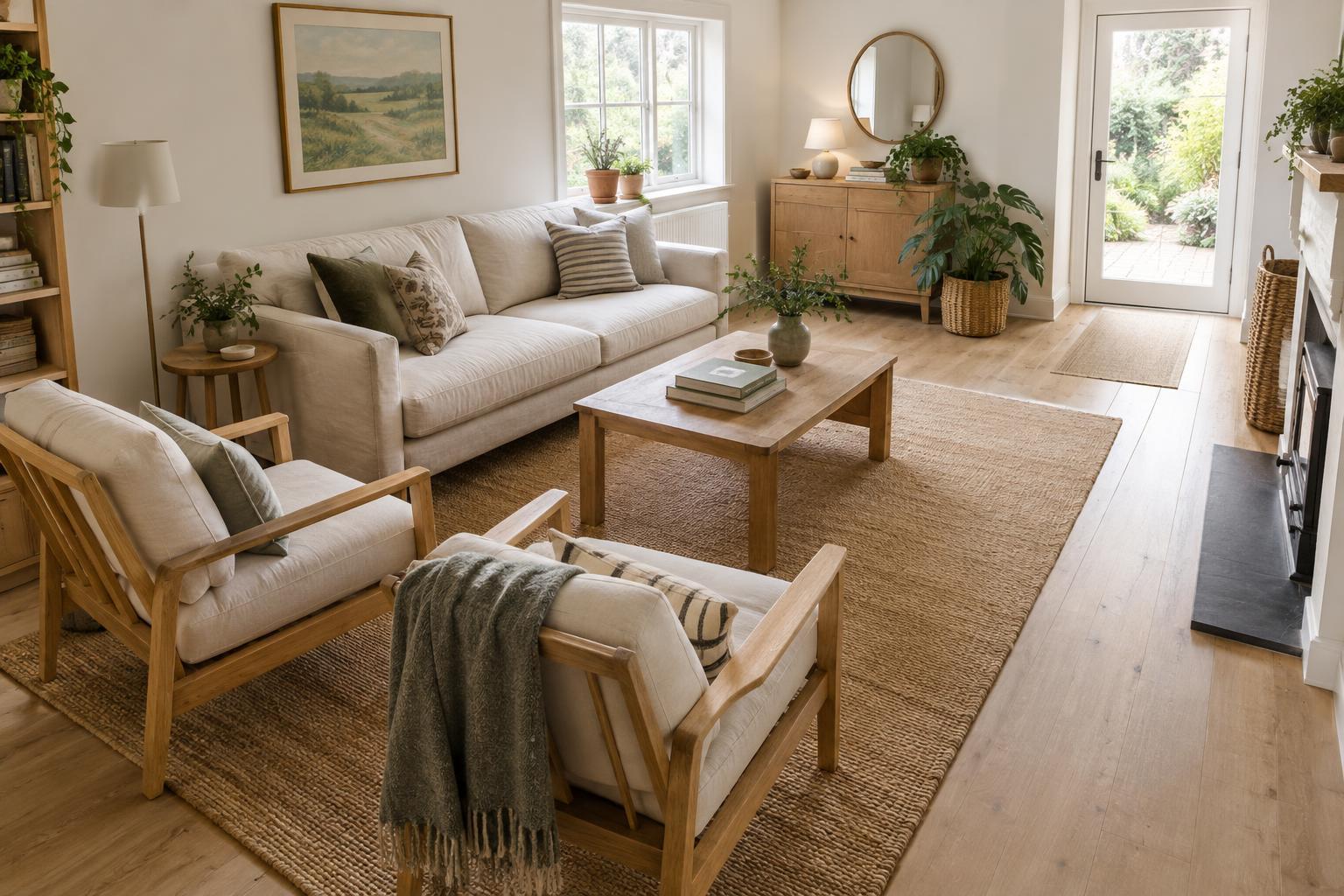
A useful starting point is to have at least the front legs of the sofa and nearby chairs rest on the rug. This creates an obvious relationship between the pieces without requiring a rug large enough to cover most of the room. If the furniture has slim legs, check the placement from the doorway too: a narrow strip of exposed floor between a chair and the rug can look accidental, even when it seemed fine up close.
Choose one clear rule for the rug’s edges
Awkward gaps often appear when each piece of furniture meets the rug differently. One chair may sit fully on it, another may stop just short, and the sofa may barely overlap an edge. Aim for a consistent arrangement instead. You can place the main seating entirely on a generous rug, set the front legs of each seat on it, or keep a smaller rug clearly centered in an open space. For most conversational seating groups, the front-legs approach is the easiest way to create a connected look.
Give the rug a little visible space beyond the sides of the sofa or outer chairs where the layout allows. If an edge ends exactly at a sofa arm, the rug can appear undersized. With a sectional, pay particular attention to the open side: extending the rug into that space helps balance the longer run of seating. A rug does not need to align with every wall, but its edges should look deliberate beside the furniture.
Protect the paths people actually use
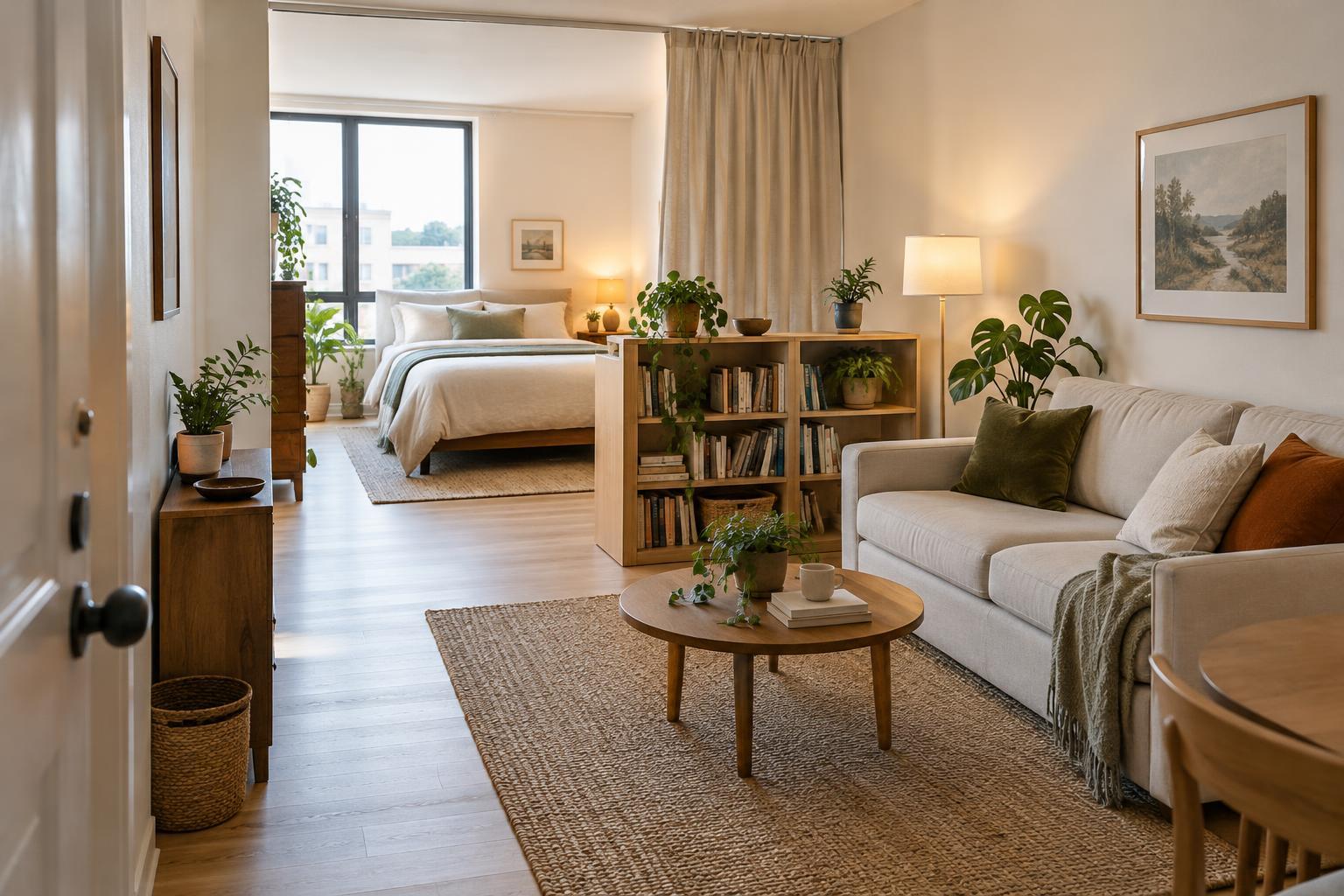
A seating area should feel defined without becoming an obstacle course. Walk the route from the doorway to each seat and to any nearby balcony, garden door or shelf. Avoid placing a rug edge where people repeatedly turn or pause, if a slight shift could move that edge out of the path. Make sure chairs can be reached comfortably without stepping around a coffee table or squeezing between furniture.
In a small room, it is tempting to push every piece against a wall to preserve floor space. Pulling a chair inward a little can sometimes make the group feel more coherent and leave a clearer route behind it. If there is not enough space for both a large rug and an easy walkway, prioritize circulation. A well-positioned smaller rug with two firmly connected seats will look more intentional than a larger one that crowds the room.
Test the size before committing
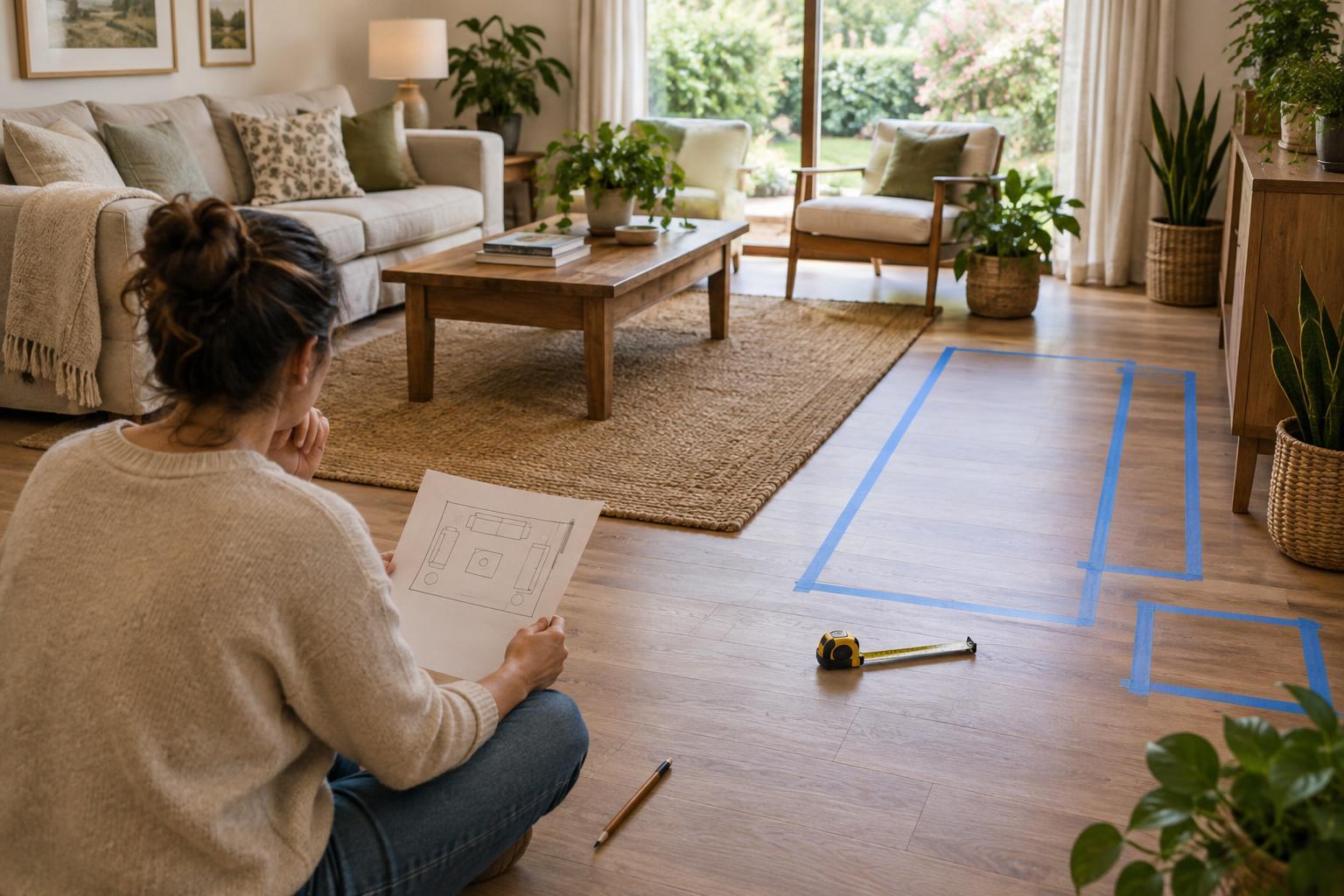
Use painter’s tape or sheets of paper to mark the likely rug corners on the floor. Sit down, stand up and walk around the outline. From each entrance, notice whether the proposed rug reaches the furniture or leaves thin, uneven bands of bare floor. This simple test is especially helpful when a product photograph makes a rug appear larger than it will in your room.
Check practical details at the same time. A coffee table should sit securely on the rug, with enough surface around it that the arrangement does not feel precarious. Consider whether doors will clear the rug and whether its thickness suits the room’s traffic. On a smooth floor, an appropriate rug pad can help keep the rug in place; check that the pad suits both the rug and the floor beneath it.
Let texture finish the zone
Once the placement works, texture can make the seating area feel welcoming. A flatweave may suit a busy route or a room where chairs move often, while a softer pile can add comfort to a quieter corner. Natural-looking fibers and earthy colors can sit comfortably alongside wood, linen and indoor greenery, but choose a rug you can care for in the way your household needs.
The final check is simple: the rug should make it easy to see which seats belong together, while leaving the rest of the room easy to navigate. If a gap catches your eye, try moving the furniture a few inches before replacing the rug. Small adjustments to the seating group often do more than adding another object to fill the space.