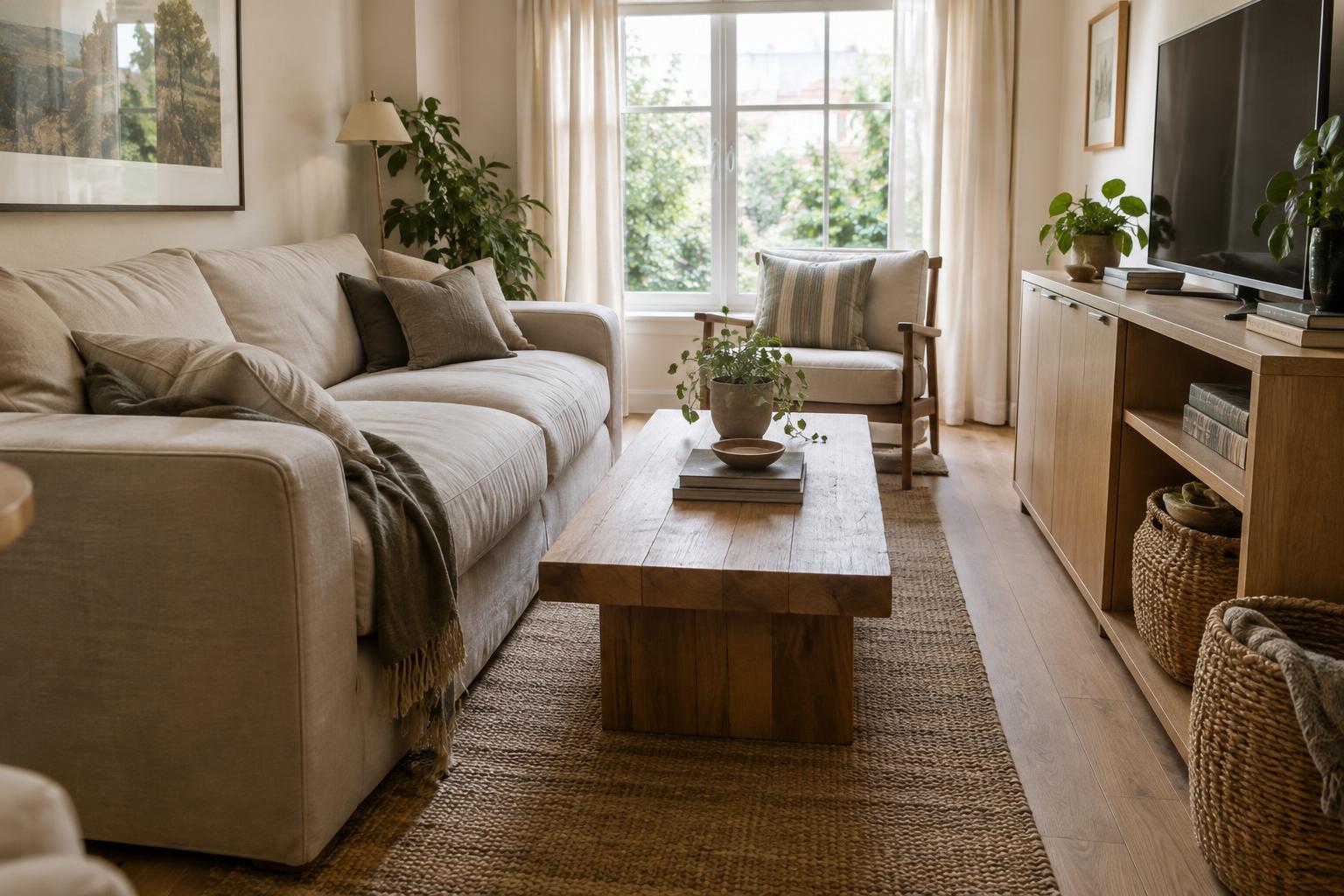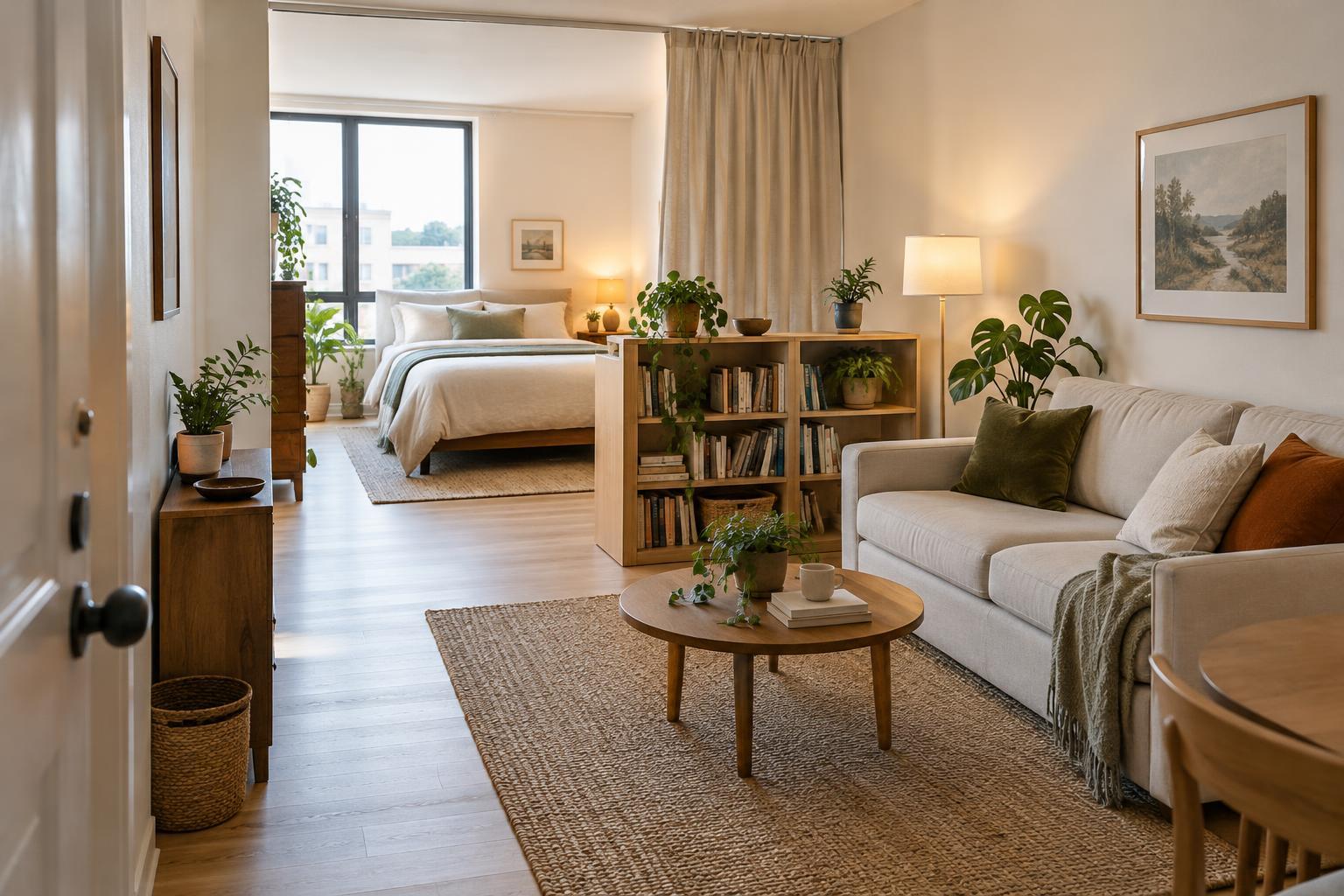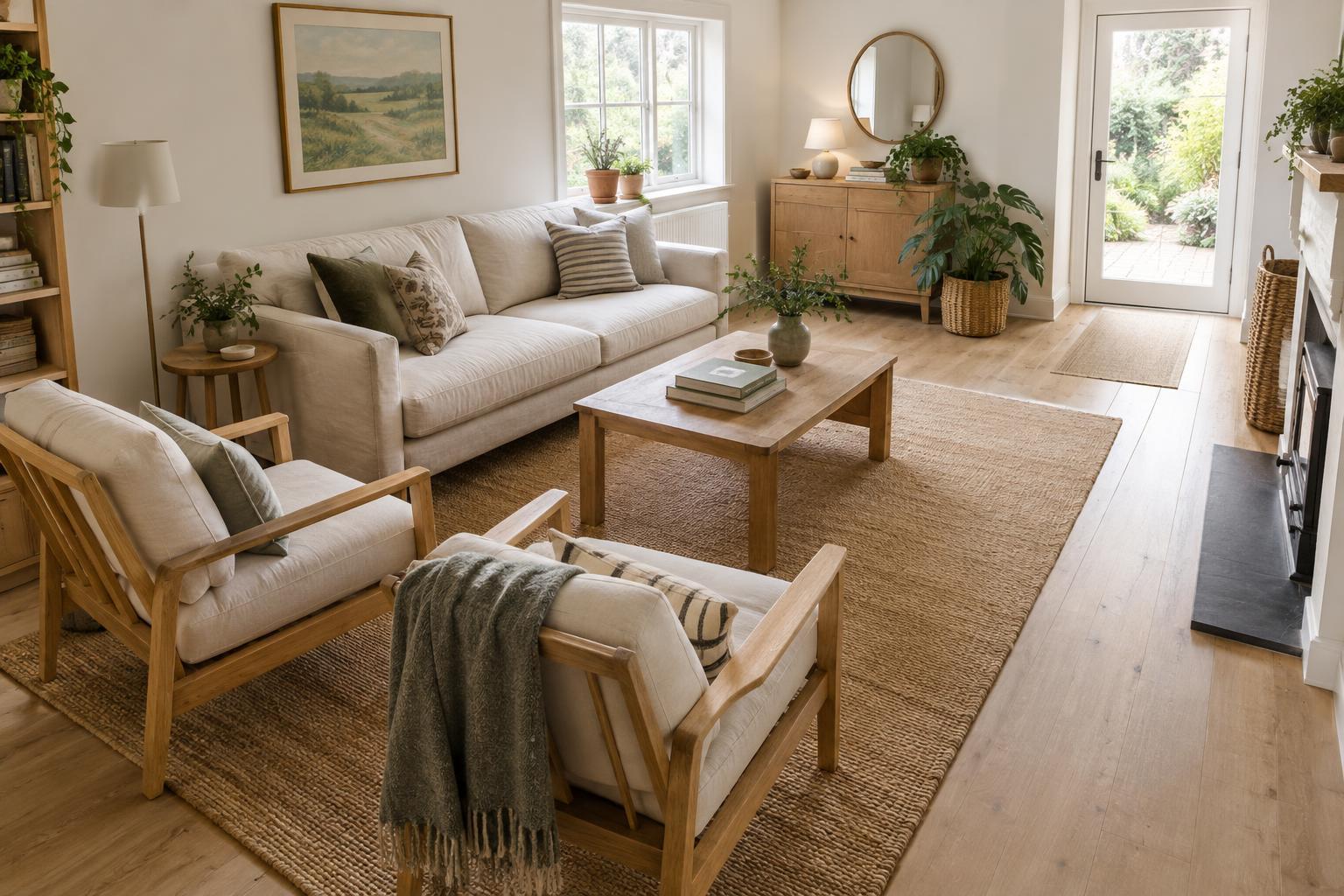
Start with what the room needs to do
Before deciding where the sofa should go, list the activities the room must support. You might need a place to read, a clear route to a balcony, room to pull out dining chairs or a spot for plants near a window. Note which parts of the current layout cause trouble: a tight corner, a blocked drawer or a seat that feels too far from a lamp. These observations give you a way to judge a new arrangement beyond whether it looks good on paper.
Choose one or two priorities. In a small living room, an easy path to the door may matter more than fitting in an extra side table. If you care for indoor plants there, think about where they can be reached for watering as well as where they will sit. Keep the first test simple by working with the furniture you already own rather than planning around pieces you might buy later.
Make a rough map and measure the fixed points
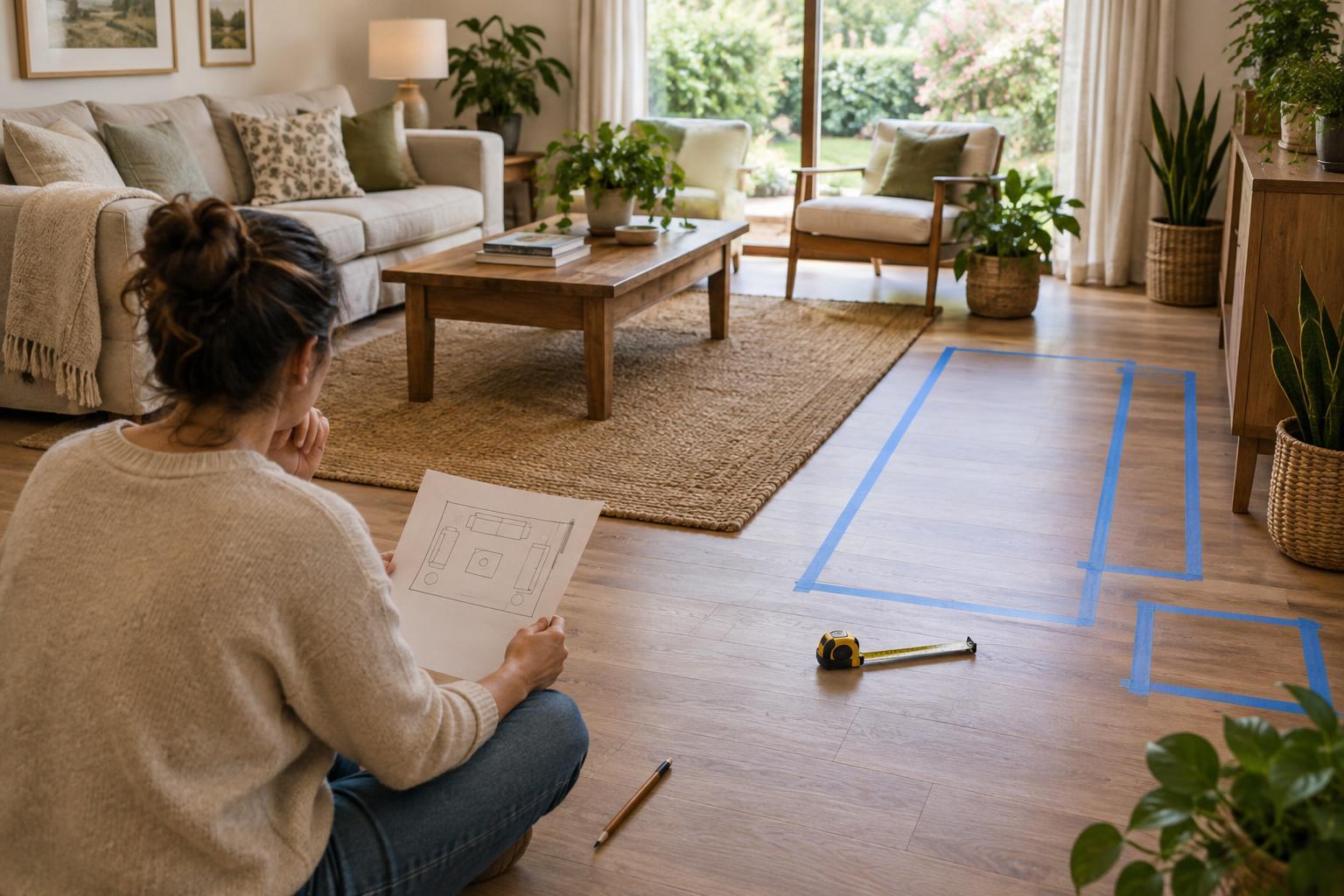
Sketch the room as a rectangle or a few connected shapes. Measure each wall, then mark doors, windows, built-ins, radiators and outlets. Include the direction in which doors swing and the space needed to open cabinets. Your drawing does not need to be beautiful; it only needs enough detail to reveal where furniture cannot go.
Measure the width and depth of each large piece you might move. Include parts that extend beyond its main frame, such as a chair’s arms or a desk’s legs. For furniture you use while seated, consider the space it takes up in use: a dining chair pulled back from the table needs more room than one tucked underneath it. Write the measurements on your sketch so you can compare arrangements without repeatedly reaching for the tape measure.
Try a few layouts on paper first
Cut simple paper rectangles for your sofa, table, shelves and other large pieces. If you draw the room and furniture to the same scale, you can slide the cutouts around without guessing at every gap. Graph paper can help, but a basic drawing with measurements is enough to rule out ideas that clearly will not fit.
Test two or three distinct arrangements rather than making tiny changes to one. Perhaps one puts seating near the window, another opens up the center of the room, and a third makes a conversation area around a rug. Trace a route from each entrance to the places you use most often. Look for pinch points, blocked door swings and furniture that would make a window or storage area hard to reach. You can discard an option at this stage without lifting a thing.
Mark the promising layout on the floor
A paper plan shows whether pieces fit, but floor markers make their footprint easier to feel. Use painter’s tape on a suitable floor surface, or place removable objects at the corners of each proposed piece. Check any tape in an inconspicuous spot first and remove it promptly if it leaves a mark. Outline the largest item, then add the others. If you cannot mark the floor, lay down sheets of paper or use a rug edge as a reference.
Walk through the room as you normally would. Carry a laundry basket, open the door, pull out a chair and reach a shelf. Try the route at different points in the day if the room serves several purposes. Leave room to stand beside plant pots for watering and to move curtains or blinds. A layout that technically fits may still feel awkward when you act out these small, repeated tasks.
Check comfort before you commit
Stand or sit where the proposed furniture would be and look around. Would the main seat have a useful lamp nearby? Could you see the people you usually talk to? Would a tall shelf make the room feel crowded or cast shade over a plant? Consider cords and outlets, too: avoid creating a route that depends on cables crossing the floor. These checks help you catch problems that a measured footprint cannot show.
Once one arrangement passes the test, decide which pieces truly need to move. Clear small objects first and plan a safe route for the heavy ones. Get help with anything you cannot move comfortably, and use appropriate protection for the floor and furniture. You can then live with the new layout for a while before making finishing changes. The aim is not to find a perfect plan in one attempt, but to make the first move a well-informed one.