Start with the stone and its finish
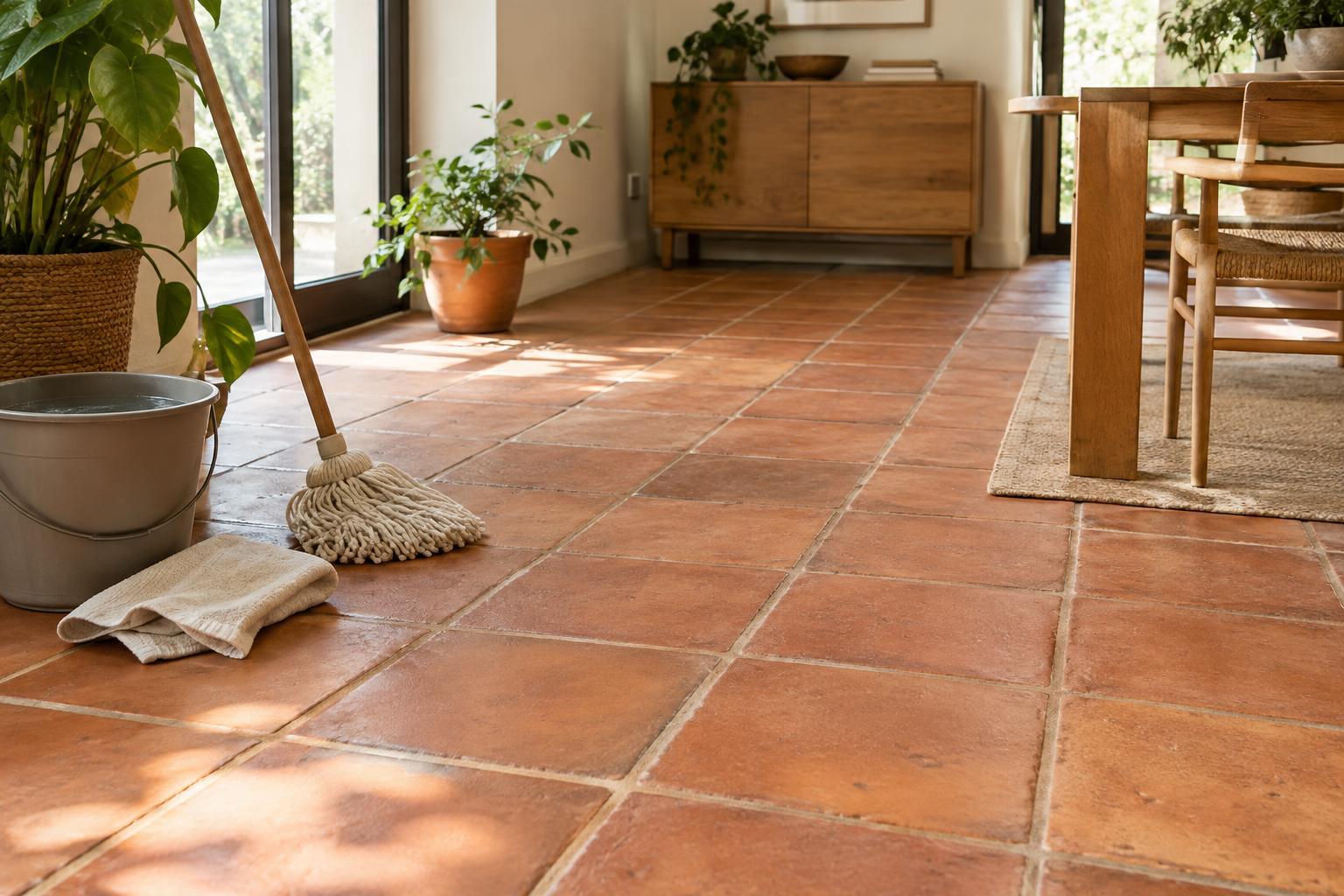
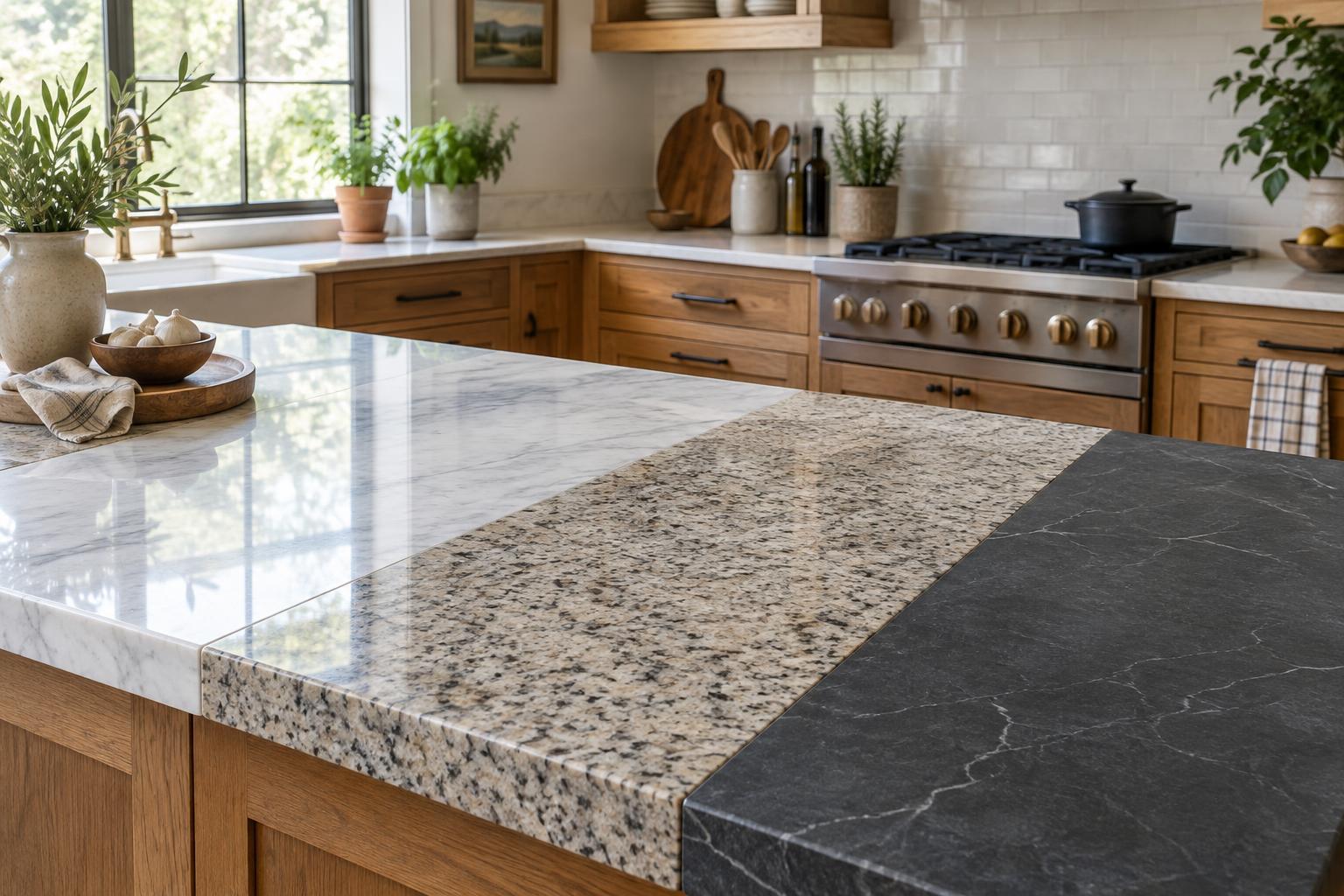
Natural stone brings texture and variation to a room, whether it is used for a kitchen counter, an entryway floor or a bathroom shelf. Those same variations make a fixed resealing schedule unreliable. Some stones absorb moisture readily; others are comparatively dense. A honed or textured finish may behave differently from a polished one, even when the stone has the same name. How often the surface gets wet, cleaned or handled matters too.
First, find out what you can about the surface you have. If you know the stone and the sealer used, keep that information handy. A newly installed surface may already have been sealed, while another may have a topical coating rather than a penetrating sealer. If you are unsure, avoid applying a product just because it is labeled for stone. The right decision begins with observing what the surface actually does.
Look for a change in everyday behavior
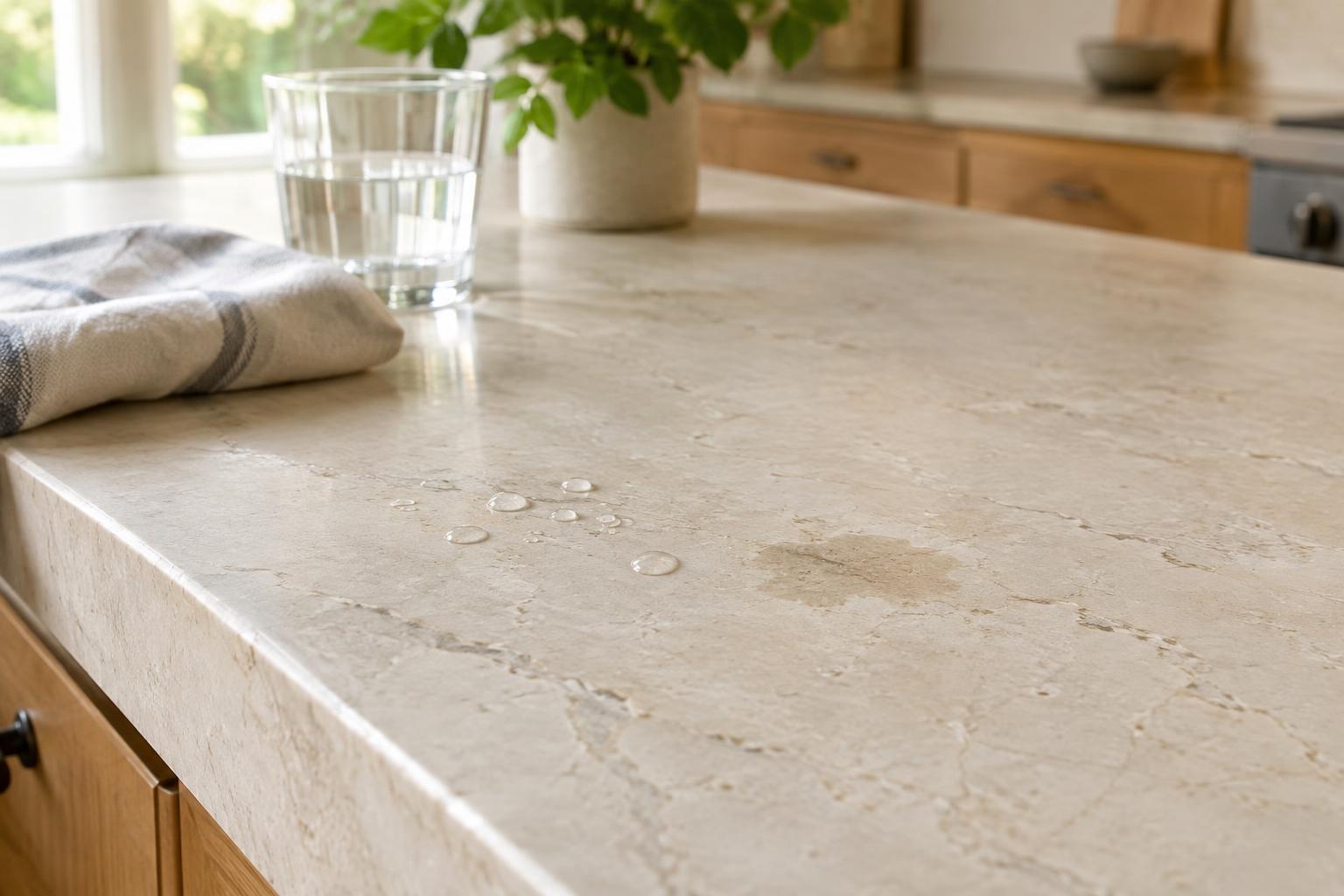
A useful clue is water that begins to darken the stone quickly instead of remaining on top long enough to wipe away. On a counter, you might notice temporary dark patches around a sink; on a floor, damp footprints may become more visible than they used to be. A change from the surface’s usual behavior is more informative than comparing it with a different type of stone.
These signs are not proof on their own. Residue from soap, cooking oils or cleaning products can change how water spreads across a surface. Existing stains may stay visible when the stone is dry, while ordinary moisture darkening often fades as it dries. A sealer will not remove a stain, repair a scratch or correct an etch mark. Etching is a change to the stone’s finish, often caused by contact with an acidic substance, and can happen even on sealed stone.
Try a gentle water-drop check
To get a clearer picture, choose a small, inconspicuous spot. Clean it with a product suitable for that stone, rinse if the product directions call for it, and let it dry completely. Place a few drops of plain water on the surface and watch them for several minutes. Then wipe them up and check whether the stone underneath has darkened. Compare that spot with another area that sees less use, if one is available.
If water repeatedly soaks in and leaves a temporary dark mark, the surface may benefit from resealing. If it stays on top and wipes away without a change in color, resealing may not be needed now. Results can vary across one slab or set of tiles, so test more than one discreet spot before drawing a conclusion. Do not use vinegar, lemon juice or another acidic liquid as a test: it may damage acid-sensitive stone. Avoid testing with oil, too, because it can leave a stain.
Decide whether sealer is the answer
Sealers can help slow the absorption of spills, giving you time to wipe them up, but they do not make stone stainproof or eliminate the need for routine care. Before resealing, check whether the issue is actually buildup. A film that feels tacky, looks cloudy or attracts dirt may need appropriate cleaning rather than another layer of product. Persistent white deposits near a wet area may also point to a moisture issue that sealer alone will not solve.
If the water check suggests increased absorbency, identify the stone and any existing treatment as well as you can. Choose a sealer labeled as compatible with both, and follow its instructions for preparation, application, ventilation and drying. Test it in an inconspicuous place first, since a product may change the stone’s appearance. Applying more than the directions call for can leave unwanted residue. For a coated surface, a valuable stone installation or a problem you cannot identify, ask a stone-care specialist before proceeding.
Keep the surface easy to assess
Simple habits make future decisions easier. Wipe up spills promptly, use a cleaner suited to the stone and avoid abrasive tools that can alter its finish. Mats or trays can catch water around plant pots and other frequently damp objects; lift them occasionally so trapped moisture can dry. In a kitchen, use a board or trivet rather than relying on sealer as a barrier against every mark.
There is no need to turn resealing into an automatic seasonal chore. Notice how the surface behaves during ordinary use, check a clean, dry area when you suspect a change, and keep any product details for next time. That approach helps you protect the stone without adding unnecessary coatings.