Look closely before treating
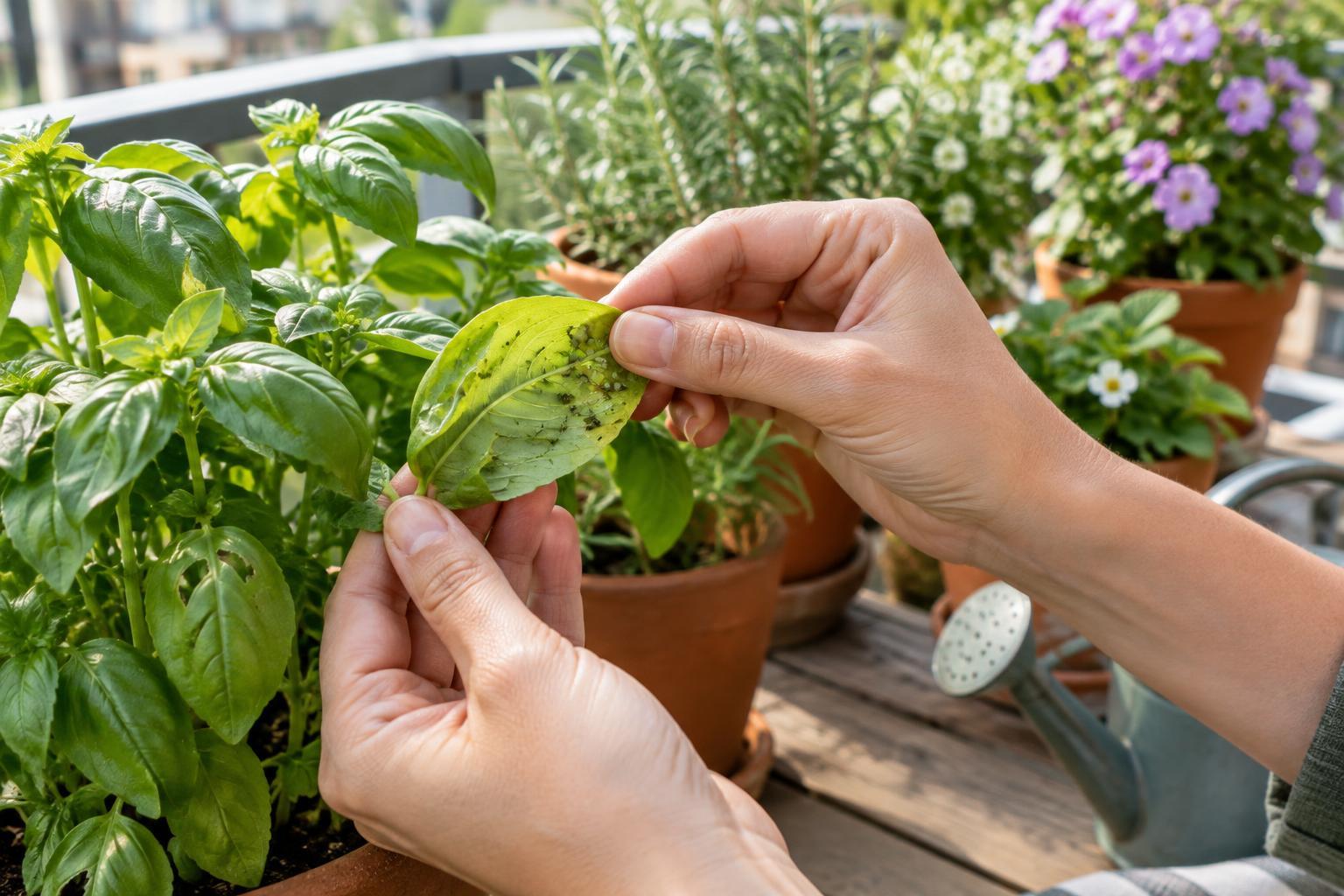
Outdoor pots put leaves, stems and soil within easy reach, which makes regular inspection one of the most useful habits in a small-space garden. Check new growth, the undersides of leaves, stem joints and the rim of each pot. Look for insects as well as clues they leave behind: sticky leaves, fine webbing, pale speckling, distorted shoots or irregular holes.
A damaged leaf does not always mean pests are present. Wind can tear foliage, strong sun can scorch it, and uneven watering can cause wilting or brown edges. Before taking action, look for a living pest or a repeated pattern of fresh damage. If a plant otherwise looks vigorous and the damage is limited to a few older leaves, monitoring may be more useful than treating it.
Recognize the most common visitors
Aphids are small, soft-bodied insects that often gather on tender shoots and flower buds. They may be green, black or another color. Their feeding can curl new leaves, and the sticky residue they leave behind, called honeydew, may coat the foliage below. Whiteflies are tiny pale insects that flutter up when disturbed; their young are more likely to be found on leaf undersides.
Spider mites are difficult to see without looking closely. Fine webbing and pale, stippled leaves are useful clues, especially when conditions are hot and dry. Scale insects look more like small bumps attached to stems or leaves, while mealybugs resemble little tufts of white cotton around leaf joints. Both can be easy to miss until a plant begins to look stressed.
Chewed edges and holes suggest a different group of visitors. Caterpillars may rest beneath leaves, while slugs and snails often feed when it is damp or dark and hide around pots during the day. A few holes do not necessarily threaten a plant; check for fresh chewing before deciding what to do.
Start with the smallest useful action
When you find pests, move the affected pot a little farther from its neighbors if space allows. This gives you room to inspect it and may slow the spread of mobile pests. Remove badly infested leaves or shoots if the plant can spare them, and dispose of that material away from your pots. For a light infestation, you may be able to wipe insects off or pick them off by hand.
A gentle stream of water can dislodge aphids and some mites from sturdy plants. Aim beneath the leaves, support delicate stems and avoid blasting soil out of the container. Let foliage dry with good airflow. Recheck the plant over the following days, because pests tucked into new growth or under leaves may remain. For slugs and snails, look around pot rims and sheltered spaces and remove any you find.
Choose treatments carefully when needed
If pests keep returning or damage is increasing, identify the likely pest before choosing a product. An insecticidal soap labeled for use on the affected outdoor plant and pest may help with certain soft-bodied pests when it reaches them directly. Follow the label, including any directions about coverage, repeat applications and precautions. Test a small part of a sensitive plant first, and avoid applying treatments when foliage is hot or in strong sun.
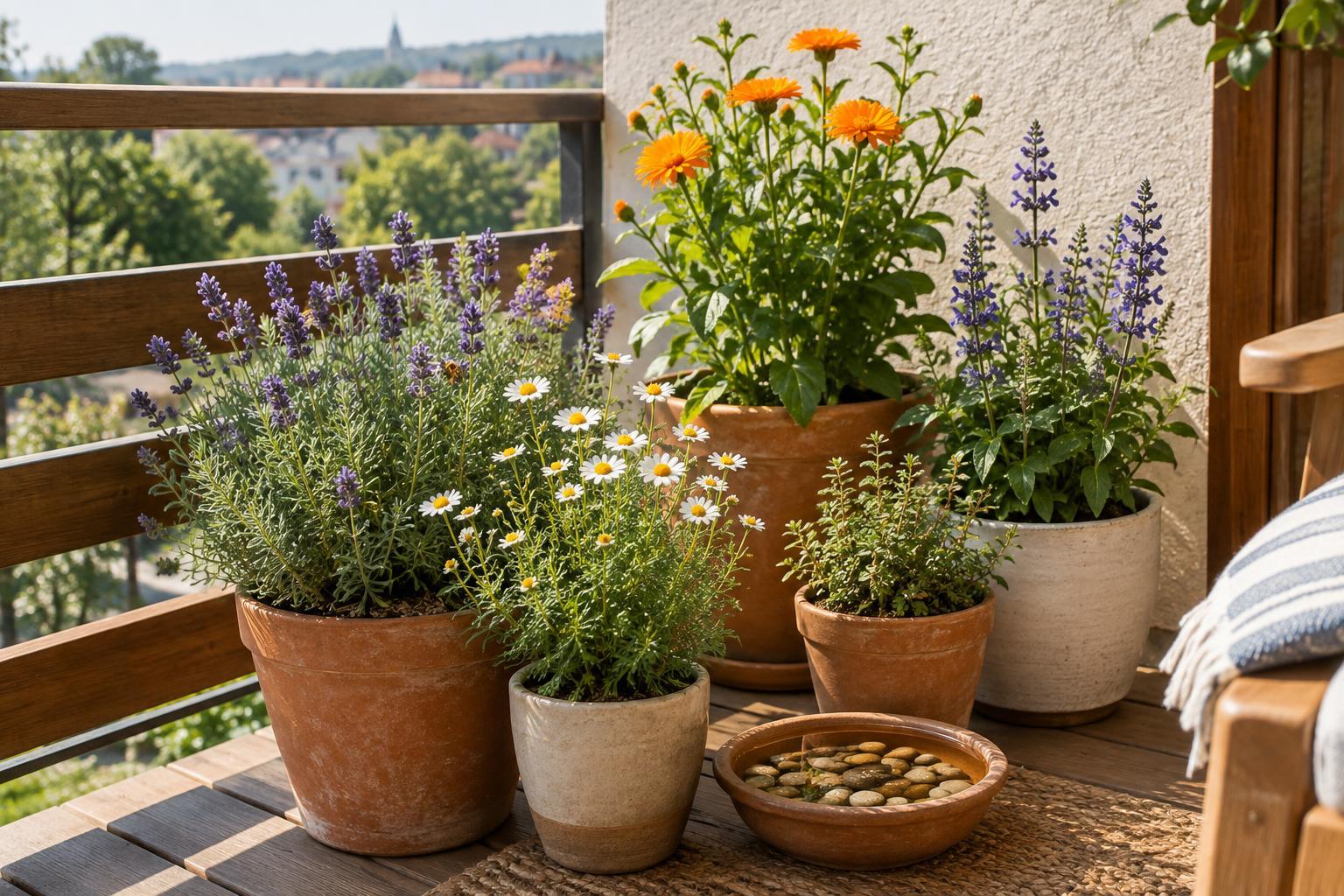
Household dish soap is not a substitute for a labeled garden product; it may injure leaves. Take care around open flowers and visiting pollinators, and keep sprays from drifting onto nearby plants or seating areas. Not every insect needs removing: ladybirds, lacewings and other predators may feed on common plant pests. If you cannot identify a visitor, observe it for a little longer rather than treating the whole collection immediately.
Make pots less welcoming to pests
Crowded containers are harder to inspect and can restrict airflow. Leave enough space to see between plants and reach their leaves, even if you keep the pots together for a lush display. When bringing home a new plant, check its leaves and stems before placing it beside established pots. Clean up fallen leaves and spent flowers so you can spot fresh damage more easily.
Healthy care will not prevent every pest, but it helps plants cope with minor feeding. Water according to the plant’s needs rather than a fixed schedule, and check that excess water can drain from each pot. Avoid adding more fertilizer simply because growth looks weak; first examine the plant for pests, root crowding and watering problems. A brief, regular inspection is usually easier than trying to diagnose a heavily damaged container all at once.