Choose the door and gather your scraps
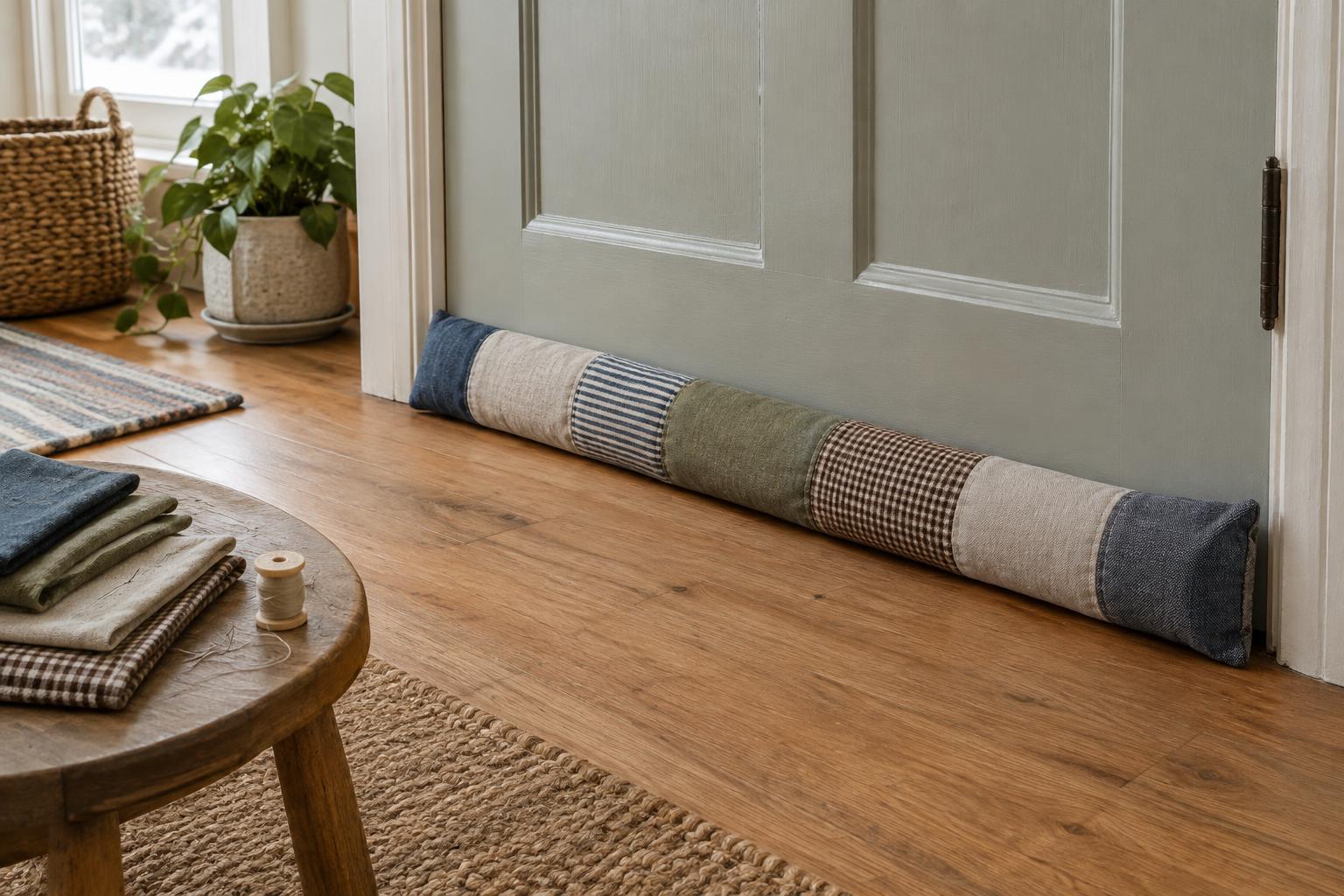
A draft stopper is a fabric tube that rests against the bottom of a closed door. It can help reduce a noticeable stream of cold air through a small gap, while giving leftover fabric a useful job. Start with a door where you can feel a draft, then check that a fabric tube will not catch under the door or get in the way of opening it.
Choose a sturdy woven fabric, such as leftover cotton canvas, denim or upholstery fabric. A patchwork tube works too, provided the joined pieces are firmly stitched. You will also need thread, scissors, pins or clips, a measuring tape and a sewing machine or hand-sewing needle. For filling, clean, dry fabric offcuts are a good way to use more scraps. Cut them into small pieces so they spread evenly rather than forming large lumps.
Measure and cut the tube
Measure the width of the door near the floor. For a stopper that sits in front of the door, aim for a finished length roughly as wide as the door. It need not be exact, but a tube that is much shorter may leave uncovered gaps at the ends. Decide how thick you want it: a finished diameter of about 8 to 10 cm makes a useful starting point for many doors.
Cut a rectangle of fabric to your chosen length plus about 3 cm for end seams. For the other dimension, cut about 28 to 35 cm, depending on how thick a tube you want and how firmly you plan to fill it. These measurements allow for a roughly 1.5 cm seam allowance; adjust them if your fabric is especially thick. If one scrap is too small, sew pieces together into a rectangle first, then press the joining seams flat.
Sew, turn and fill
Fold the rectangle lengthwise with the right sides together. Pin the long edges, then sew along them with a roughly 1.5 cm seam allowance. Sew across one short end and leave the other open. Reinforce the corners and the ends of the long seam with a few extra stitches, since those areas will take strain when you move the stopper. Trim bulky corner fabric without cutting through the stitches, and turn the tube right side out.
Add the chopped fabric scraps a handful at a time, pushing them toward the closed end with your fingers or a blunt wooden spoon. Fill the tube evenly so it rests against the floor without becoming stiff or overpacked. Test its shape along the door before closing it. If the tube feels too light to stay put, you can add a removable, securely closed inner pouch of dry weighted filling. Keep any grain-filled pouch completely dry, and check it periodically for dampness or pests.
Close the end and put it to work
Turn the open edge inward by about 1.5 cm. Pinch the fabric together and sew it shut with small, close hand stitches. For a stronger closure, go over the seam a second time. If you expect to clean the outer fabric often, consider making a separate slipcover instead: sew the filled tube closed, then make a slightly wider cover that can be removed without disturbing the stuffing.
Place the finished stopper against the bottom of the closed door and check for gaps at either end. Before leaving it there, open the door fully and make sure the stopper does not interfere with movement. Avoid placing it where someone might trip or where it could obstruct a door needed for a quick exit. A loose stopper is easiest to use on a door that does not need to swing over it.
Keep it useful through the season
Shake and reshape the tube occasionally to redistribute the filling. Spot-clean the outside as needed and let it dry completely before returning it to the floor. A stopper filled only with suitable fabric scraps may be washable, but that depends on both the outer fabric and the filling; a removable cover makes routine cleaning simpler. Store it clean and dry when winter is over.
A draft stopper works best as one small part of making a room feel more comfortable. If you still notice a strong draft, check whether the door closes properly and whether the gap needs a more permanent fix. Meanwhile, your sewn tube can add a soft texture at floor level and give otherwise unused fabric a place in the home.