Start with the pots that need help
Outdoor pots can dry quickly in summer, especially when they are small, exposed to wind or placed in strong afternoon sun. A self-watering reservoir gives the potting mix access to an extra supply of water while you are away. It is a useful backup for a short trip, but it does not guarantee that every plant will stay watered for a set number of days. Plant size, weather, potting mix and reservoir capacity all affect how long the supply lasts.
Begin by grouping plants according to their needs. Leafy annuals and thirsty container plants are better candidates for a wick-fed setup than plants that prefer their mix to dry between waterings. Check that each pot has drainage holes and that the plant is healthy before changing its watering routine. If a plant is already struggling or badly root-bound, a reservoir may not solve the underlying problem.
Gather a reservoir and a suitable wick
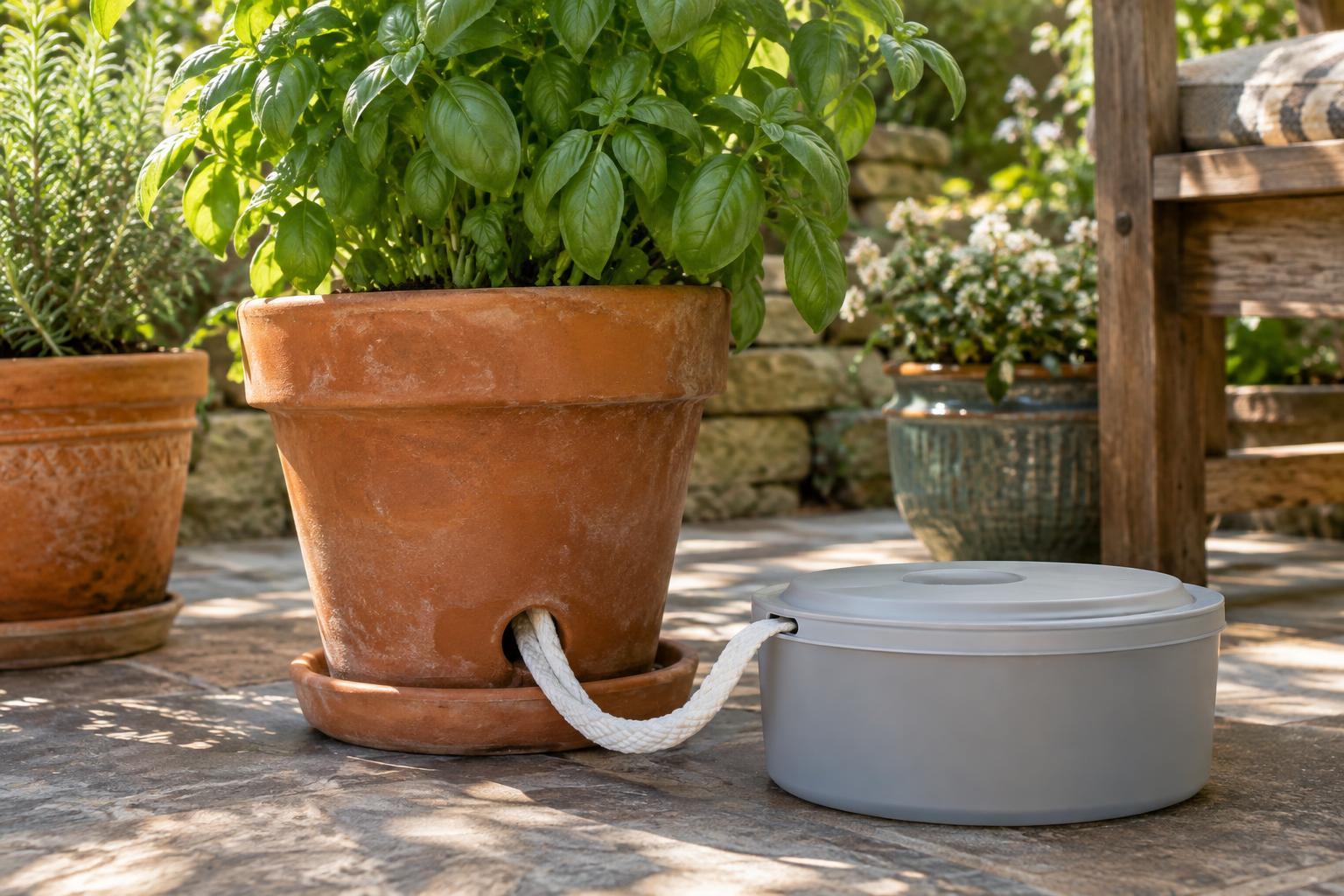
For a basic setup, use a stable, opaque container that can hold water beneath or beside the pot, plus a length of absorbent cotton or synthetic wicking cord. A covered bucket or lidded storage container with a small opening for the wick helps keep debris out and reduces exposed standing water. Choose a container that will not tip over and a location that can safely support the combined weight of water and pots.
The wick needs continuous contact with both the water and moist potting mix. Thread one end through a drainage hole and tuck several inches into the lower part of the mix; place the other end at the bottom of the reservoir. If the planted pot is too heavy to lift or its drainage holes are hard to reach, do not force a wick into place. A purpose-made self-watering planter or help from a trusted person may be a more reliable option.
Set it up without blocking drainage
Position the pot above or alongside the reservoir so excess water can still drain freely. A sturdy stand or riser can hold a pot over a covered water container, with the wick passing through a small opening in the lid. Avoid sealing the pot’s drainage holes or leaving its base submerged unless the planter was designed to work that way. Roots need air as well as moisture, and constantly saturated mix can cause problems.
Water the potting mix thoroughly from above before filling the reservoir. A damp wick and damp mix are more likely to begin transferring water than dry ones. Fill the container, make sure the wick reaches the water at its lowest expected level, then secure the lid. Keep the container shaded where practical: this can limit heat buildup and help keep the water supply usable. Cover any openings that could admit leaves or allow insects to reach standing water.
Test the setup before you leave
Set up the system several days before your trip rather than on departure morning. Check the mix with a finger below the surface each day, and note how quickly the reservoir level falls. The goal is evenly moist mix appropriate for that plant, not a pot that stays waterlogged. If the mix is dry while the reservoir remains full, check the wick’s contact with the water and soil. If the mix stays too wet, use a thinner wick or remove that plant from the system.
This trial also helps you judge capacity. A reservoir that empties during a few ordinary days may be too small for a trip of the same length in hotter weather. For a longer absence, or where summer conditions are unpredictable, arrange for someone to check the plants and refill the water if needed. No passive setup can respond perfectly to a heat wave, heavy rain or a wick that slips out of place.
Give the plants an easier place to wait
Before leaving, move pots into a sheltered position with light that suits each plant, avoiding a sudden shift into deep shade. Grouping containers can make them easier to check and may reduce their exposure to drying wind. Remove dead leaves, check for pests and make sure neither the pots nor their reservoirs obstruct a walkway or can be knocked over.
When you return, inspect the mix and roots’ growing conditions before returning to your usual watering schedule. Empty and clean reservoirs that are no longer needed, rather than leaving water outdoors indefinitely. A tested wick-fed system is most helpful as one part of a simple travel plan: suitable plants, free drainage, a stable water supply and someone to call if the trip runs longer than expected.