Choose a bin and a sheltered spot
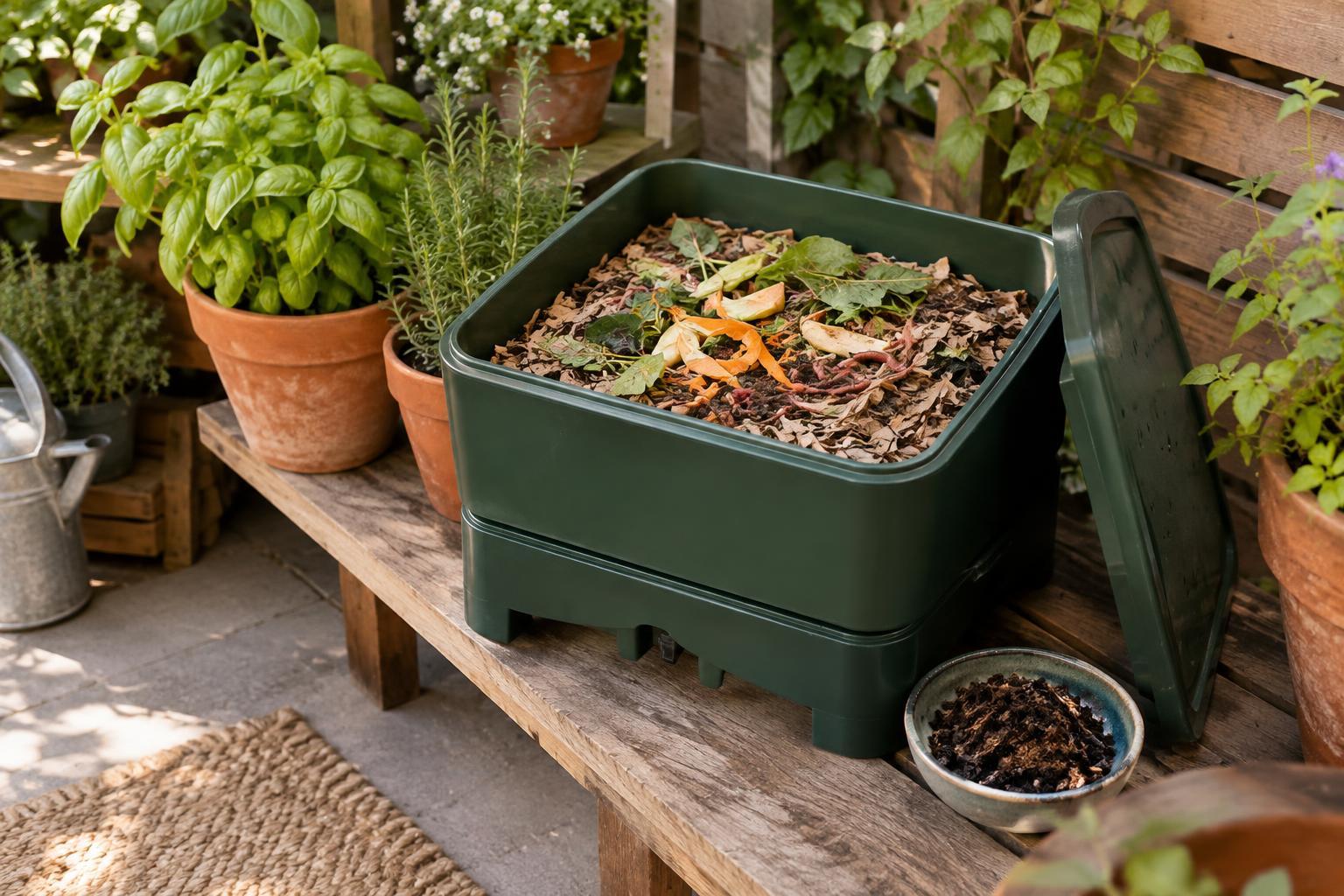
A worm bin works best as a home for composting worms, not as a container to fill with every scrap from the garden. Start with an opaque plastic storage box that you can lift and move comfortably. A broad, shallow box gives worms room to spread through the bedding. Fit it with a lid, then add small ventilation holes near the upper sides. Cover the openings with fine mesh if insects are likely to enter.
Place the bin where it will stay shaded and protected from heavy rain, direct sun and freezing conditions. A covered patio, balcony corner or utility room may work, depending on your climate and available space. If the bin has drainage holes, set it over a tray and check the tray regularly. A well-managed bin should feel damp but should not produce much liquid; collected runoff is not a substitute for finished compost.
Build a soft, airy bedding layer
Before adding worms, loosely fill much of the box with bedding such as torn plain cardboard, uncoated paper and dry leaves. Moisten it until it feels like a wrung-out sponge, then fluff it so air can move through. Add a little finished compost or garden soil if you have it; this gives the worms a gritty material to work with. Keep the bedding loose rather than pressing it into a dense mat.
Use composting worms from a reputable local supplier, and check whether their use is permitted where you live. Common garden earthworms are adapted to soil and may not thrive in a shallow bin of decomposing scraps. Set the worms on top of the bedding and let them move down on their own. Leave a light layer of damp bedding over the surface and close the lid.
Feed small amounts of suitable scraps
Start feeding cautiously. Soft, pesticide-free plant trimmings, spent leaves, small pieces of fruit and vegetable peel, and crushed eggshells are reasonable choices. Chop bulky scraps so they break down more easily. Tuck each addition beneath the bedding in one area, then use another area for the next feeding. Wait until most of the previous food has softened or disappeared before adding more.
Skip woody stems, thick branches and large amounts of grass clippings: they can take a long time to break down or form a wet, compact layer. Keep diseased plants, weeds with seeds and plants that spread readily by cuttings out of the bin, since a home worm bin may not make them safe to use in the garden. Avoid meat, dairy and oily foods, which are more likely to cause odors or attract pests. Cover fresh scraps with bedding to help keep flies away.
Read the bin’s moisture and odor clues
Check the bin when you feed it. The contents should feel moist, with pockets of air between the scraps and bedding. If the bedding is dry, mist it lightly and check whether the lid or ventilation is allowing it to dry too quickly. If it is soggy, mix in dry cardboard and pause feeding. An unpleasant smell often means there is more food or moisture than the bin can handle; remove any rotting excess and add fresh bedding.
A few small organisms in a worm bin are normal, but many flies around the lid usually signal exposed food. Bury scraps more deeply and cover the surface with damp cardboard or leaves. If worms cluster near the lid or try to leave, check for heat, waterlogged bedding, dryness or a recent large feeding. Make one adjustment at a time so you can see what helps.
Harvest castings without emptying the whole bin
Over time, the bedding and scraps become a dark, crumbly material often called worm castings. To collect some, move finished material to one side of the box and put fresh bedding and food on the other. Many worms will gradually follow the food, making it easier to scoop out the older material. Pick out any visible worms and return them to the bin, along with scraps that have not broken down.
Use the finished material as an amendment mixed into potting mix or garden soil, rather than packing a container full of it. A compact bin may not process every garden cleanup, and that is fine. Treat it as a place for a steady supply of soft scraps, while sending larger or unsuitable material to another appropriate composting or disposal method.