Start with the work you actually do
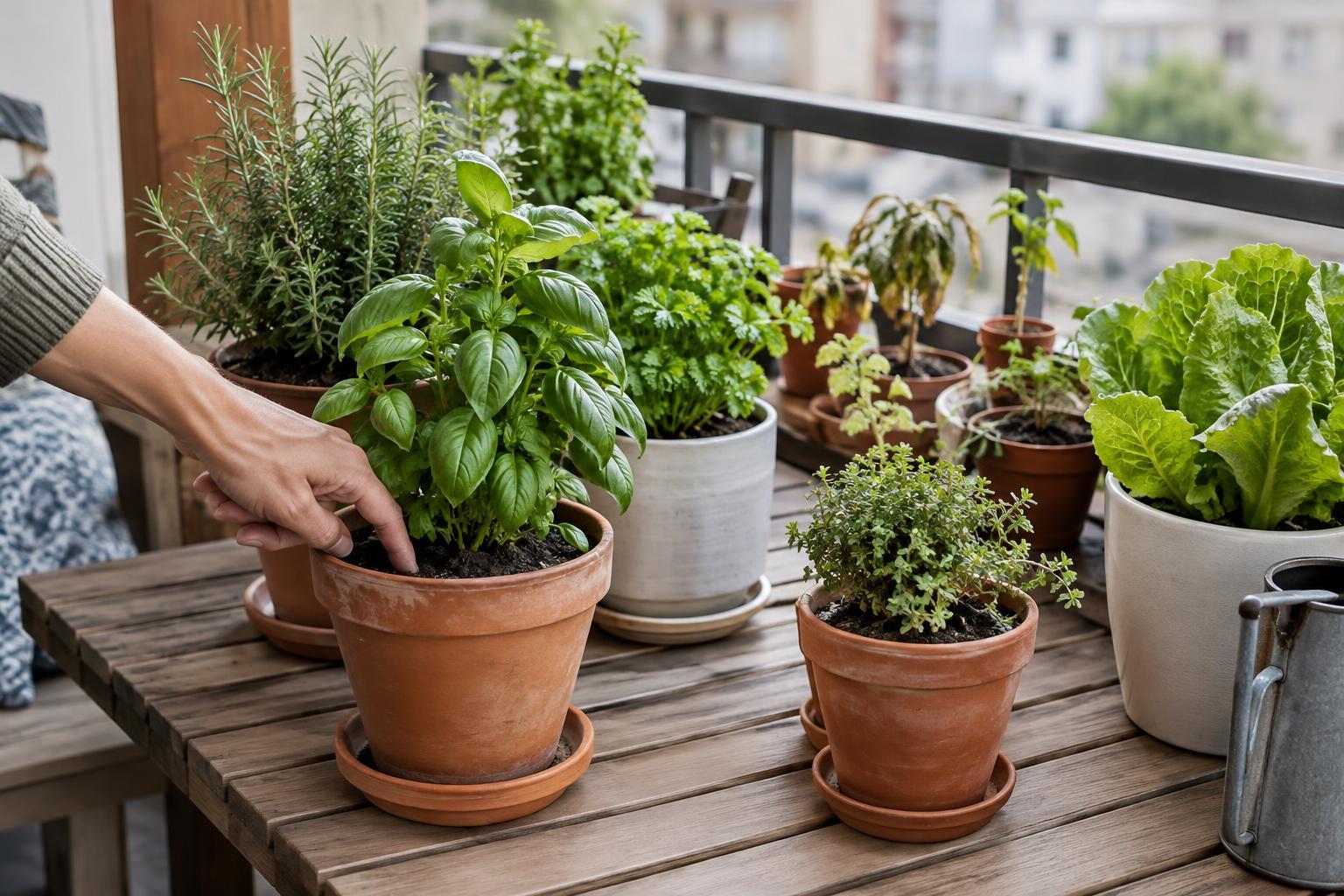
A potting station can be as simple as a tray brought out when you need it. Before buying a bench or storage unit, think about your usual tasks. Do you mostly tuck new herbs into pots, replace tired plants or start seeds? These jobs call for a stable surface and room for a few supplies, but not necessarily a permanent workspace.
Pick a spot where you can move around comfortably and reach your plants without blocking a door or walkway. An outdoor table, a sturdy folding table or a tray placed on a low, stable surface may be enough. Check that the surface can handle the weight of a filled pot and that it does not wobble while you work. If the space is shared or exposed to wind, a setup you can pack away may be more useful than a fixed station.
Make a contained work surface
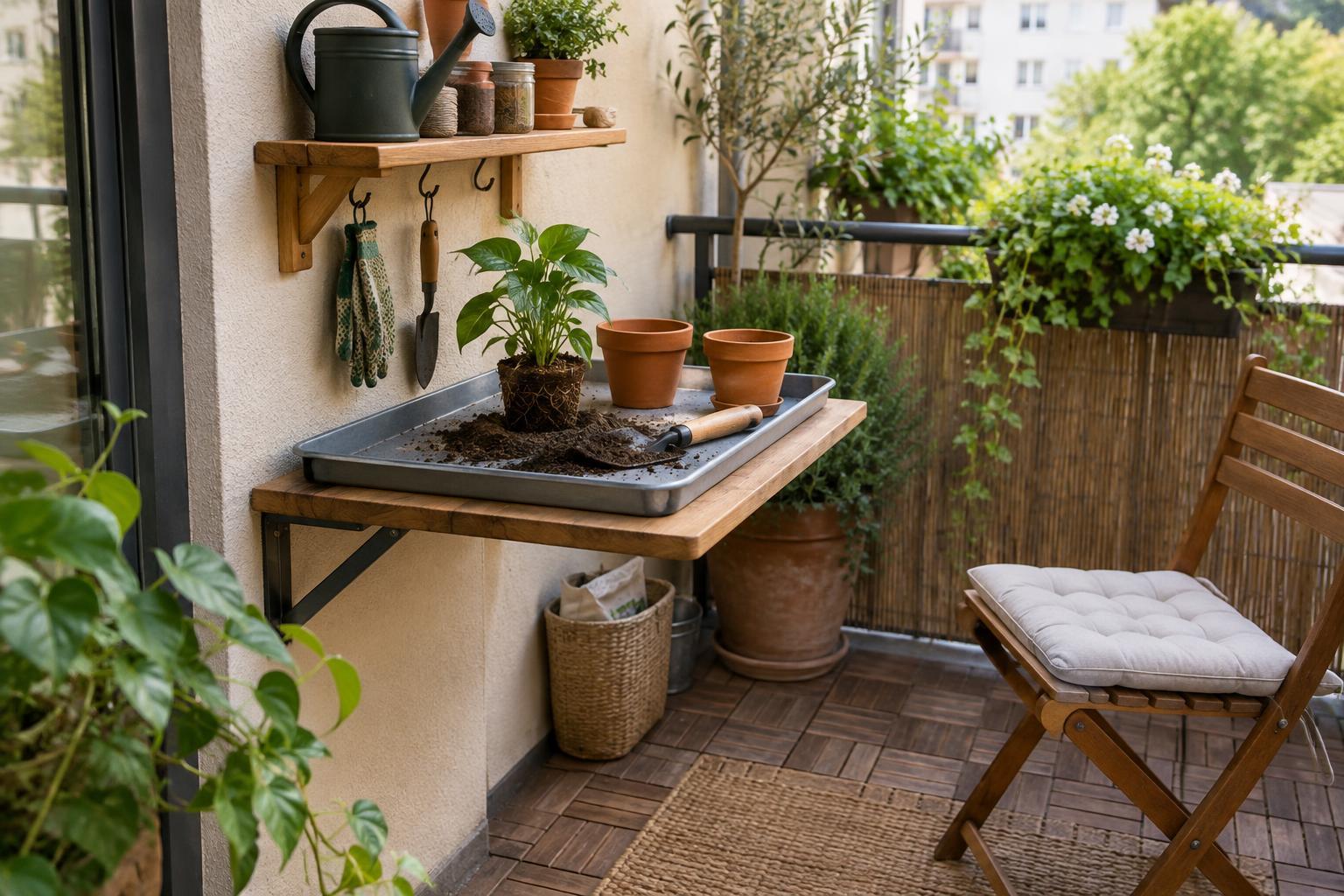
Loose potting mix spreads quickly across decking, paving and narrow balconies. A shallow, washable tray with raised edges gives you a defined place to work and catches most spills. Choose one wide enough for your largest everyday pot, with a little space beside it for a scoop. A light-colored tray can make dropped seeds and small tools easier to spot.
Keep a small container nearby for spent leaves, empty nursery pots and packaging. You can set clean, reusable pots aside before you begin so they do not get mixed with waste. If you work at a table used for meals, protect it with the tray rather than relying on a thin sheet that may shift as you lift pots.
Avoid doing messy jobs right beside an open door or an air vent. On a breezy day, work with small amounts of mix at a time and keep the unused portion closed. If conditions make the work frustrating, it is reasonable to wait for a calmer day rather than chase spilled material around the space.
Store supplies without surrendering the floor
The most useful potting kit is usually a small one: a scoop, hand brush, gloves if you like them, plant labels and a container for small tools. Put these in a lidded box or handled caddy so everything travels to the work surface in one trip. Keep sharp tools covered or stored where they cannot be reached accidentally.
Potting mix takes up more room than tools, so buy quantities you have a realistic place to keep. Close opened bags securely and store them where rain will not soak them. A weather-resistant storage box can help, but check its contents occasionally for trapped moisture. Keep supplies clear of drains, doors and any route you need to use in a hurry.
Wall shelves or hooks can free up floor space if they are suitable for the surface and securely installed. Do not assume a railing or fence can safely hold a heavy storage bin. A compact kit on an existing shelf is often simpler than adding furniture to an already crowded balcony.
Use a repeatable potting routine
Set out only what you need for one plant or group of similar plants. Place the empty pot in the tray, add some mix, position the plant, then fill around it gradually. Keeping the bag closed between scoops reduces spills. Before you start, check where you will water the newly potted plant; a tray used for dry potting work may not be the best place to catch a large amount of runoff.
When you finish, return usable loose mix to its container if it is clean and appropriate to reuse. Brush stray material into the tray, then wipe or wash the work surface as needed. Avoid sweeping potting mix into drains or over the edge of a balcony. Give tools time to dry before closing them into storage.
Let the station change with your space
After a few sessions, notice what you repeatedly reach for and what stays untouched. If you always carry the tray to a different corner, move the storage closer to that spot. If a permanent bench becomes a place to pile unrelated items, a folding surface may serve you better.
A good small-space potting station makes plant care easier without taking over the outdoor room. Keep the walkway open, give every supply a place to return to and leave yourself a clear surface when the job is done. The result is less about building a dedicated garden workspace and more about making the next small planting task easy to begin.