Check what your plants need first
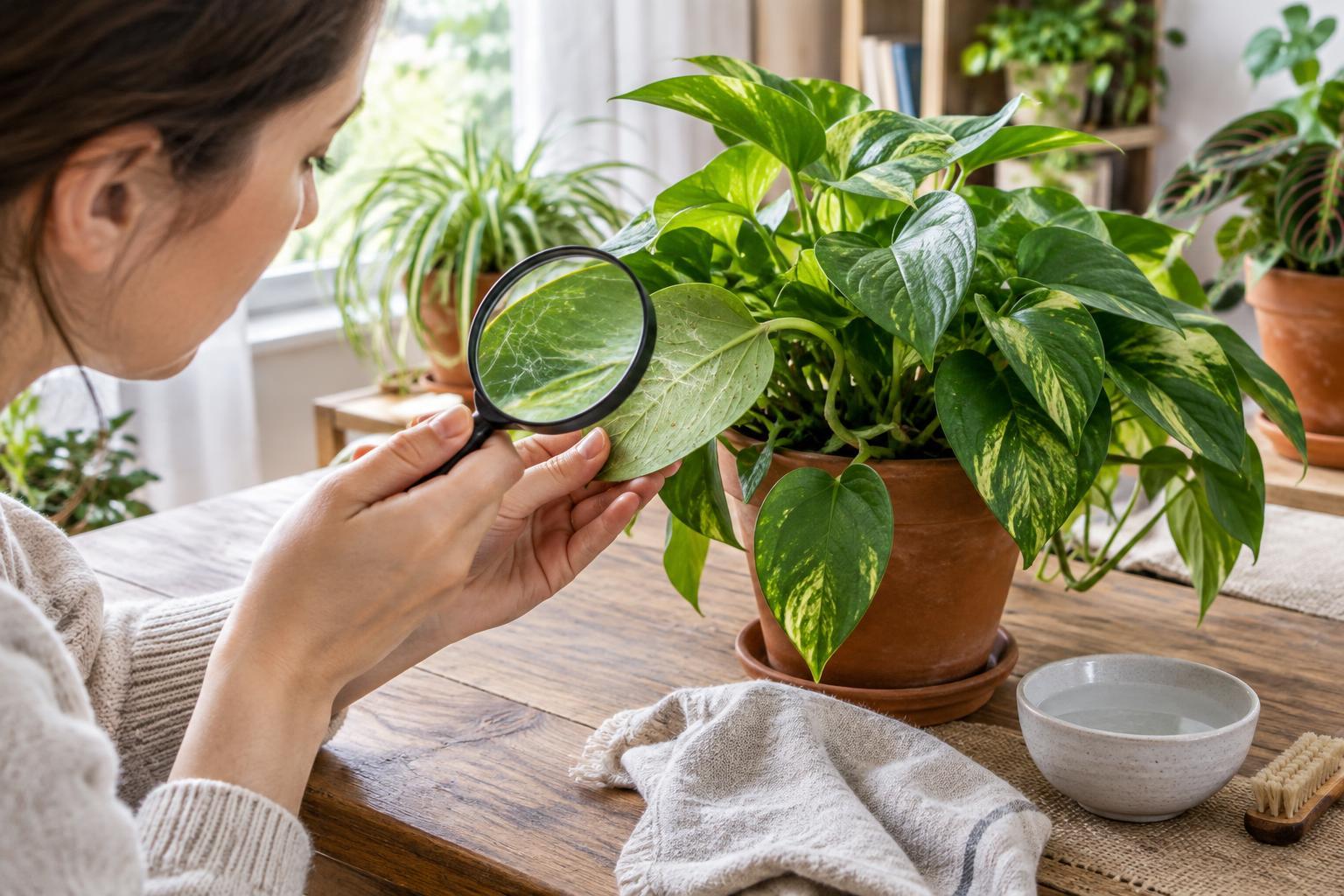
A brown leaf tip does not automatically mean the air is too dry. Inconsistent watering, excess fertilizer, direct sun and drafts can produce similar damage. Before changing the room, check whether the potting mix is drying at an appropriate pace for the plant and whether its light and watering routine suit it. If new growth looks healthy, an old damaged tip may simply remain visible; it will not turn green again.
Humidity matters most for plants adapted to moist air, such as many ferns and some tropical foliage plants. Succulents and other dry-air-tolerant plants are unlikely to benefit from a humidifier. If you are unsure what your plant prefers, start by observing its response to light, watering and location rather than treating every plant alike. The goal is not to make the whole home feel tropical. It is to give sensitive plants a suitable spot without leaving moisture on walls, windows or furniture.
Measure the room, then look for moisture
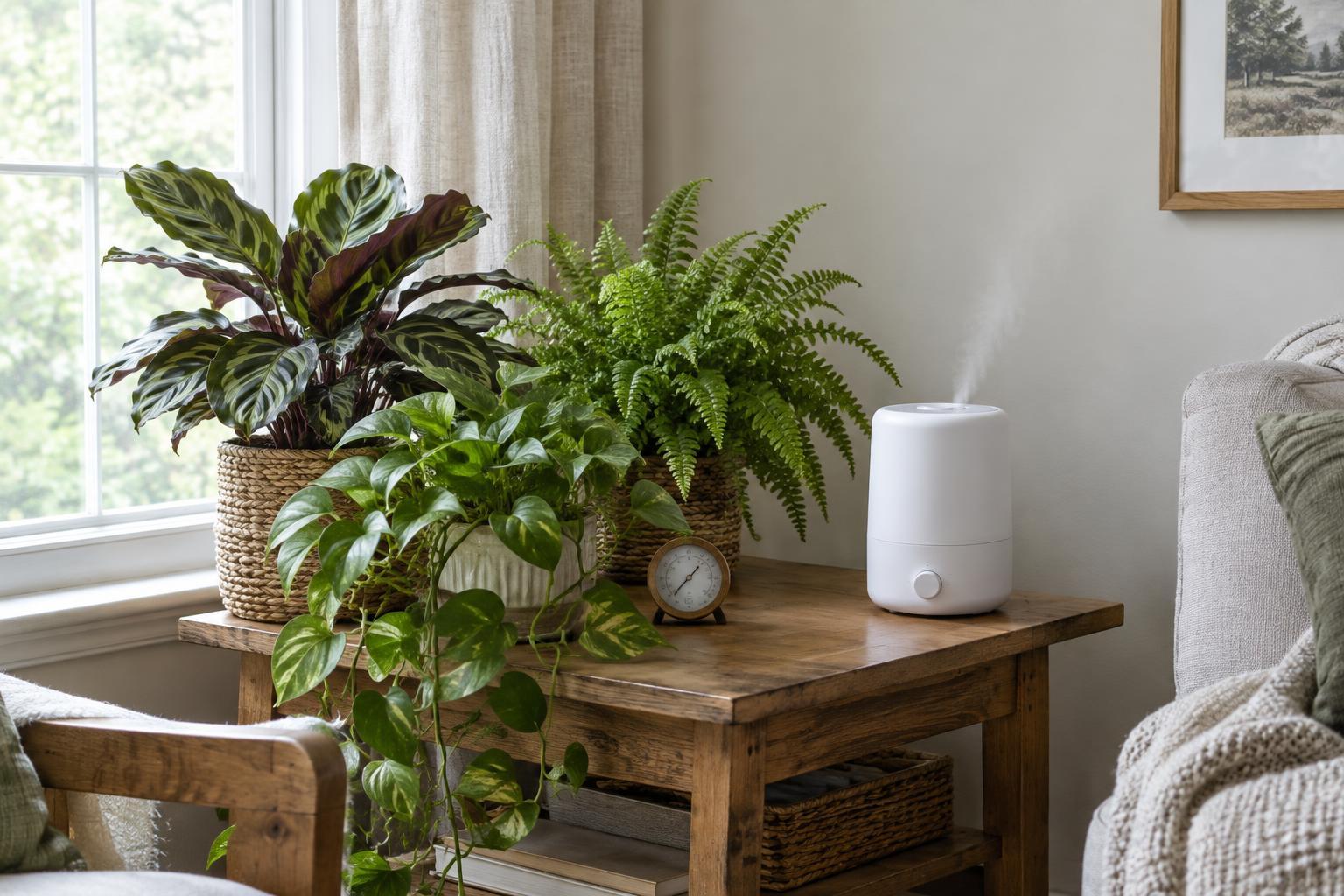
An inexpensive hygrometer can give you a useful reading near your plants. Take readings at different times and in different spots: the air beside a heating vent, a sunny window and a sheltered shelf may not feel the same to a plant. Treat the number as a guide rather than a target to chase. A plant’s condition and the state of the room matter just as much.
Check for condensation on windows, damp patches behind furniture, a musty smell or surfaces that stay wet. These are reasons to reduce added moisture or improve airflow, even if a plant seems to enjoy the humidity. Cooler window glass and poorly ventilated corners can collect moisture before the rest of the room feels damp. Leave space between plants and walls so you can see and clean those areas.
Improve the plant’s spot before adding water to the air
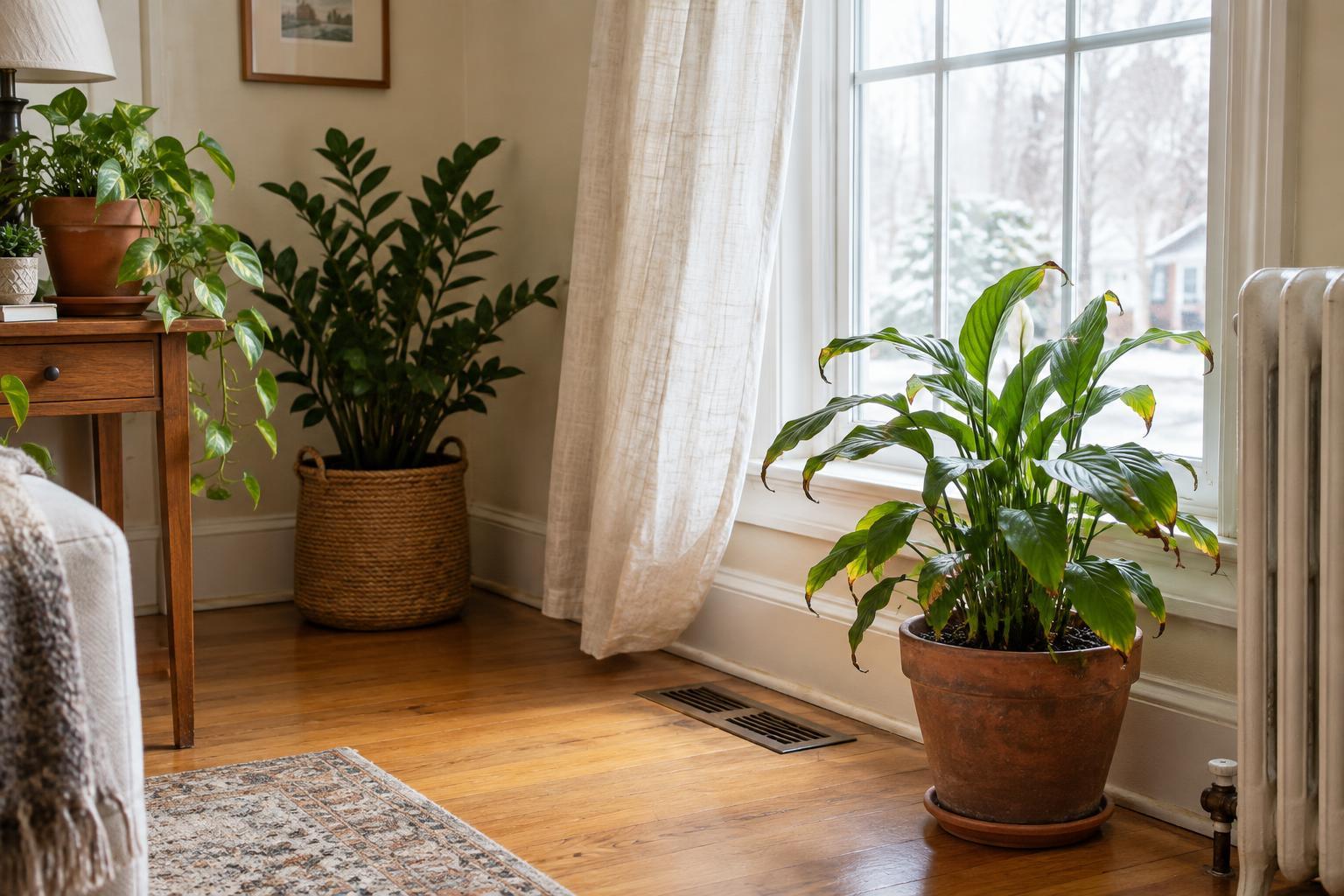
Moving a humidity-loving plant away from a radiator, heating vent or frequently opened exterior door may help more than putting a humidifier beside it. Choose a place with the light the plant needs, then look for shelter from drying air and sudden temperature changes. Do not sacrifice adequate light for a steamy corner: a bathroom is only a good plant spot if it has suitable natural light and ventilation.
Grouping plants makes it easier to care for them together and may create a slightly more humid area around their leaves, but it is not a substitute for room humidity when the air is very dry. Keep enough space between pots for air to move and for leaves to dry after watering. A pebble tray can catch drips and keep a pot above standing water, but its effect on the surrounding air is usually limited. Never let the base of a pot sit in water unless that plant’s care calls for it.
Use a humidifier with boundaries
If sensitive plants still struggle in a dry room, a small humidifier can add moisture more consistently than occasional misting. Start at a low setting and place it where its output can disperse into the room, not where it blows continuously onto leaves, walls, curtains or wood furniture. Follow the manufacturer’s instructions for water, cleaning and placement. Empty and clean the unit as directed so it does not become a source of stale water.
Watch the room while you use it. If windows fog up, a nearby surface feels damp or the air begins to smell musty, turn the humidifier down or off and allow more ventilation. You can also run it for shorter periods rather than leaving it on all day. Misting leaves may briefly wet them without changing room humidity for long, so it is a poor main strategy, particularly for plants whose foliage should not stay wet.
Choose a manageable routine
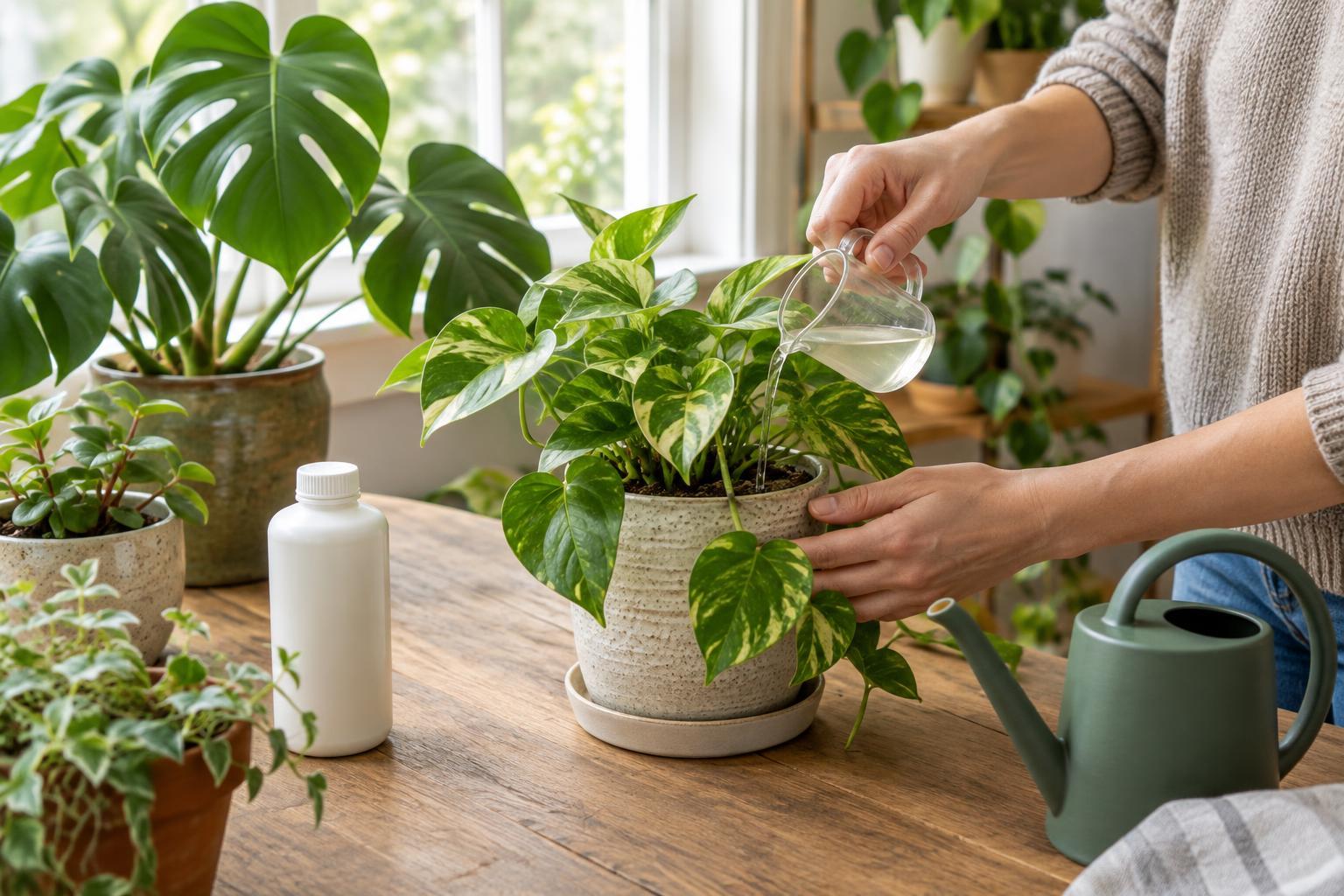
Make one change at a time and give the plant a chance to produce new growth before judging the result. Keep watering based on the potting mix and the plant’s needs; extra water in the soil is not a safe shortcut to humid air. After watering, empty saucers and wipe up spills so the plant area stays tidy and dry.
If a room repeatedly develops condensation, it may be a better home for plants that tolerate its existing conditions. Matching plants to a space is often easier than trying to remake the space around them. A comfortable plant corner has suitable light, sensible watering and enough air movement for surfaces to dry—not just a higher humidity reading.