Find out where the wind hits hardest
Wind rarely moves across a balcony evenly. It may rush around a corner, rise through gaps in the railing or bounce off a wall. Before rearranging your plants, watch how their leaves move on a breezy day. A plant that sways gently may be comfortable where it is; one that is repeatedly bent or rattled against the railing needs a more sheltered spot.
Look beyond the most obvious gusts. Wind can dry potting mix quickly, especially in small or unglazed containers. It can also wear leaves against nearby surfaces and loosen tall stems over time. Checking where the soil dries fastest and where leaves show repeated damage will help you decide which parts of the balcony need protection.
Use the layout to create shelter
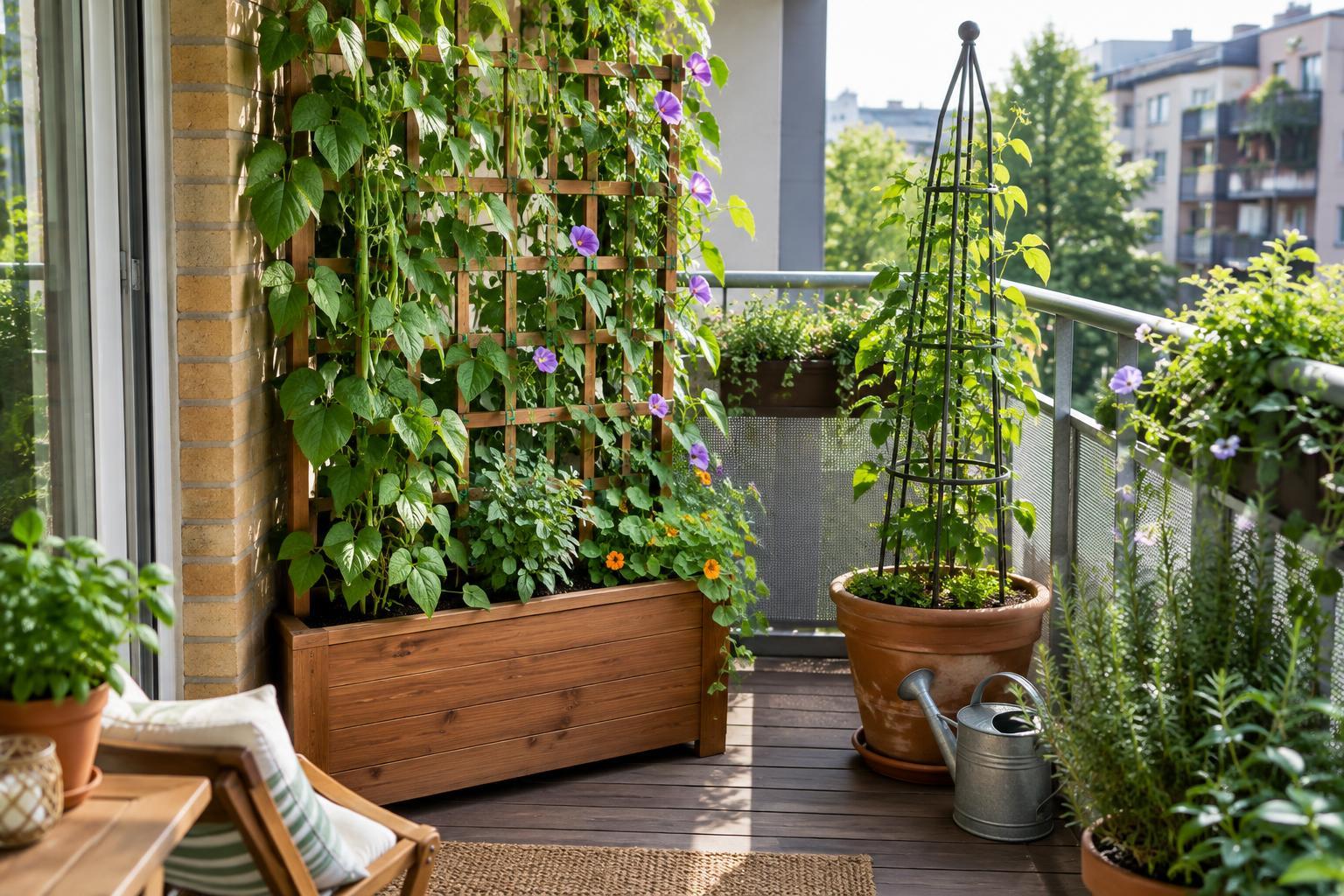
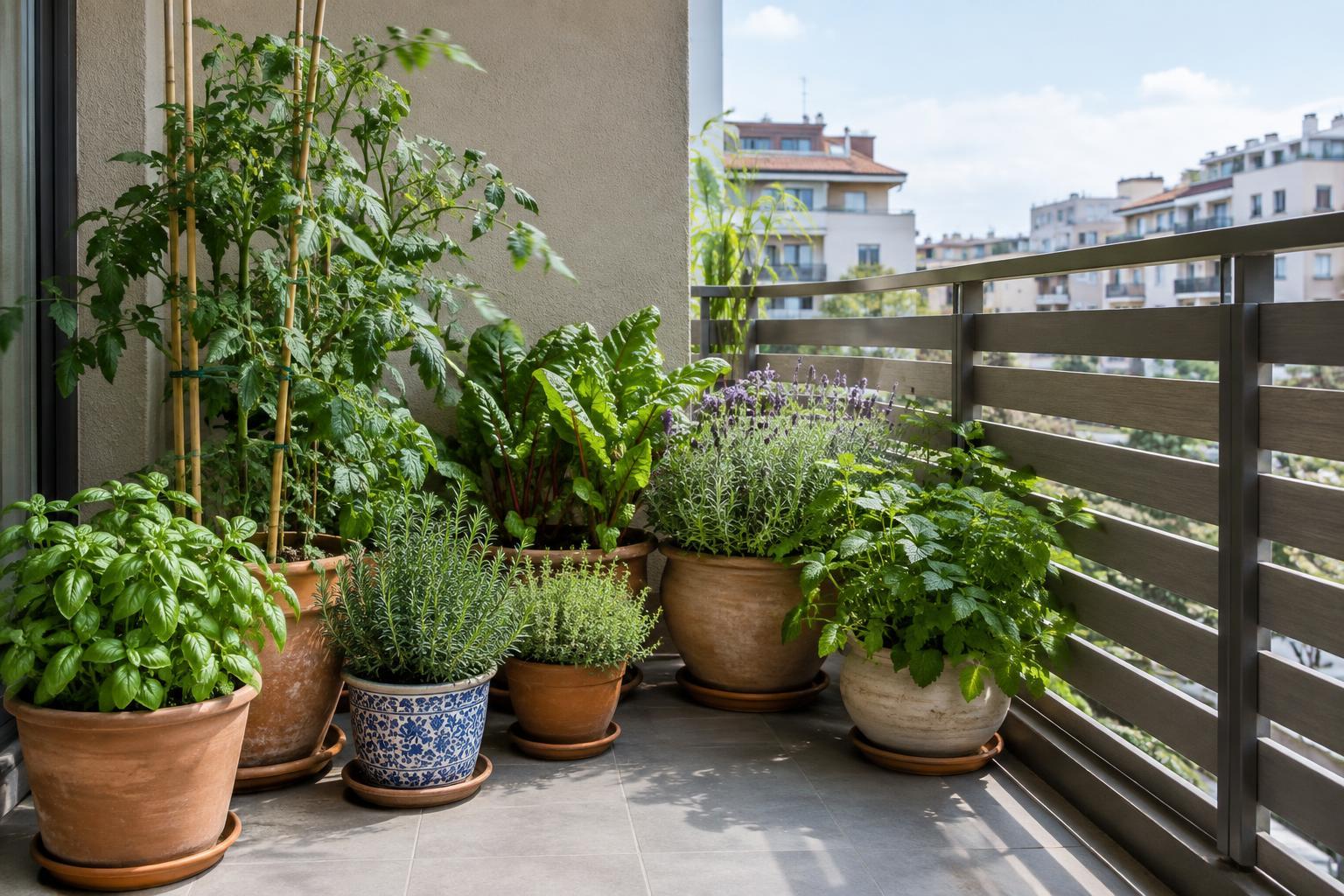
Start with placement rather than buying a screen. Move vulnerable plants toward a solid wall or into a corner that stays calmer. Set larger, sturdier plants behind smaller ones so they break up some of the airflow, but leave enough space for leaves to move without rubbing together. Keep plants clear of doors, walkways and drains.
If your balcony remains exposed, a purpose-made outdoor screen may help soften the wind. A screen that lets some air pass through may work better than a solid panel that catches every gust. Before installing one, check your building’s rules and make sure any fixture is suitable for the balcony. Avoid attaching a screen, planter or trellis to a railing unless that use is permitted and it can be secured safely.
Choose containers that stay put
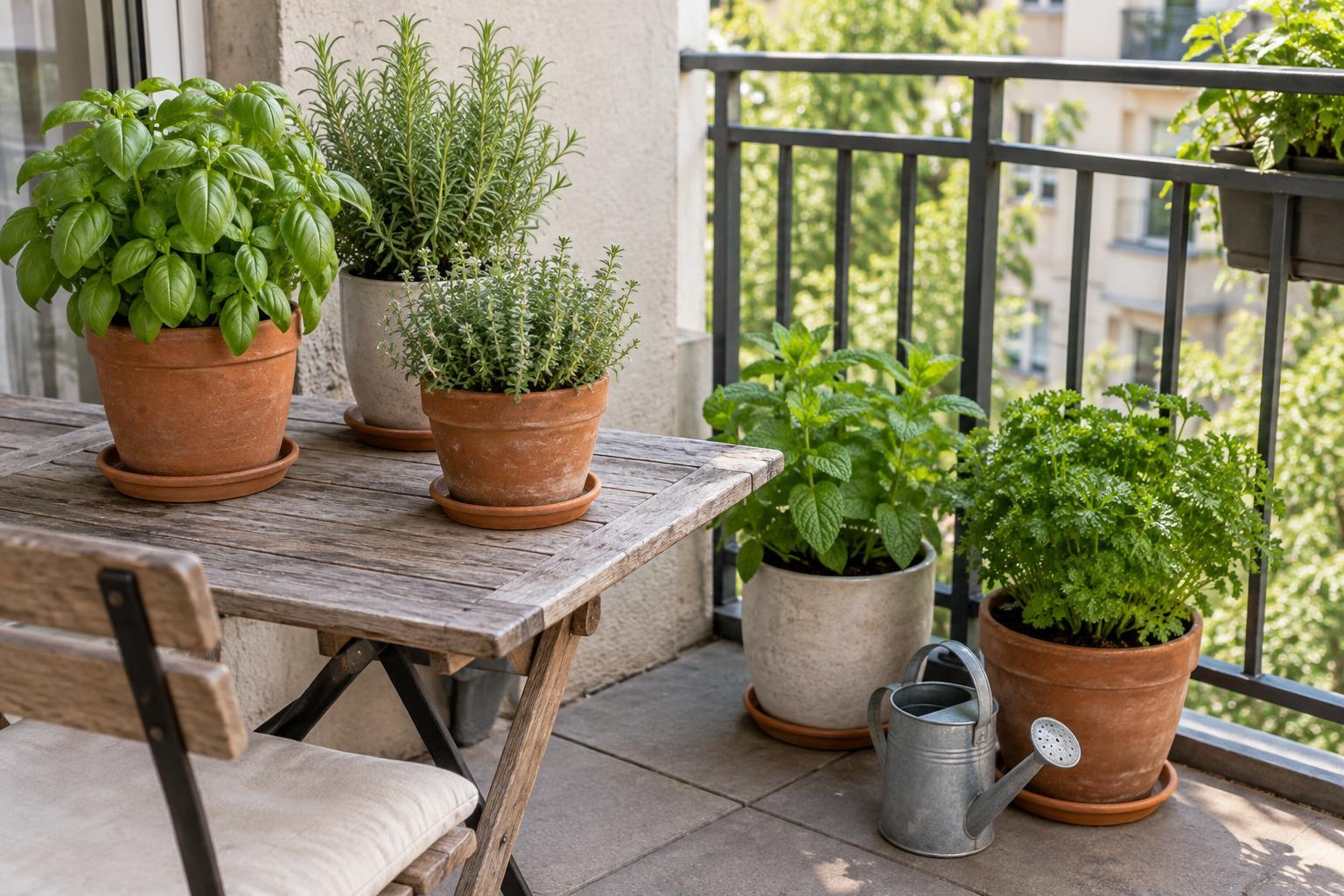
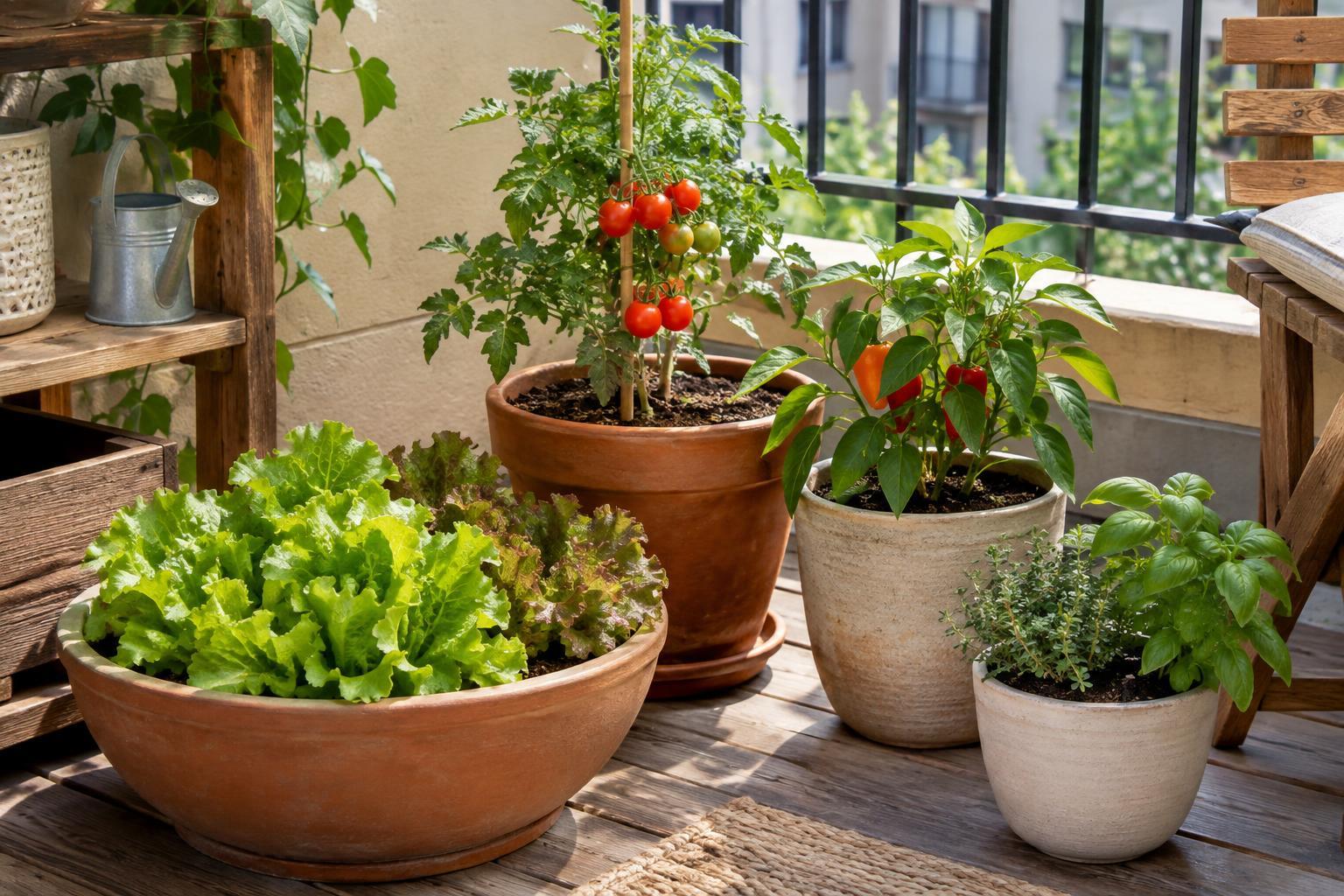
A wide container with a low centre of gravity is generally more stable than a tall, narrow pot. Place heavier pots on the balcony floor rather than on a ledge or raised stand. If you use decorative outer pots, check that the inner pot sits securely and that the outer pot cannot tip or trap water around the roots.
Group containers on the floor to make the arrangement more sheltered and easier to check, but do not wedge them so tightly that you cannot reach them for watering. Keep saucers, tools and other loose items from becoming airborne in a gust. The weight of soil, water and large containers adds up, so check any applicable balcony load guidance before creating a heavy display.
Support stems without holding them rigid
Plants with tall or flexible growth may benefit from a stake or small support placed firmly in the pot. Tie stems loosely with soft plant ties, leaving room for growth and gentle movement. A tight tie can rub or pinch a stem, while a support that shifts in the soil can do more harm than good.
For a new or particularly tender plant, a smaller specimen may be easier to establish on an exposed balcony than a top-heavy one. Prune broken growth cleanly when you notice it, and remove dead leaves that could collect around drains. If a plant keeps suffering in the same position despite these changes, move it to a calmer spot or choose a more wind-tolerant plant for that location.
Adjust your care after windy weather
Do not assume a windy day means every pot needs water. Push a finger into the potting mix and water according to what you find and what the plant prefers. Small pots may dry faster than expected, while sheltered pots nearby may still be damp. Water thoroughly when needed, let excess drain and avoid leaving containers standing in water.
After a strong gust, make a quick round of the balcony. Check that pots are stable, supports are secure and nothing has shifted toward an edge, door or drain. Then look for torn leaves, bent stems and unusually dry soil. These small checks let you adjust the layout before the next windy day, turning an exposed balcony into a more dependable place for plants.