Start with a plant that can grow from a stem
Stem cuttings are an approachable way to make another plant from one you already have. Pothos, heartleaf philodendron, tradescantia and many vining hoyas are common candidates. Not every houseplant works this way: some grow from crowns, offsets or leaf cuttings instead. If you are unsure what plant you have, identify it before cutting so you can choose a suitable method.
Choose a healthy parent plant with firm stems and leaves. Skip stems that are yellowing, damaged or showing signs of pests. A cutting uses energy while it grows roots, so strong growth gives it a better start. Spring and summer often bring more active growth indoors, but a cutting can root at other times if it has suitable warmth and light.
Before you begin, gather clean scissors or pruners, a small glass or a pot with drainage holes, and either water or a lightly moistened potting mix. Cleaning the blades helps avoid transferring problems between plants. You do not need a large container; a small one makes it easier to see what is happening and manage moisture.
Find the node before you cut
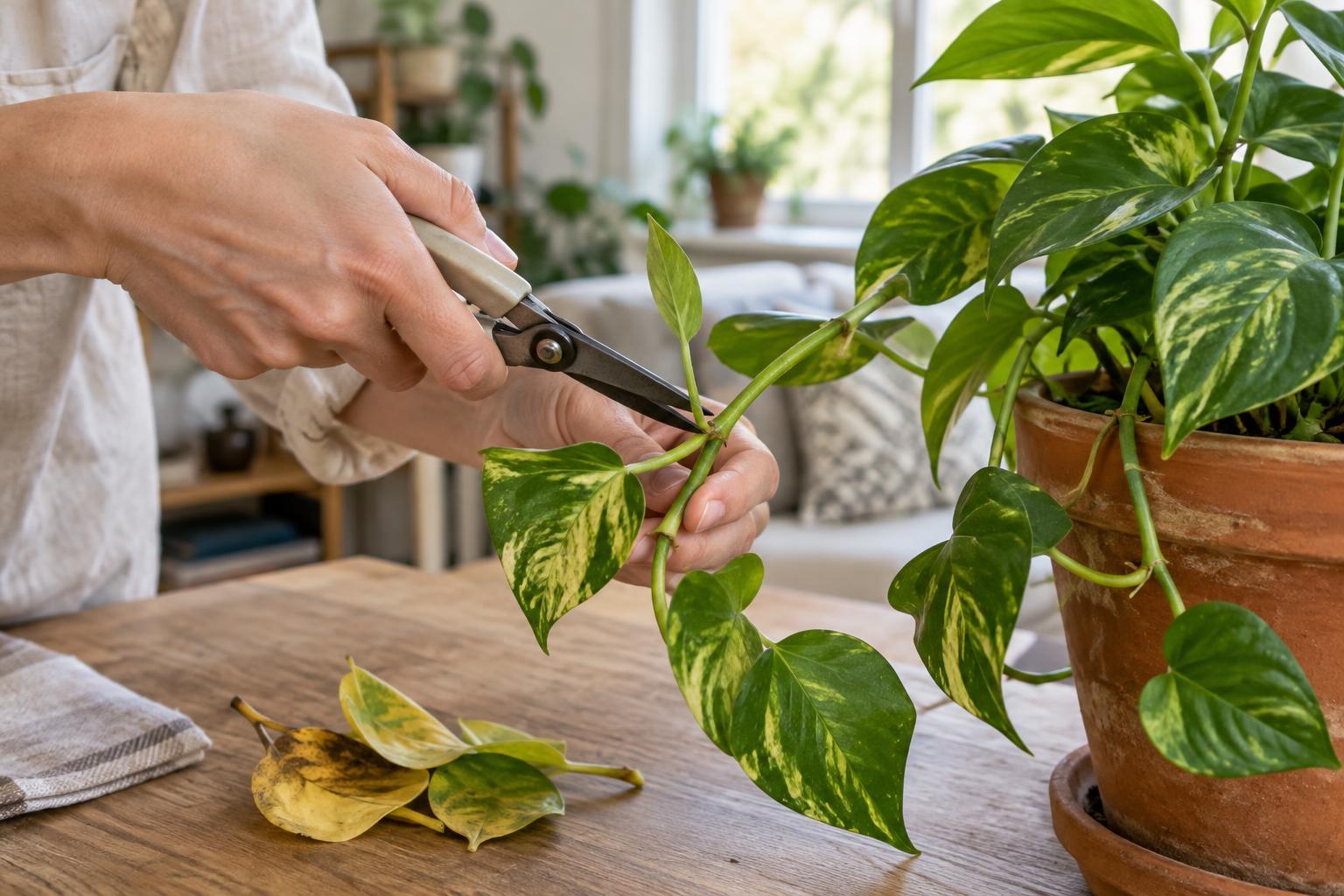
The most important part of many stem cuttings is the node: the point on a stem where a leaf attaches. Nodes may look like small bumps or joints, and some plants show tiny aerial roots there. Roots commonly emerge near a node, so a leaf and its stalk alone will not usually make a new vining plant.
Select a stem with at least one healthy leaf and one or more nodes. Make the cut just below a node, leaving enough stem to place that node in water or potting mix without submerging a leaf. Remove any leaf that would sit below the waterline or beneath the mix; buried or soaked leaves can decay. If you take a longer piece of vine, you can divide it into shorter cuttings, checking that each piece has a node.
Keep the parent plant in mind, too. Taking a few cuttings from a vigorous vine may encourage it to branch, but avoid stripping a small plant of much of its foliage. If its sap irritates your skin, wear gloves, and keep cuttings away from children and pets that might chew them.
Choose water or potting mix
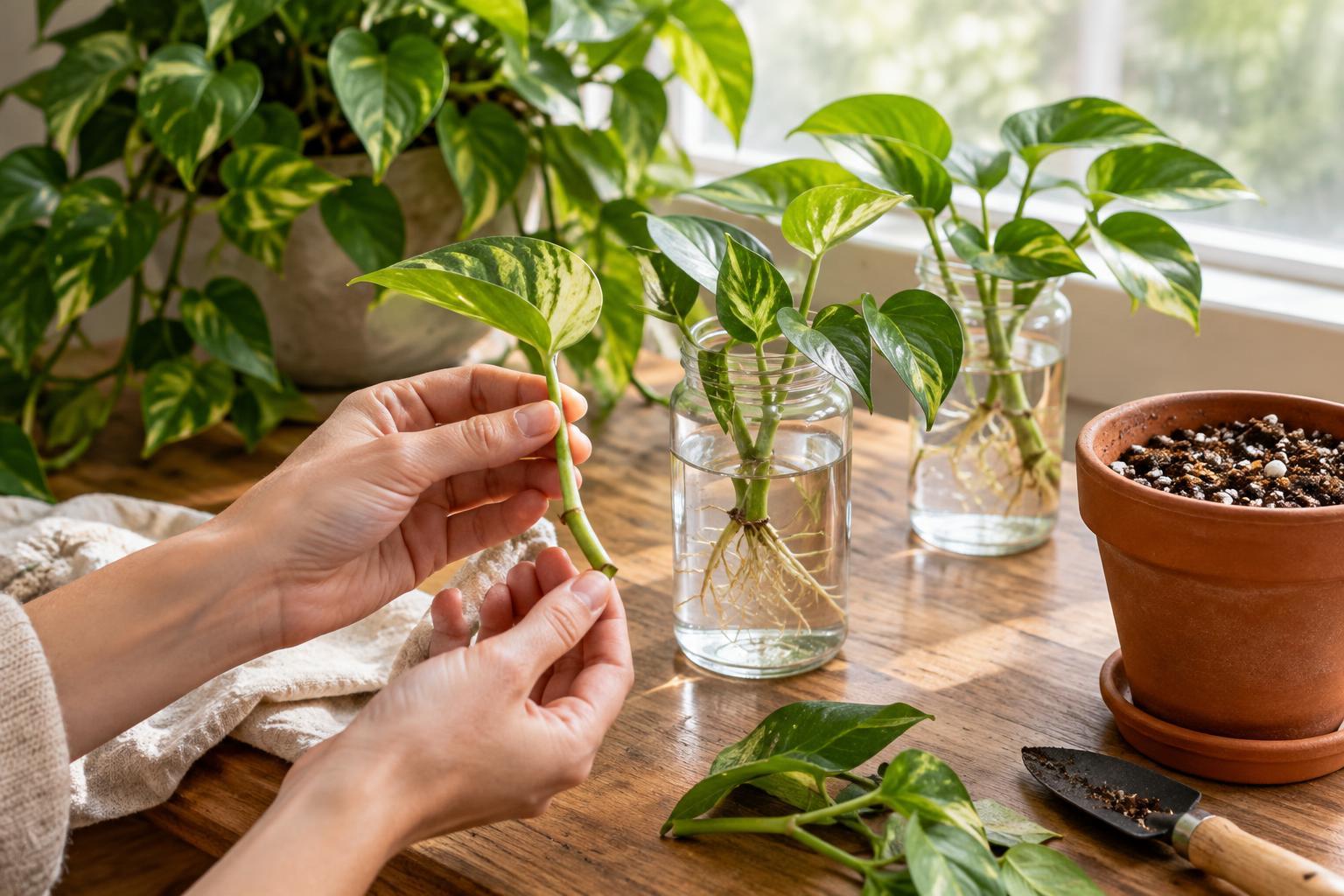
Water makes root growth easy to observe. Place the cutting in a small glass so at least one node is underwater and the leaves stay above the surface. Set it in bright, indirect light rather than strong sun that can heat the glass or dry the cutting. Top up the water as needed and replace it if it becomes cloudy. If a stem turns soft or dark, trim back to healthy tissue and try again with a clean container.
Potting mix avoids a later move from water to soil. Put the node into a small pot of airy, lightly moistened mix, then gently firm the mix around the stem so it stays in place. Keep it damp but not saturated. A clear cover can help slow moisture loss, provided it does not press against the leaves; open it regularly for airflow and remove it if you see persistent condensation or decay.
Neither method is best for every plant or home. Water offers a clear view of progress, while mix can make the eventual transition to a potted plant simpler. In both cases, warmth, indirect light and steady attention matter more than elaborate equipment.
Give roots time to develop
Rooting speed varies with the plant and growing conditions, so look for changes rather than following a fixed calendar. A water-rooted cutting is ready to pot when it has several visible roots long enough to sit in the mix without being bent or crowded. For a cutting already in mix, new leaf growth is an encouraging sign, though it does not always prove a strong root system has formed. A very gentle tug may reveal resistance; do not pull hard enough to disturb new roots.
To pot a water-rooted cutting, choose a container with drainage holes and fill it with a suitable houseplant mix. Make a small opening, lower the roots into it, and settle the mix around them. Water thoroughly, let excess drain, and return the plant to bright, indirect light. Keep the mix lightly moist at first while the cutting adjusts, then shift toward the watering routine appropriate for that plant.
If leaves wilt, check the basics before changing several things at once. Make sure the node is still in contact with water or mix, the stem is not rotting, and the cutting is not sitting in harsh sun. Some cuttings fail despite careful handling. Taking more than one, when the parent plant can spare them, gives you another chance to learn what works in your space.