Plan the pot before you plant
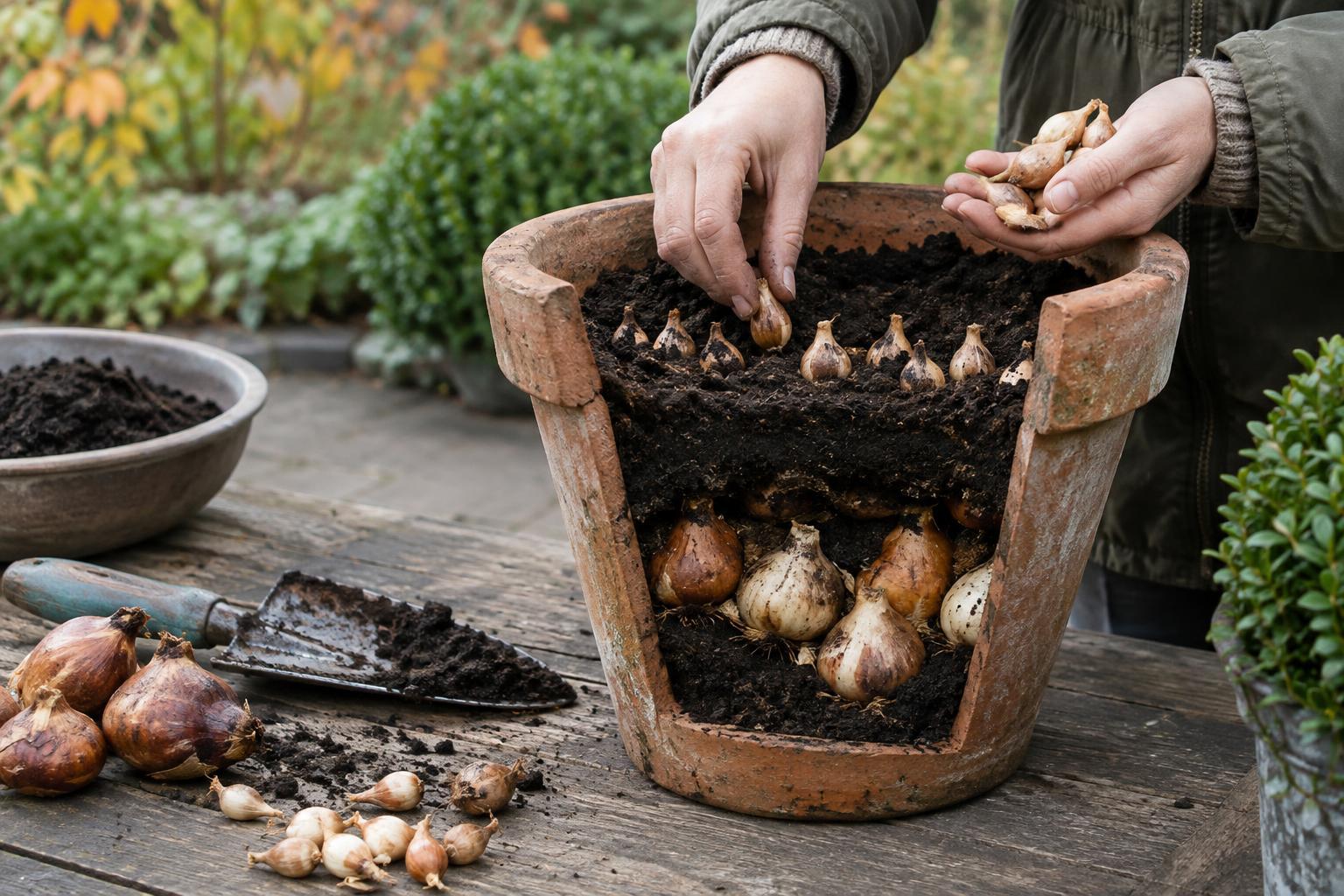
A layered bulb pot places different bulbs at different depths in the same container. Gardeners sometimes call it a bulb lasagne: larger bulbs sit lower down, while smaller bulbs occupy the space above them. As the bulbs grow, they can produce successive displays without taking up more floor space. It is a useful project for a doorstep, balcony or small patio.
Choose bulbs suited to your local growing conditions and to container planting. One possible combination is tulips for the bottom layer, daffodils in the middle and crocuses near the top. You could also include grape hyacinths if you like their compact flower spikes. Flowering order varies by variety and weather, so check packet descriptions if a particular sequence matters to you. For a calmer display, choose a limited range of flower colours rather than trying to fit every favourite into one pot.
Choose a roomy container and free-draining compost
Use a pot with drainage holes and enough depth to hold several layers of bulbs with compost between them. A broad, sturdy container also gives you room to arrange bulbs without crowding them. Fill it with a suitable potting mix that drains well; bulbs are less likely to do well if they sit in persistently soggy compost. Set the pot where excess water can escape rather than collecting beneath it.
Before filling the pot, consider where it will spend winter. A planted container can be heavy and awkward to move. Position it where you can reach it for occasional checks, and where emerging shoots will receive light in spring. If squirrels or other animals tend to disturb freshly planted pots in your area, have a piece of mesh ready to secure over the top until the bulbs are established.
Build the layers from large bulbs to small
Add a base of compost, leaving enough room above it for the deepest bulbs, the remaining layers and a final covering of compost. Place the largest bulbs on this first level with their pointed ends upward. Leave a little space between them and keep them away from the pot wall. Cover them with compost, then set the next group of bulbs above, offsetting their positions rather than stacking each bulb directly over another.
Repeat with the smallest bulbs nearest the surface. Follow the planting-depth guidance on each bulb packet where possible; bulb sizes and recommendations differ. Leave a little space below the rim so water does not spill over when you water. Add compost to cover the top layer, gently firm it to remove large air gaps, and water once to settle everything in place. Label the pot while you still remember what you planted.
Look after the pot through winter
Most spring-flowering bulbs benefit from a cool period before they bloom, so an outdoor pot is often a good choice where the bulbs are suited to the climate. Keep an eye on moisture rather than watering on a fixed schedule. Rain may provide enough; if the compost becomes dry, water it lightly. If it stays saturated, check that the drainage holes are clear and the pot is not standing in a tray of water.
Containers can be more exposed to cold than bulbs planted in the ground. In places with prolonged hard freezes, move the pot to a sheltered, unheated spot or insulate the container as appropriate for your conditions, while avoiding a warm indoor room. Remove any protective mesh before shoots grow through it. Once growth appears, give the pot a bright position and water when the compost begins to dry.
Enjoy the flowers, then decide what comes next
As each group finishes flowering, remove spent flowers if you wish, but leave green foliage in place. The leaves help the bulbs store energy for future growth. They can look untidy for a while; placing the pot beside a leafy container may soften the view without cutting the foliage back too soon.
When the leaves have yellowed and died back naturally, you can lift and store suitable bulbs or leave them in the pot if it will remain well drained. Repeat flowering in containers is not guaranteed, particularly for some tulips, so treat any return as a welcome bonus. If you have pets or young children, keep bulbs and planting materials out of reach: many ornamental bulbs are harmful if eaten.