Start with the light plants actually receive
A small outdoor space may look sunny from indoors, yet a railing, roof overhang or neighboring building can shade its planting area for much of the day. Before choosing plants, measure the light where their leaves will be. The floor, the top of a railing planter and a shelf against the wall can have different exposures, even when they are only a short distance apart.
For this purpose, direct sun means sunlight reaches a spot without a solid object blocking it. Bright shade still provides useful light, but it is not the same as direct sun. If you can see a clear, defined shadow cast by a small object at the planting spot, direct sun is likely reaching it. On an overcast day, shadows may be too faint for this test, so make most observations when the sky is reasonably clear.
Make a simple sun map
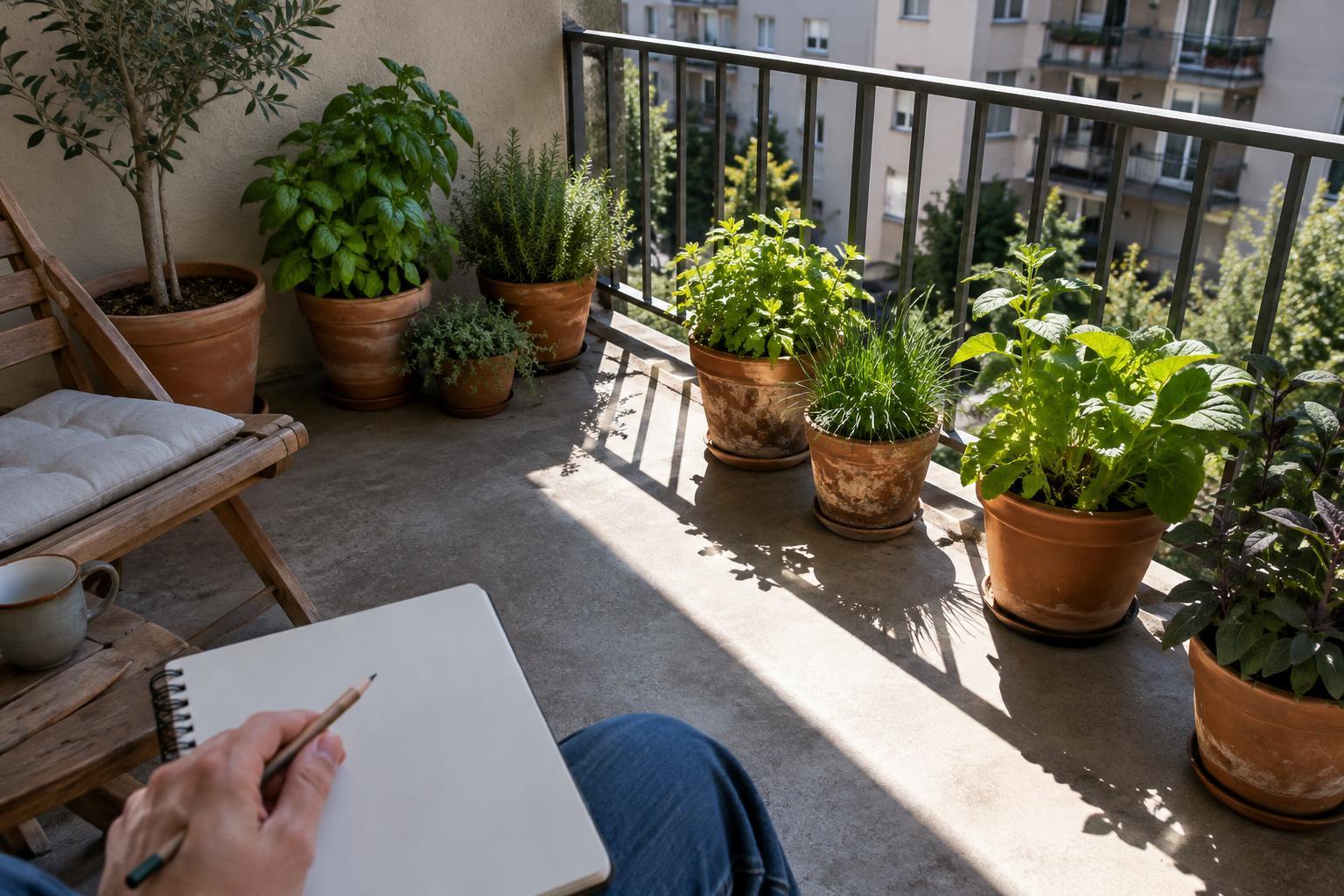
Sketch the balcony or patio from above. Mark fixed features such as walls, doors, railings and overhead cover. Then choose a few realistic planting spots: perhaps the outer corner, the area beside the door and the place you could fit a container near the wall. Give each spot a letter so your notes stay easy to read.
On a clear day when you can be at home, check each spot about once an hour from morning through late afternoon. Write down the time and whether the spot is in direct sun, bright shade or deep shade. Note any obstruction that explains a change. You do not need special equipment; a paper grid or a note on your phone will do. Take observations at the height where plants will grow, not just on the paving below them.
At the end of the day, add up the periods of direct sun for each spot. Hourly checks give an estimate rather than an exact total: a patch of sun may move in or out between visits. If a spot is close to the amount of light a desired plant needs, check more frequently around the times its light changes. Repeat the survey on another clear day if you can, especially if the first day was interrupted or unusually hazy.
Read the pattern, not just the total
Many plant labels describe full sun as roughly six or more hours of direct light, partial sun or partial shade as roughly three to six hours, and shade as less than that. These are useful starting points, not guarantees: plants differ, and label terms are not always used consistently. Record both the estimated hours and when they occur. Four hours of morning sun may feel quite different from four hours of strong afternoon sun, particularly in a sheltered corner that holds heat.
Look for narrow bands of light that cross your space. A pot may receive sun at its base while its leaves remain behind a solid railing, or a trailing plant may extend into brighter light than the container itself. Reflective walls and pale paving can make a shaded area appear bright, but reflected light should not be counted as direct sun. Also note whether exposed spots dry out quickly or catch strong wind; sun hours alone do not describe the whole growing environment.
Allow for seasonal changes
One day’s map is a snapshot. As the sun’s path changes through the year, a wall or overhang may cast a longer shadow, while a gap between buildings may admit light at different times. Trees can also change the pattern as their foliage grows or falls. If you have the space for a small note on your map, record the season and any temporary conditions, such as construction screening or a movable shade.
You do not need to wait a year before planting. Use your first map to make a sensible start, then revisit it when the light pattern visibly shifts. Containers offer flexibility: a pot that suits a bright corner now may be moved later if another spot becomes better. Check that its new position is stable and that water can drain without causing problems below.
Turn your notes into a planting plan
Match plants to the conditions you observed rather than the direction the balcony faces. Put plants that call for more direct light in the longest-lasting sunny spots, and reserve reliably shaded areas for plants suited to lower light. If a plant label calls for full sun and your best spot receives only a brief window, choose a different plant instead of hoping that general brightness will make up the difference.
Leave room to adjust. Start with a few containers, watch how the plants respond and check the soil before watering rather than using sun exposure as your only guide. A leggy plant may need more light, while scorched or fading leaves may suggest the spot is too intense for that plant; watering and other conditions can also play a part. Your sun map is most useful as a working record, one you can update as the space and its shadows change.