Why save autumn leaves?
Fallen leaves can become leaf mold: a dark, crumbly material made as leaves slowly break down. Unlike a typical compost heap, a leaf mold bag does not need a mix of kitchen scraps and other ingredients. It is a simple seasonal project for anyone with a few bags and a sheltered outdoor corner.
Leaf mold is valued for the texture it adds to soil and for its ability to help soil hold moisture. It is not a concentrated fertilizer, so think of it as a soil improver or mulch rather than a complete source of plant food. One or two manageable bags are enough to try the method without committing space to a large pile.
Gather leaves and prepare the bags
Collect fallen leaves from a garden, path or other place where you have permission to gather them. Pick out litter, large sticks and obvious pet waste. If leaves show extensive signs of disease, leave them out of this project; bagged leaves break down slowly and are not managed like a hot compost heap. A mix of ordinary deciduous leaves works well. Thick, leathery leaves may take longer to soften than thin ones.
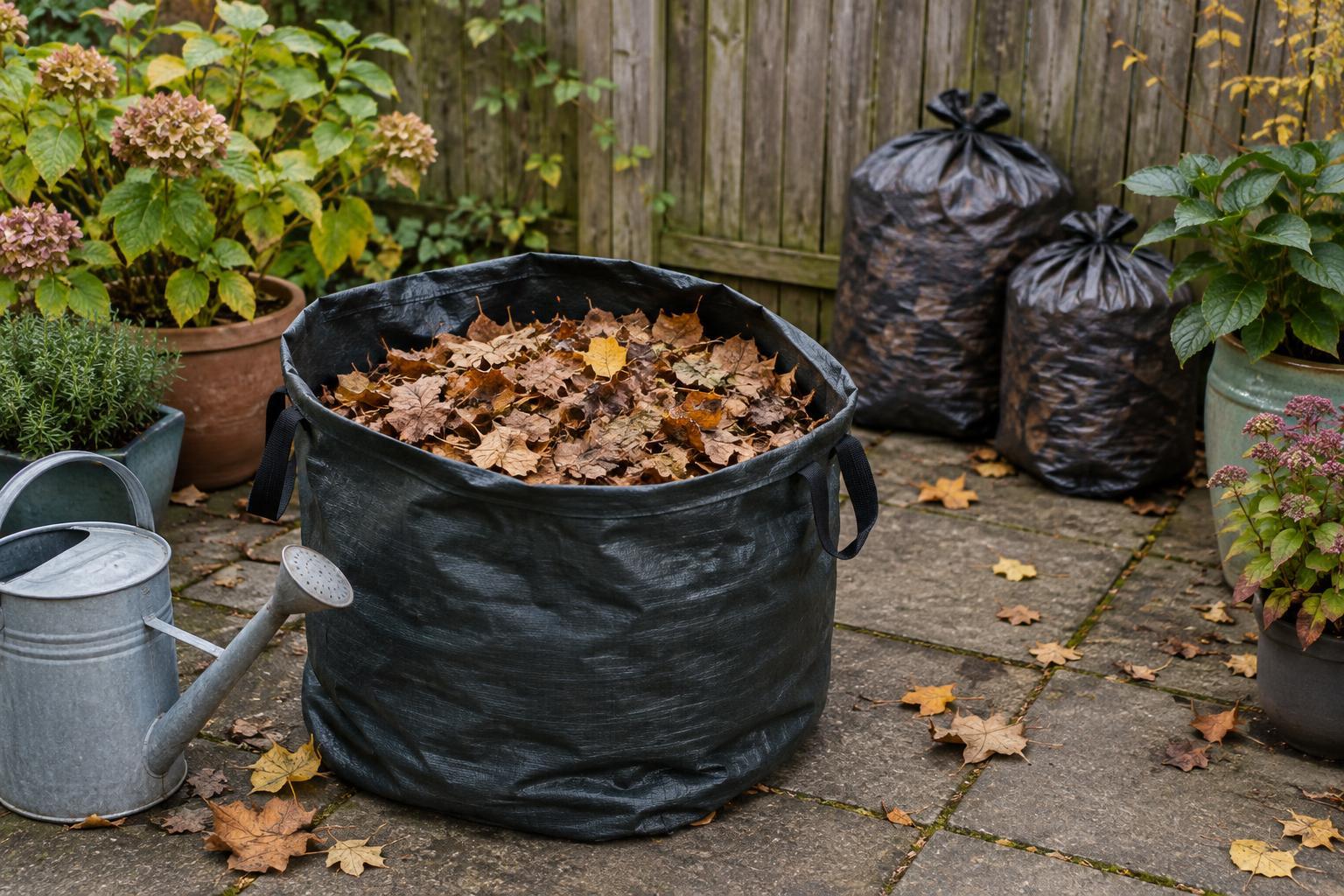
Use sturdy reusable sacks or plastic garden bags that you can tie loosely. Make several small holes around the sides and near the bottom so excess water can drain and air can enter. Avoid bags so large that you cannot move them when full. If you have many leaves, make several smaller bags instead.
Whole leaves will break down, but smaller pieces pack more neatly and usually soften faster. You can run a mower over a leaf pile if you already use one, or simply crush dry leaves by hand as you fill the bag. Shredding is optional; there is no need to buy a tool for this project.
Fill, dampen and store
Put leaves into each bag in loose handfuls. If they are dry, add a little water as you go and turn or shake the bag to spread the moisture. Aim for leaves that feel damp, not leaves sitting in a pool of water. Rain-wet leaves may need no extra water. Gently press them down to make room, but do not compact them into a solid block.
Tie the top loosely, or fold it over so the contents stay put while some air can still move through the holes. Set the bags upright in a shaded, out-of-the-way outdoor spot where they will not block a path or blow around. A sheltered corner beside a shed or fence can work well, provided water can drain away. Keep bags out of indoor living areas: this is a damp, decomposing garden material.
Over the following months, check a bag occasionally. If the leaves have become crisp and dry, sprinkle in a little water. If they are soggy, let excess water drain and add more holes if needed. You do not have to turn the contents regularly, though a gentle shake can help redistribute leaves near the outside.
Know when it is ready
Leaf mold develops at its own pace. Leaf type, particle size, moisture and weather all affect how long it takes; it may need a year or more to become fine and crumbly. Rather than relying on a calendar, open a bag and look at the material. Partly broken-down leaves are still recognizable. Finished leaf mold is darker, soft and earthy, with little of the original leaf shape remaining.
If a bag contains a mixture of textures, you can use the finer material and put the larger pieces back to continue breaking down. There is no need to rush. Bags that have torn can be emptied into another sack or a covered garden container so the contents do not scatter.
Use it around plants
Spread finished leaf mold over the soil in garden beds or around established container plants, leaving a little space around stems. It can also be mixed into garden soil when preparing a planting area. Its main contribution is organic texture, so continue to meet each plant’s light, water and feeding needs as usual.
For pots, use leaf mold as one component of a suitable potting mix rather than assuming it can replace the whole mix. Its texture varies from batch to batch, and young seedlings may need a more consistent growing medium. When handling dry leaf mold, dampen it lightly to limit dust, and wash your hands afterward. Then save the empty bags for another autumn if they are still in good condition.