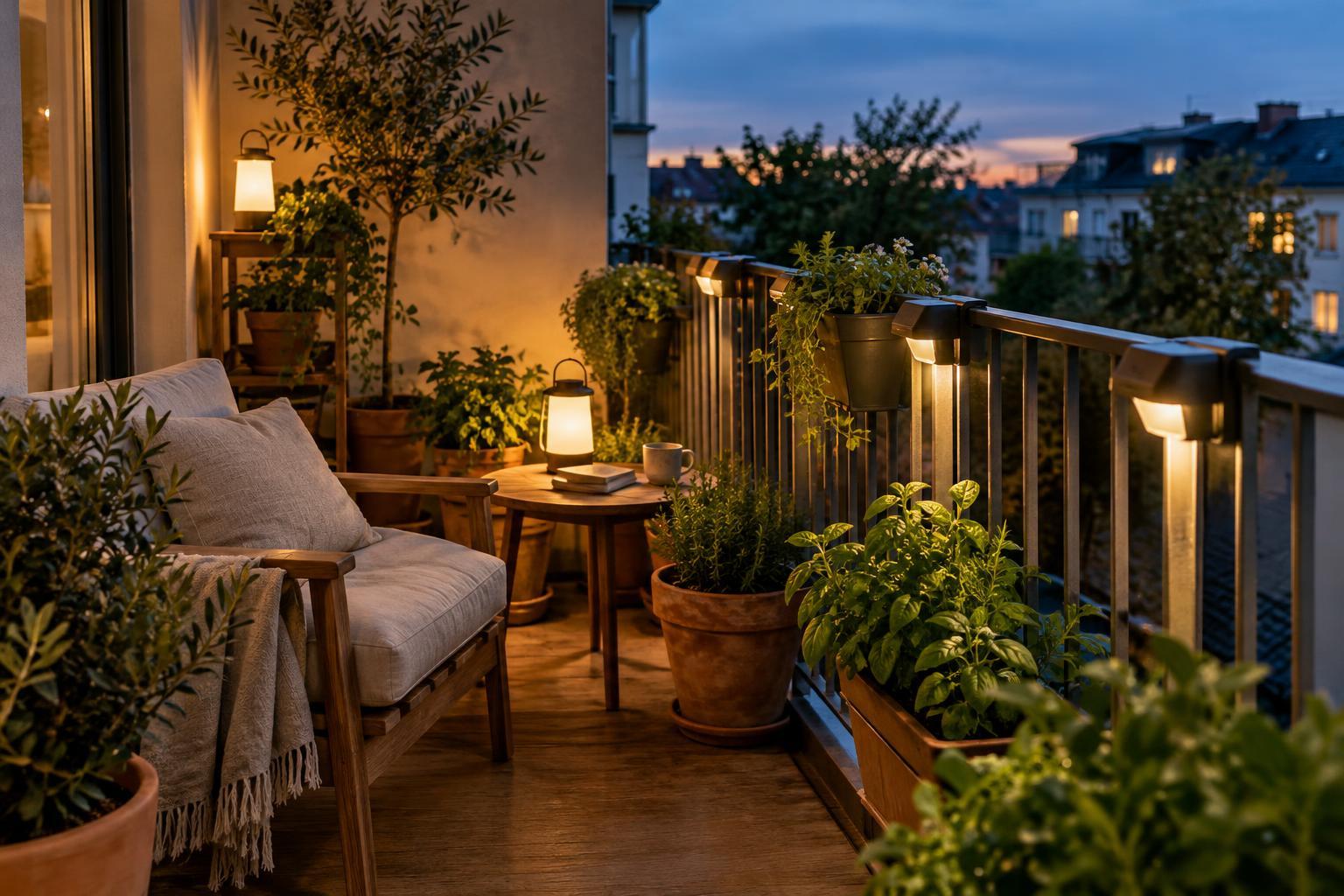
Plan the glow before choosing the lights
Start with what you want to do on the balcony after sunset. A small dining table benefits from a light that lets you see plates and drinks. A reading chair needs a more focused beam, while a balcony used mainly for conversation may feel better with several softer points of light. Lighting these spots separately is often more useful than trying to brighten the whole space with one powerful lamp.
Look at the balcony from both inside and outside. Note where people walk, where doors open, and which surfaces can hold a lamp without crowding plants or drinks. A practical plan might put a rechargeable table lamp beside the seating, a low light near the doorway and a gentle accent among the pots. Keeping the route across the balcony clear is the simplest way to avoid trailing cables.
Choose a power source that suits the spot
Rechargeable lamps are a flexible choice for a covered or shaded balcony. They can move between a table and a shelf, and you can bring them inside to charge rather than running a cable through the door. Check the maker’s guidance before buying: a lamp intended only for indoor use should not be left outside, even on a warm evening. Consider how easily you can carry and charge it, as well as how long it will run at the brightness you prefer.
Solar lights work best where their panels receive enough direct daylight. A balcony shaded by an overhang or neighboring building may give them less charging time, so treat them as accent lighting rather than your only dependable light. Battery-powered LED lanterns are another portable option, particularly for occasional use. Whichever type you choose, follow its instructions for outdoor exposure, charging and battery care.
Put light where it helps, not where it gets in the way
Place your most useful light close to the activity it serves. A shaded rechargeable lamp on a table can illuminate a meal without shining straight into anyone’s eyes. For a reading seat, try a portable lamp on a stable side table and adjust its position until the page is comfortable to see. Low lights can define the edge of a planting group, but keep them away from the main walking route.
If you use solar string lights, choose a position for the panel before deciding where the lights will go. Keep the short wire between panel and lights tidy and off the floor; cable-free from the socket does not always mean wire-free. Secure lights only to suitable, stable features, following the product instructions. Avoid draping anything where it could catch on a door, interfere with a neighbor’s space or come loose in the wind.
Build a softer summer atmosphere
A few modest light sources usually create a calmer setting than one bright, exposed bulb. Try a warm-toned table lamp for faces and food, then add a dimmer lantern beside a cluster of leafy pots. Leaves and natural textures can catch the glow and make a small balcony feel layered, even when there is little room for decoration. If a light has a dimmer, begin at its lowest useful setting.
Keep neighboring windows in mind when aiming lamps or hanging accent lights. Direct the light down toward the table or plants rather than outward. You can also test the arrangement from your indoor room: a balcony that looks inviting through the open door may need less light than you first expected.
Make the setup easy to use and put away
The best arrangement is one you can manage on an ordinary evening. Give rechargeable lights a regular place indoors near their chargers, and keep portable lanterns together so they are easy to carry out. Before settling on a layout, walk through it in the dark with the lights on. Check that you can find the doorway, move around chairs and reach your plants without stepping around equipment.
Weather and wind can change quickly, so check each product’s outdoor rating and follow its storage instructions. Set lamps on stable surfaces and bring in anything that might blow over or should not be left in rain. With a clear floor and a few well-placed portable lights, the balcony can be ready for summer evenings without a cable stretching across the threshold.