Start with a careful look
A plant can move through very different conditions on its way to your home. Greenhouse light, a shop display and the trip back may each differ from the room where it will live. Give it a quiet start rather than trying to perfect everything on the first day. Remove any decorative wrapping that traps water around the pot, and check that the pot has drainage holes or can be lifted out of its cover pot for watering.
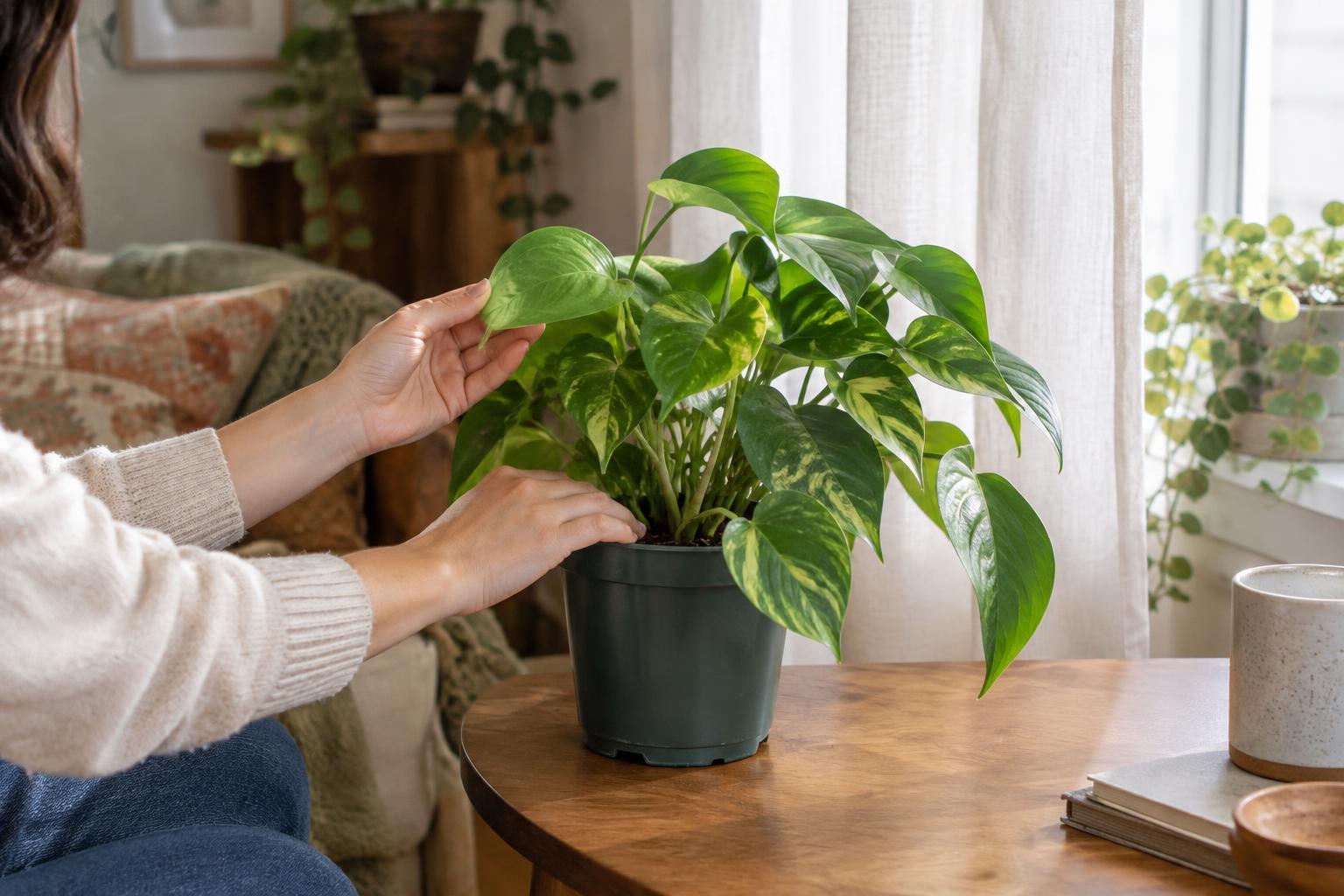
Before placing the newcomer beside other plants, look over the tops and undersides of leaves, stems and the soil surface. Watch for insects, sticky residue, fine webbing or clusters of bumps. A few damaged leaves may simply reflect handling, but signs of pests deserve a closer look. If you can, keep the plant apart from your collection for a week or two while you observe it. This makes it easier to notice a problem before it spreads.
Choose a place with appropriate light
Use the plant’s care label as a starting point, then pay attention to the light in your actual room. “Bright, indirect light” generally means a well-lit position where strong sun does not fall on the leaves for long. A plant sold from a shaded shelf may need a gradual introduction even if its species can tolerate some direct sun. Move it closer to a bright window in stages, or filter harsh light with a sheer curtain, to reduce the chance of scorched leaves.
Keep the plant away from heating vents, cold drafts and spots where its leaves press against a window. A convenient position is one you can reach to check the soil and turn the pot occasionally. Once you have chosen a reasonable spot, resist moving it every day in response to a single drooping leaf. Give the plant time to respond, and make changes based on repeated signs rather than one brief observation.
Check the soil before watering
Do not assume a newly bought plant needs a drink. It may have been watered just before you brought it home, and damp soil can remain wet longer in a less bright room. Feel the soil below the surface with a finger or a wooden skewer, and notice how heavy the pot feels. Water when the soil has dried to a depth appropriate for that plant, rather than following a fixed calendar. A moisture-loving fern and a succulent should not be treated alike.
When it is time to water, wet the soil evenly and let excess water drain away. Empty any water left in a saucer or cover pot so the roots are not sitting in it. If water races down the sides of very dry soil without soaking in, water slowly in several passes and check that the soil has absorbed moisture. Yellowing or drooping can have more than one cause, so check the soil before deciding that more water is the answer.
Hold off on major changes
It is tempting to repot a new plant immediately, especially if the nursery pot looks plain. In many cases, it is easier on the plant to let it settle first and place the nursery pot inside a decorative cover pot. You can repot later if roots are crowded, the soil dries unusually quickly, or the current pot has no workable drainage. If you do need to repot, choose a container only modestly larger than the root ball and a potting mix suited to the plant.
The same restraint applies to fertilizer and pruning. A plant adjusting to new light and watering conditions does not need several other changes at once. Remove leaves that are fully dead, but wait before reshaping healthy growth. Keeping the routine simple also helps you work out which condition may need adjusting if the plant struggles.
Observe, then adjust one thing at a time
Some change after a move is possible: a plant may shed an older leaf or pause its growth while it settles. Over the following weeks, look for the overall pattern. Are new leaves healthy? Does the soil dry at a manageable pace? Is the plant leaning strongly toward the window or developing pale, stretched growth? Those clues are more useful than judging it on a single day.
If something seems wrong, begin with the basics: light, soil moisture, drainage and visible pests. Change one condition, then allow time to see whether it helps. Acclimation is less about a special treatment than about providing suitable conditions consistently. Once you learn how the plant behaves in your room, caring for it becomes a simpler part of your everyday routine.