Choose a spot and a type of strawberry
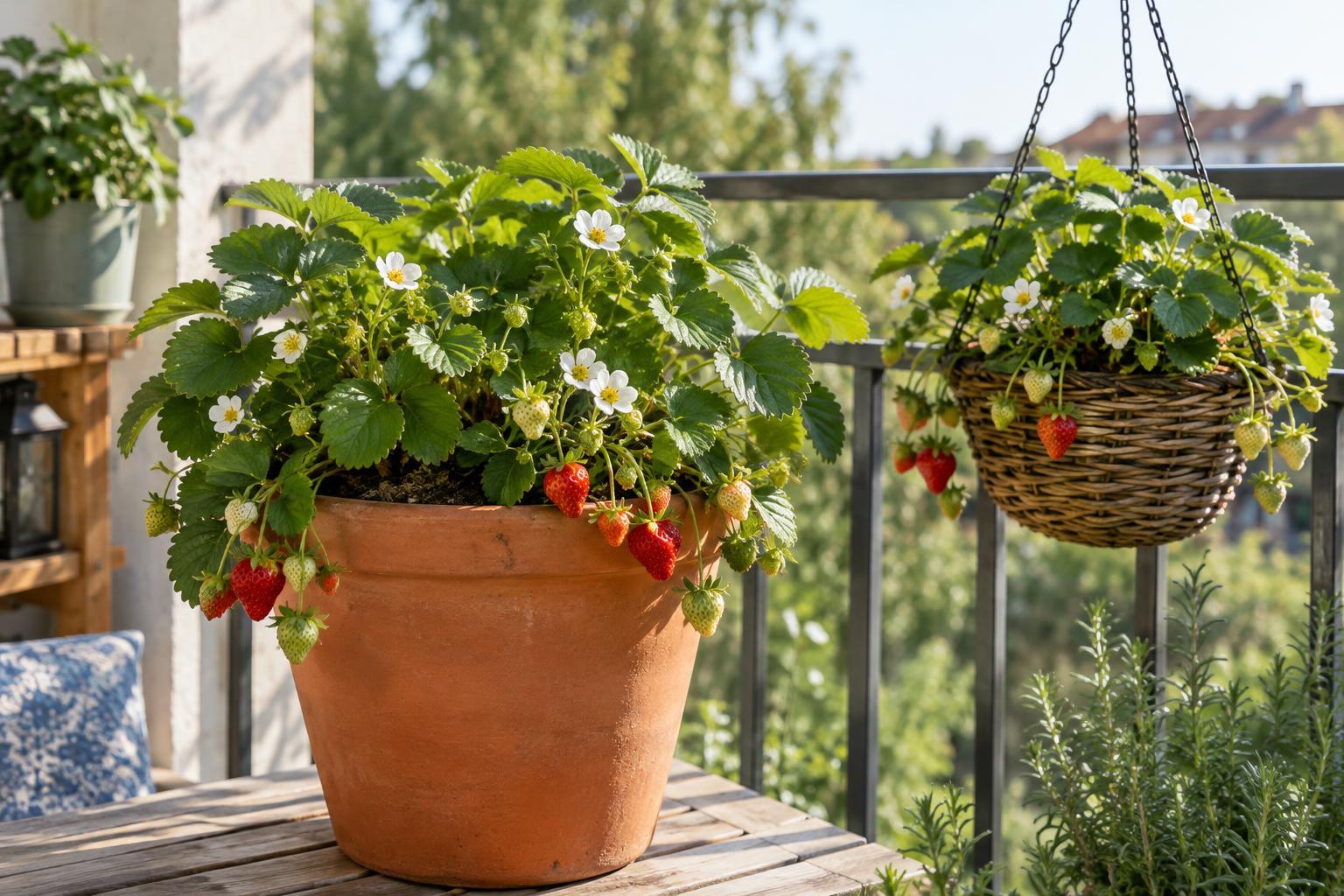
Strawberries are well suited to containers because their roots can grow in a manageable amount of space and their fruit hangs within easy reach. Start with the sunniest practical spot you have. Most varieties fruit best with around six or more hours of direct sun, though a little afternoon shade can help keep containers from drying too quickly in hot weather. If your balcony is exposed, place pots where they will not tip over and check that hanging baskets are securely supported.
Plant labels can help you decide what kind to grow. June-bearing strawberries tend to produce one main crop, while everbearing and day-neutral types can produce fruit over a longer period when conditions suit them. For a small space, a longer harvest may be appealing; for a batch of fruit at once, a June-bearing variety may be more useful. Choose healthy plants with firm crowns and leaves that show no obvious damage.
Give the roots enough room
Pick a pot or basket with drainage holes and enough depth to hold a useful volume of compost. A shallow decorative bowl may look attractive, but it can dry out quickly and restrict root growth. A pot roughly 25 to 30 cm wide can accommodate a few plants, depending on its depth and the variety; leave space between crowns rather than packing every gap. In a hanging basket, remember that wet compost is heavy. Use a sturdy basket, liner and fixing rated for the load.
Fill the container with fresh, good-quality potting mix rather than soil dug from the garden, which may compact in a pot. Set each plant so its crown—the point where leaves meet roots—sits at the surface. Burying the crown can encourage rot, while leaving the roots exposed can cause them to dry out. Firm the mix gently around the roots, water thoroughly and let the excess drain away. If the mix settles, top it up without covering the crown.
Keep watering and feeding steady
Container-grown strawberries rely on you for moisture, especially when they are flowering and carrying fruit. Check the potting mix with a finger rather than watering to a fixed schedule. When the top layer feels dry, water until it runs from the drainage holes, then allow the container to drain freely. On warm or windy days, hanging baskets may need checking more often than pots on the ground. Try to water the mix near the base of the plants instead of repeatedly soaking the leaves and fruit.
Potting mix contains a limited supply of nutrients. Once plants are established, use a fertilizer suitable for fruiting container plants according to its label; more is not necessarily better. If flowers appear but little fruit develops, consider whether pollinating insects can reach the plants. Outdoors, they usually can. In an enclosed space, opening access when practical or gently transferring pollen between flowers with a small, soft brush may help.
Make fruit easy to pick and protect
Let fruit ripen on the plant until it is colored all over, then pick it gently with a short piece of stem attached. Check plants regularly so ripe berries do not sit and soften. Hanging baskets naturally lift much of the fruit away from the ground; in pots, a thin layer of clean straw or another suitable mulch can help keep berries off damp compost. Keep mulch clear of the crowns.
Birds and slugs may find strawberries before you do. Fine netting can protect a pot if it is secured so wildlife cannot become trapped; check it regularly and remove it when it is no longer needed. Move pots out of easy reach of slugs where possible, and clear away fallen or damaged fruit. Strawberry plants also send out runners that form new plants. Snipping off most runners directs space and energy back to the parent plant, but you can root a healthy runner in a small pot if you want another plant.
Care for plants after the harvest
When fruiting slows, continue watering as needed and remove dead or badly damaged leaves. Strawberry plants are perennial, but their roots are more exposed to cold in containers than in the ground. Where winters are cold, move pots to a sheltered position and insulate the container if needed, while keeping drainage holes open. Water lightly during dry spells rather than leaving the mix permanently wet. Hanging baskets may be easier to take down and shelter than to protect in place.
In spring, remove tired foliage and refresh the top layer of potting mix without burying the crowns. As plants become crowded or less productive over time, replace them with new plants or healthy runners you have rooted. A few well-spaced plants that are easy to reach and care for will usually make a more satisfying small-space strawberry patch than an overfilled basket.