Start with the light you have
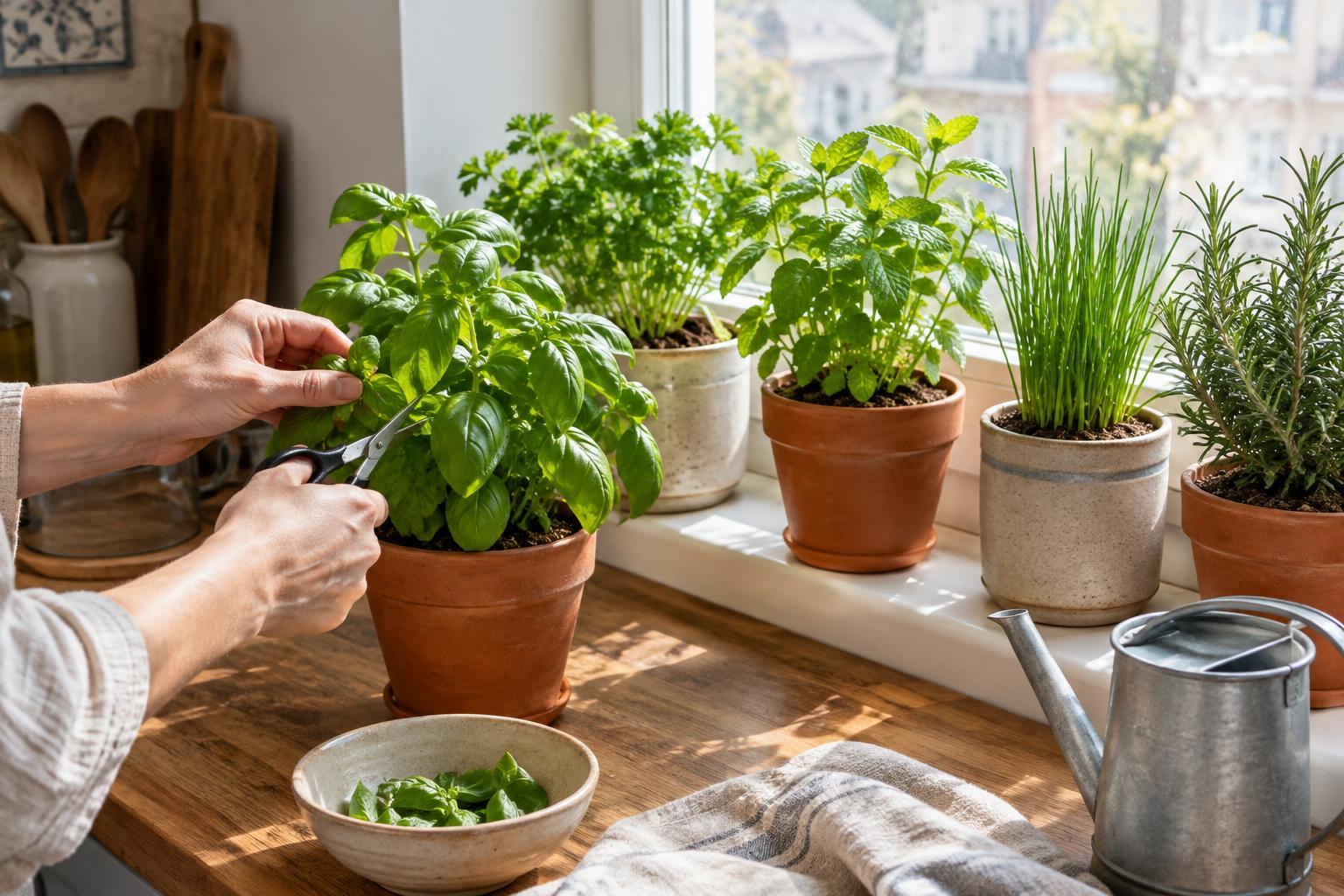
Before buying herbs, watch the place where you hope to grow them. Most culinary herbs need a bright position to produce sturdy, flavorful leaves. A window that receives several hours of direct sun is a good starting point for basil, rosemary, thyme and oregano. Parsley, chives and mint may cope with a somewhat less sunny spot, though they still need plenty of daylight. If a plant stretches toward the window, develops small leaves or grows weakly, it may need more light.
Keep pots close enough to the window to benefit from the light, but check for drafts and extreme temperatures. Leaves pressed against cold glass can suffer, while a hot window may dry small pots quickly. If your home lacks a suitable window, a grow light can make indoor herbs more practical. Follow the light maker’s placement guidance and give plants a regular period of darkness rather than leaving the light on continuously.
Choose herbs that fit your cooking and your space
Start with two or three herbs you use often. Basil is useful for frequent leaf harvests but appreciates warmth and strong light. Chives provide slender leaves that can be snipped in small amounts. Parsley is versatile, while thyme and oregano suit cooks who prefer compact, woody herbs. Mint grows readily in suitable conditions, but give it its own pot: it can crowd neighboring plants in a shared container.
Young plants offer a quick start and let you see how an herb responds to your room. Seeds can be satisfying, especially for basil or parsley, but seedlings need careful attention to light and moisture. Whether you buy a plant or grow one from seed, check its leaves and stems before bringing it indoors. A plant with healthy growth and no visible insects is easier to settle into a kitchen than one already struggling.
Give roots a workable home
Use a pot with drainage holes and a loose potting mix intended for containers. Roots need both moisture and air; a container without an outlet makes it harder to avoid soggy soil. Set the pot on a saucer to protect your shelf, then empty any water left in the saucer after watering. Decorative pots without holes work best as outer covers around removable, draining nursery pots.
Choose a container that gives the roots a little room without surrounding a small plant with a large volume of wet mix. If you bring home a crowded supermarket herb pot, you can gently divide it into a few smaller groups and repot them separately. Handle roots as little as possible and keep the newly potted plants out of harsh conditions while they adjust.
Water by checking the soil, not the calendar
Indoor pots dry at different rates depending on light, temperature, pot size and plant growth. Press a finger into the top of the mix before watering. When it feels dry at the surface and slightly below, water thoroughly enough that some runs from the drainage holes. Let excess water escape rather than giving the plant repeated small splashes that wet only the top layer.
The right interval will vary by herb. Basil and parsley may need more regular moisture, while established thyme, oregano and rosemary generally prefer the mix to dry somewhat between waterings. Yellowing leaves, limp growth or persistently damp soil can point to overwatering, but they can have other causes too. Check the soil and roots before adding more water. Remove dead leaves promptly and allow space around pots for air to circulate.
Harvest a little and keep plants growing
Begin harvesting once a plant has enough healthy growth to spare. For basil, pinch a stem just above a pair of leaves to encourage branching. Snip chives near the base, leaving some growth in place, and take outer parsley stems rather than stripping the center. With thyme, oregano and rosemary, cut modest lengths of healthy stems instead of removing large woody sections. Regular, light harvests are easier on a small indoor plant than one severe cut.
Look over your herbs as you pick. Sticky leaves, fine webbing or clusters of insects are reasons to isolate a plant and inspect it more closely. If an herb repeatedly weakens despite reasonable light, watering and room to grow, replacing it may be simpler than trying to maintain it indefinitely. An indoor herb garden does not have to be permanent to be useful: a few well-kept pots that earn their place in your cooking are a successful start.