Start with the space, not the plants
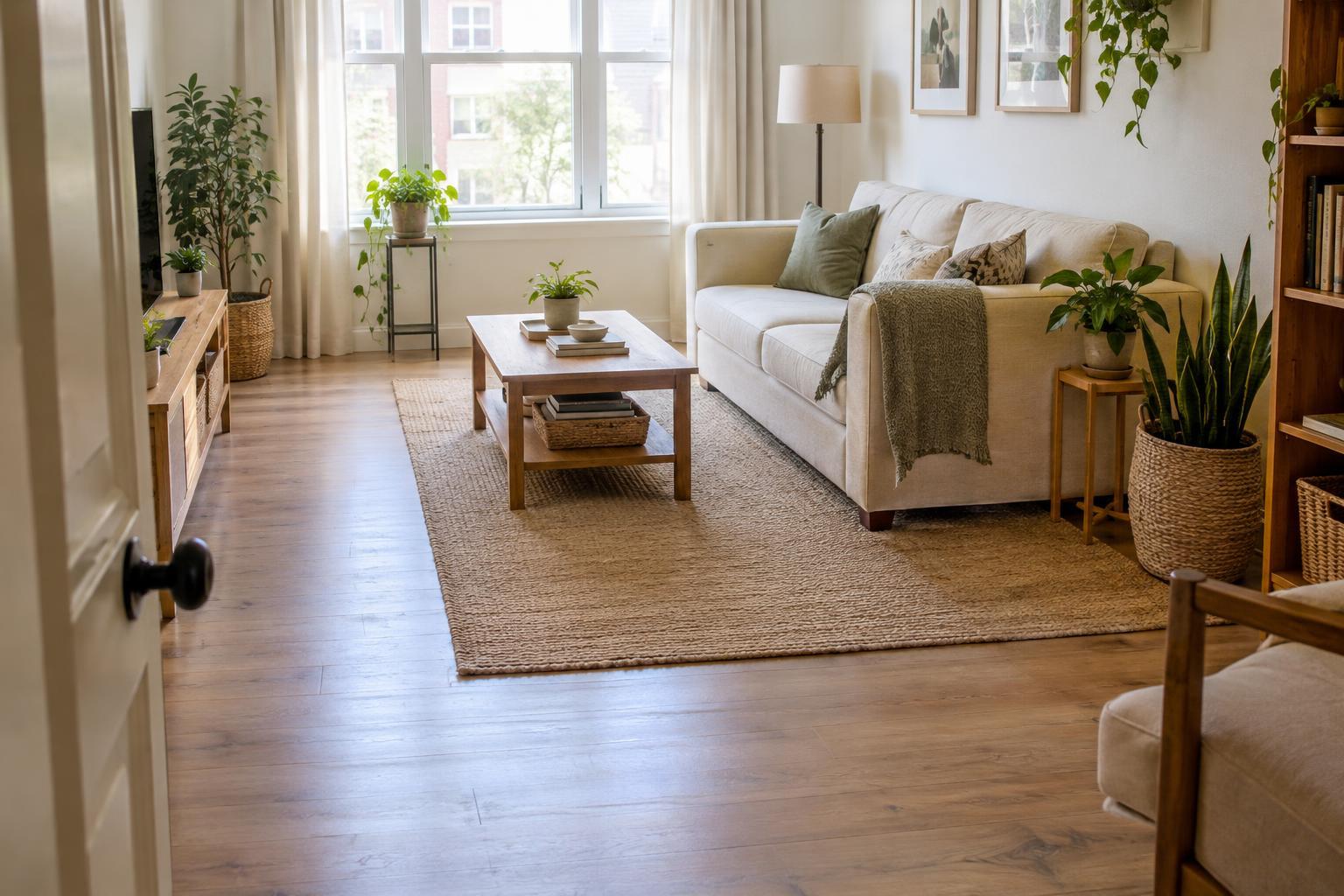
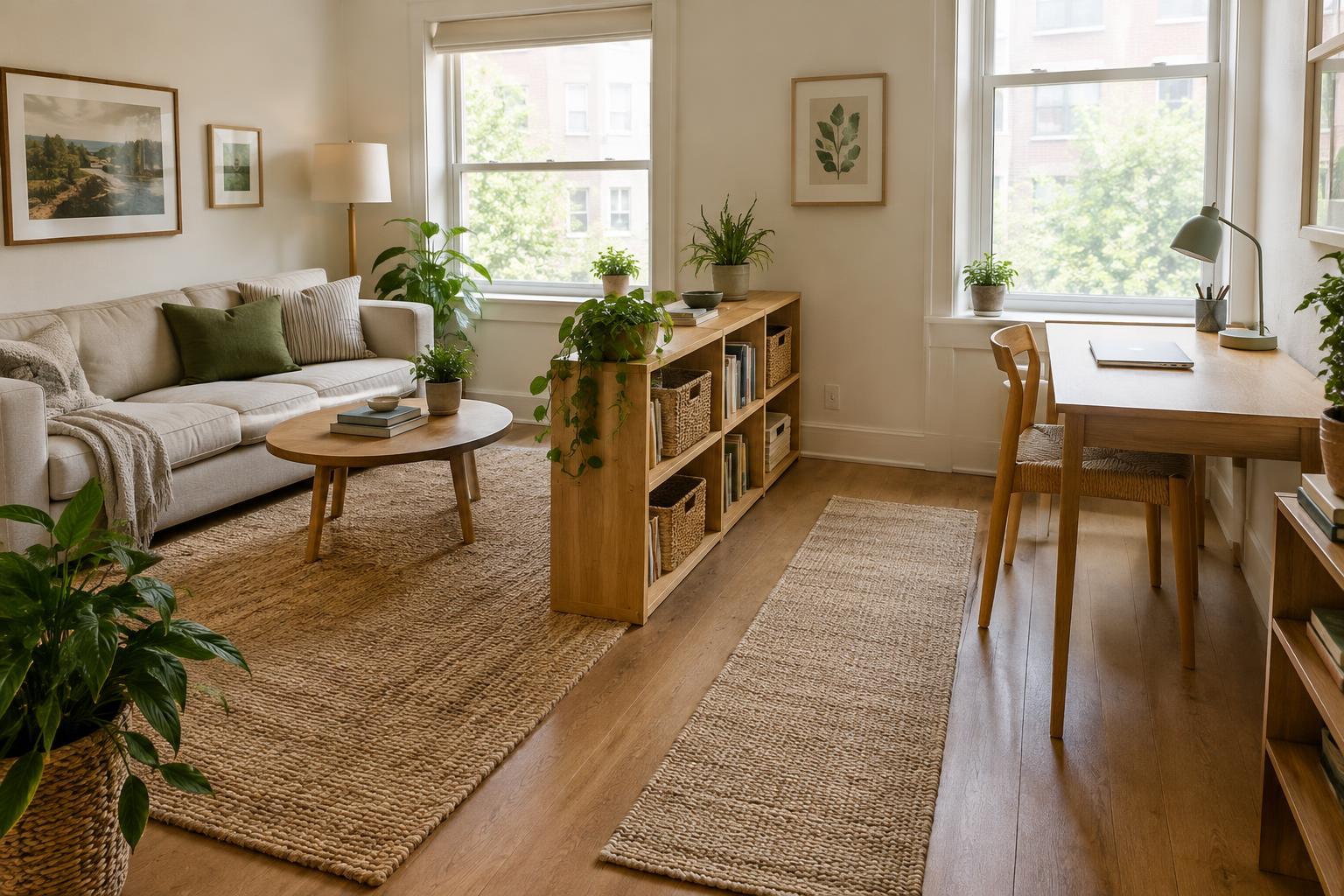
A good plant grouping begins with a boundary. Choose one part of the room—a window corner, the end of a sofa or an empty stretch beside a bookcase—and decide how much floor space it can use. Leave doors, drawers and regular walking routes clear. If you have to turn sideways to pass the display or move a pot to open a cabinet, the grouping is too large for that spot.
Look at the area from the places where you usually sit and enter the room. A cluster that seems compact from one angle may block a view or make a small room feel busy from another. It can help to mark the proposed footprint with pieces of paper before moving heavy pots. Aim for a shape that belongs to the furniture layout rather than a row of plants pushed against the wall.
Build a simple high, middle and low arrangement
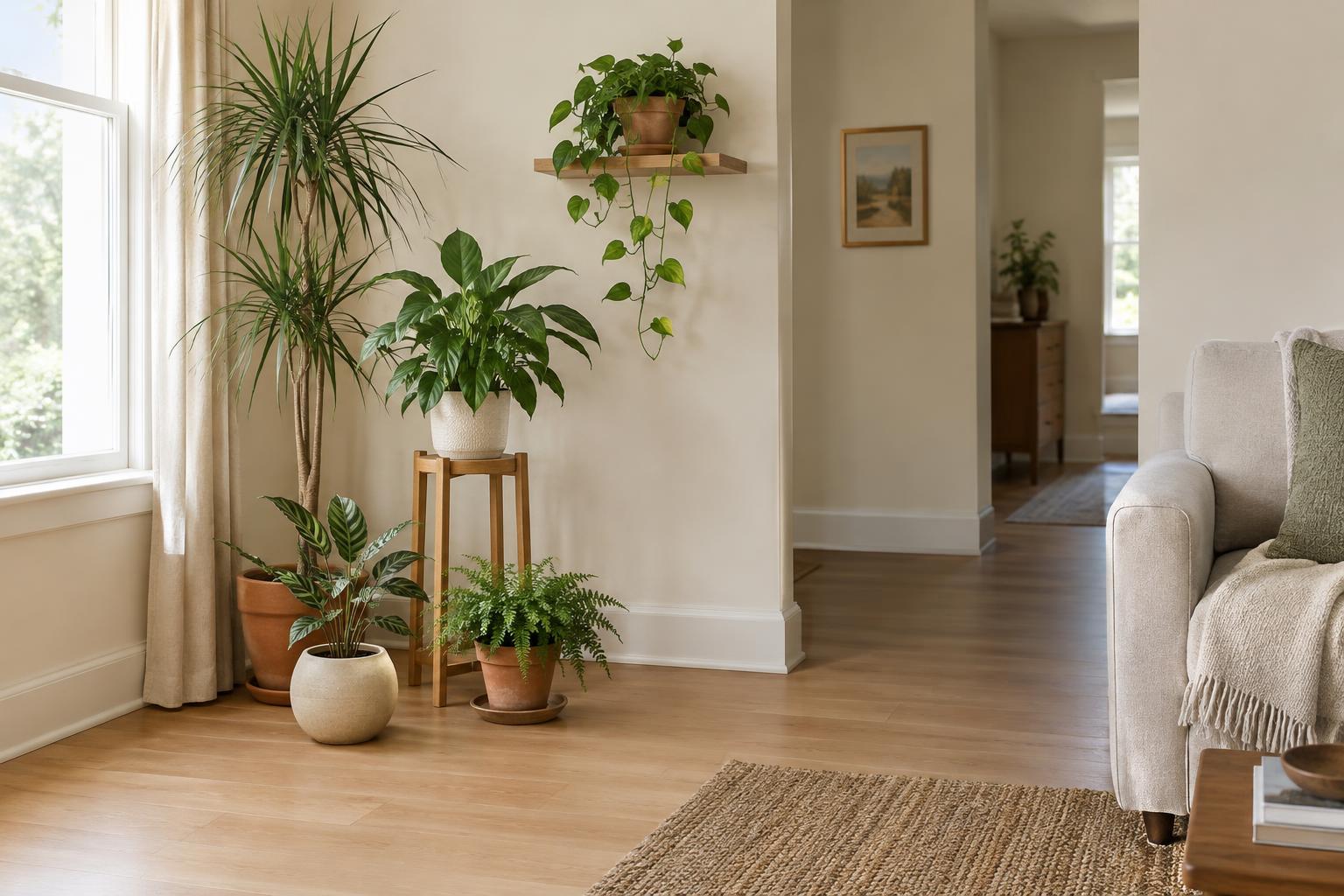
Three height levels are often enough to create depth. Put the tallest plant or support toward the back, a medium-height plant slightly to one side, and a smaller pot near the front. Their outlines should overlap a little without hiding one another. A broad-leaved floor plant, an upright plant on a sturdy stand and a low pot on a side table could make one complete grouping.
Vary the height of the surfaces as well as the plants. A shelf can lift a small plant above a floor pot, while a trailing plant can soften the edge of a cabinet. There is no need to fill every level. An open gap between leaves lets light through and gives the eye a place to rest. If the display looks crowded, remove one plant before buying another stand.
Pay attention to mature size, not just how a plant looks today. A plant that spreads outward may need more space than a taller, narrower one. Arrange pots so leaves are not constantly brushed by people passing, and leave enough access to turn a pot, check its soil and clean around it.
Match the grouping to the available light
Grouping plants by appearance alone can make care difficult. Observe where direct sun falls during the day and which parts of the proposed display remain farther from the window. Place each plant according to its own light needs rather than assuming the whole corner receives the same light. A high shelf may be dimmer than the floor near a window, while a plant at the front of a cluster may shade one behind it.
Keep window coverings usable and avoid pressing leaves against the glass, where temperatures can fluctuate. If plants in the same arrangement need very different conditions, separate them into smaller groups elsewhere in the room. This makes the display easier to maintain and gives each plant a better-fitting position.
Use supports that earn their place
Stands, stools and shelves add height, but too many can make a room feel like an obstacle course. Choose a few stable supports with footprints that suit the pots they hold. Check that a shelf is suitable for the combined weight of pots, soil and water, and keep heavy containers low. In homes with children or pets, consider whether a stand could be pulled or knocked over.
Repeated materials can make mixed plants feel like one arrangement. You might use two similar pot finishes, or let a wooden shelf echo another piece of furniture. The containers do not need to match exactly; a limited mix of colors and textures is usually calmer than a different statement pot at every height. Use saucers or watertight inserts where needed to protect floors and furniture, and empty standing water after watering.
Edit the display as it grows
Step back once the plants are in place. Can you see the shape of each one? Is there open floor around the grouping? Does the room still work for its everyday activities? Move a pot a little closer to its neighbors if the display feels scattered, or spread the plants apart if leaves merge into one dense mass. Small adjustments often do more than adding another plant.
Revisit the arrangement as leaves grow and daylight changes through the seasons. Prune where appropriate for the plant, rotate pots when useful for even growth, and relocate anything that outgrows its place. A comfortable plant grouping is not a fixed picture. It is a small, workable layout that gives greenery a presence while leaving the room easy to live in.