Start with the conditions, not the containers
A row of appealing pots is tempting, but plants that look good together may not thrive in the same spot. Before arranging a group, notice how much natural light reaches the area and whether that changes across the surface. The end of a shelf nearest a window may be much brighter than the end against a wall. Choose plants whose light needs suit their individual positions rather than assuming the whole grouping receives the same light.
Think about daily use of the room as well. A plant display beside a frequently opened door may get bumped, while one on a narrow windowsill may make it difficult to open the window. Start with a location where pots can stand securely and you can reach every plant without moving furniture. The best-looking arrangement is one you can comfortably maintain.
Build a group with varied heights
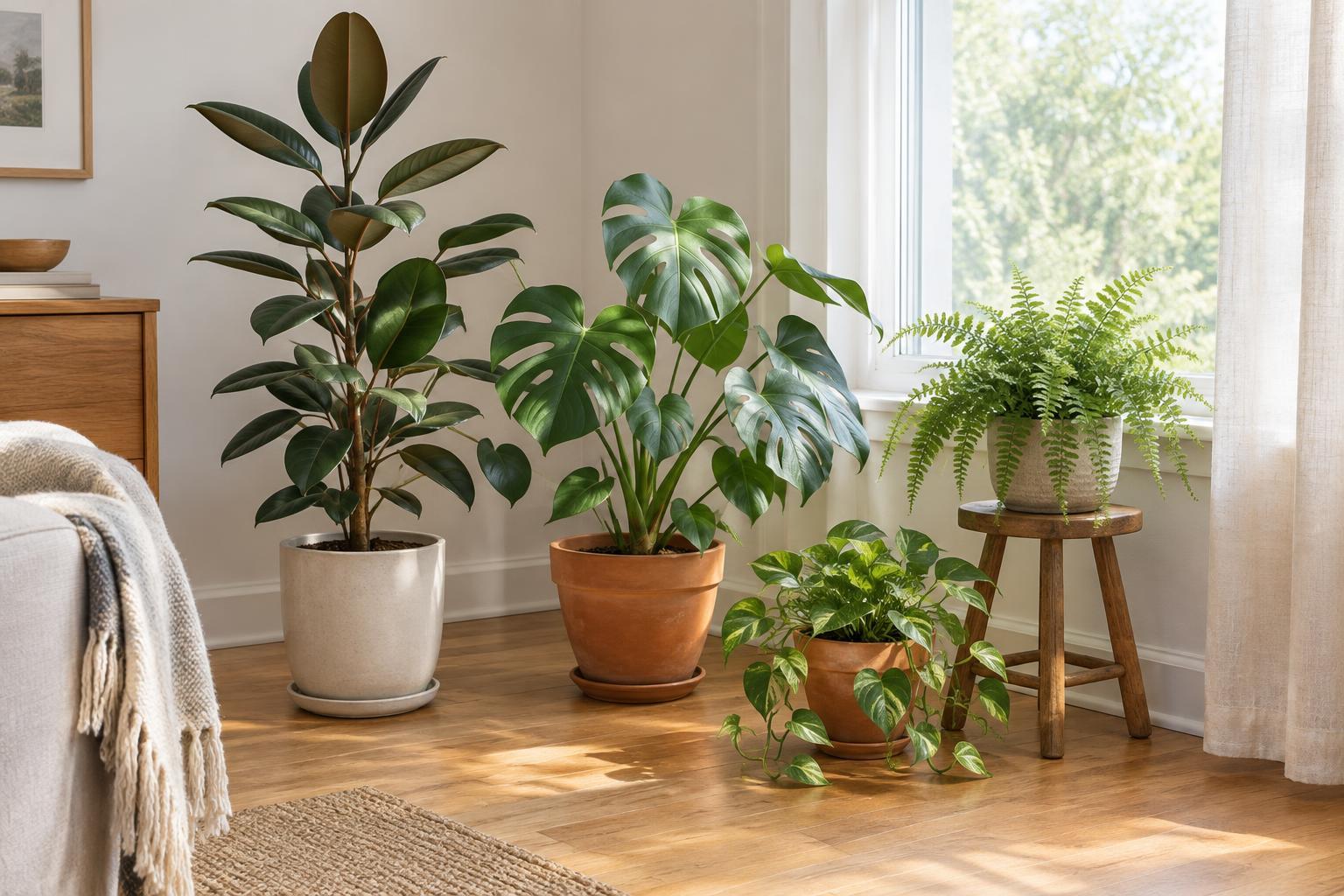
Begin with the largest plant or pot as an anchor, then place smaller plants around it. A tall plant toward the back can give a grouping shape without hiding everything else. On a table viewed from all sides, a taller plant near the center may work better. Try arranging the pots while they are empty, or move the plants gently into position, before committing to a setup that is awkward to change.
Variation does not require a collection of stands. A sturdy low stool, a wide shelf, or pots of different heights can create layers. Keep heavy containers on stable surfaces, and avoid placing a pot where trailing stems will snag on drawers or walkways. Leave a little open space between leaves and nearby walls so the display feels deliberate rather than packed into a corner.
Leave space for leaves and growth
A grouping can look sparse at first and crowded a few months later. Check each plant’s current spread as well as the direction it is growing. Leaves pressed against a window, wall, or neighboring plant can be difficult to inspect and may be damaged when pots are moved. Give each pot enough room to turn or lift it without dragging foliage across the others.
You do not need to keep every leaf separate. Some overlap can create a lush effect, provided you can still see into the plants and reach the soil. If a fast-growing plant begins to shade a smaller one, rearrange them rather than forcing the smaller plant to remain in a dimmer position. Treat a display as something you can adjust, not a fixed arrangement.
Make watering and cleaning easy
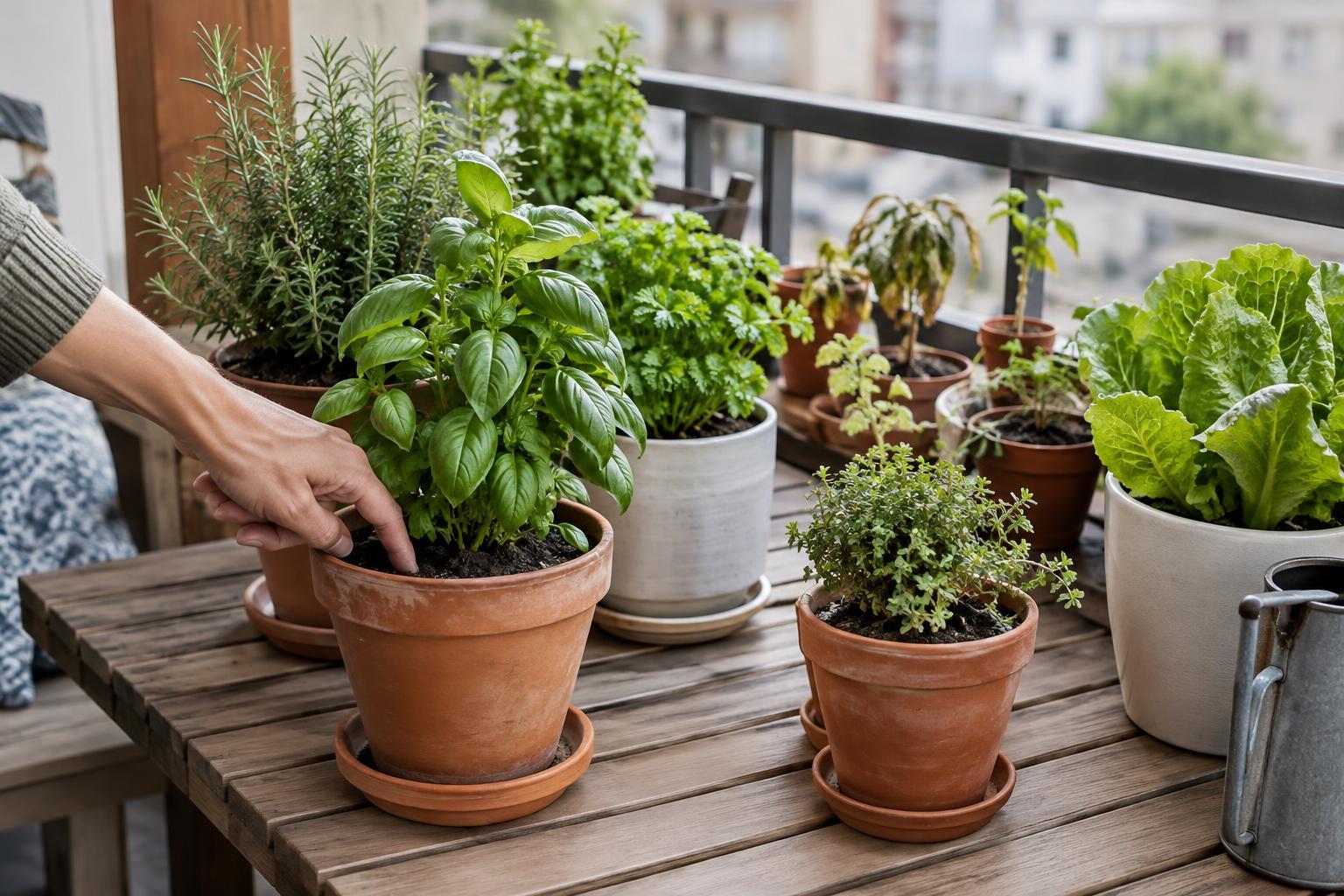
Picture the routine before you finish styling. Can you check the soil in every pot? Can you lift a container to empty its saucer, or water it at a sink if that is your preference? Pots tucked behind other plants are easy to overlook. Position those that need more frequent attention toward the front, and keep enough clearance to remove each one without disturbing the entire group.
Protect the surface beneath the display with suitable saucers or trays, and check under them occasionally for trapped moisture. A decorative outer pot can catch drips, but water should not be left standing around a plant’s roots. Wipe up spills promptly, particularly on wood or other moisture-sensitive surfaces. Grouping plants should simplify your routine, not hide a water problem until it affects the furniture.
Edit the display as the plants change
Stand back and look at the group from the places you normally use the room. If one large leaf blocks a lamp or a small plant disappears behind taller neighbors, swap a few positions. Repeating a pot color or material can bring a mixed collection together, but the plants do not need identical containers. A little visible space between forms often makes individual leaves easier to appreciate.
Revisit the arrangement when plants grow, seasons alter the light, or you notice a care task becoming inconvenient. Move a struggling plant to a more suitable spot even if that means breaking up a matching set. A successful indoor grouping is not simply a cluster of pots: it is a display that lets each plant receive appropriate light and makes its everyday care manageable.