Choose branches that are ready to wake up
Forcing flowering branches means bringing cut stems indoors before they bloom outside and giving their buds warmth and water. It is a simple late-winter project, but timing matters. Many spring-flowering shrubs and trees form their flower buds well before they open. After a period of winter cold, those buds may respond to the gentler conditions in your home.
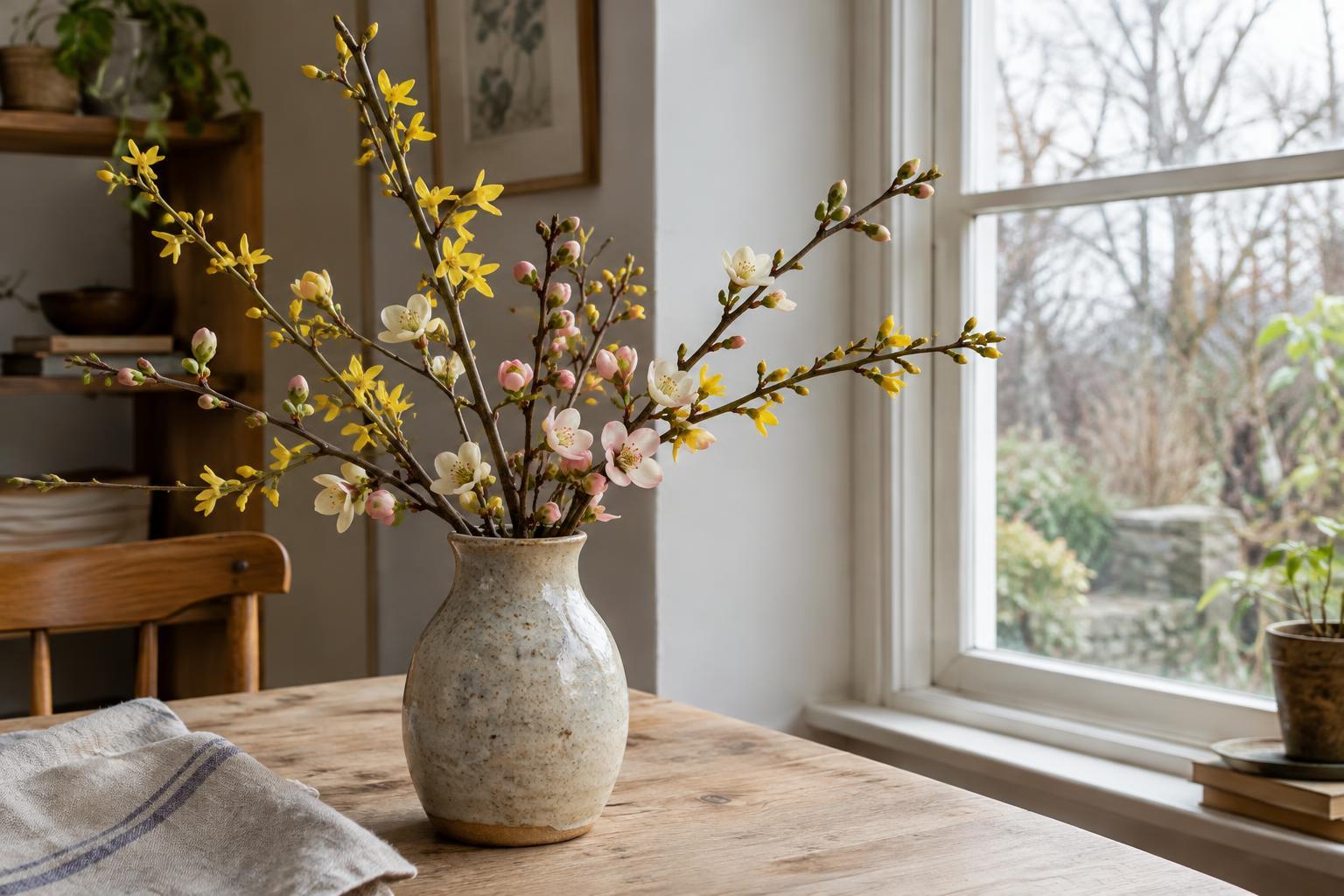
Forsythia, flowering quince, pussy willow and some flowering cherries or apples are possible choices if they grow in your area. Look for branches with plump, well-formed buds rather than bare or damaged twigs. Flower buds are often rounder than leaf buds, though the difference varies by plant. If you are unsure, try a few stems and treat the result as an experiment: some will open readily, while others may produce leaves or do little at all.
Choose from plants you own or have permission to prune. Leave wild plants undisturbed, and check a plant’s identity before bringing it indoors, especially if children or pets may reach the arrangement. Even a familiar garden plant may not be suitable for a household where stems, flowers or vase water could be chewed or swallowed.
Cut lightly and with the plant in mind
On a mild late-winter day, select healthy branches that can be removed without spoiling the plant’s shape. A few stems from different parts of a shrub usually look better on the plant than many taken from one spot. Keep in mind that each flowering branch you bring inside is one that will not bloom outdoors. Be particularly restrained with small plants and fruit trees, where removing flower buds may also reduce fruit.
Use clean, sharp pruners. For a vase arrangement, stems roughly the length of your forearm or longer are easy to display, but let the plant’s natural branching guide you. Cut back to a side branch or a suitable bud rather than leaving an awkward stub. Avoid cutting into the main framework simply to get a taller stem. If a branch shows signs of disease, leave it out of the vase and clean your pruners before moving to another plant.
Give the stems a fresh start
Bring the branches inside soon after cutting. Remove any buds or leaves that would sit below the waterline, then make a fresh cut at the base of each stem. Place them in a clean vase or bucket of room-temperature water. There is no need to crush the ends of woody stems; a clean cut is simpler and avoids unnecessary damage.
Start the arrangement in a cool room with bright, indirect light. Warmth helps buds develop, but a spot beside a radiator or in strong direct sun can dry stems and flowers quickly. Keep the water level above the cut ends, and replace cloudy water with fresh water. Rinsing the vase when you change the water helps keep the display tidy. If a stem stops taking up water or its cut end looks dry, trim a little from the base.
Wait for the buds, then enjoy the display
Branches may take several days or several weeks to open, depending on the plant, how much winter cold it has experienced and how developed its buds were when cut. A stem that opens leaves instead of flowers has not failed; it can still make a fresh-looking arrangement. If the buds shrivel, try again later in the season with newly cut branches and check that the vase has not run dry.
Once flowers appear, move the vase away from strong heat and direct sun to help the display last. Let the branch shapes do the work: a few stems in a sturdy vase can have more presence than a crowded bunch. When the display is finished, dispose of the stems according to your local garden-waste guidance. The project leaves the outdoor plant to carry on growing while giving you a small preview of spring indoors.