Find out what has come loose
Before reaching for glue, turn the chair over and look closely at how the cane is attached. Many cane chair seats use a single sheet of woven webbing. Its edges sit in a groove around the seat opening, held in place by a narrow strip called spline. Other seats are woven strand by strand through holes in the frame. The two styles need different repairs: the steps below are mainly for sheet cane fitted into a groove.
Press gently around the perimeter and note where the movement starts. If a short section of spline has lifted but the cane beneath it is intact, you may be able to secure that edge. If the sheet is torn, brittle, badly sagging or loose on several sides, replacing the webbing is usually more dependable than patching one spot. Check the wooden frame, too. A split rail or a loose joint needs attention before the seat can hold securely. Do not sit on the chair while the seat or frame is loose.
Prepare for a small edge repair
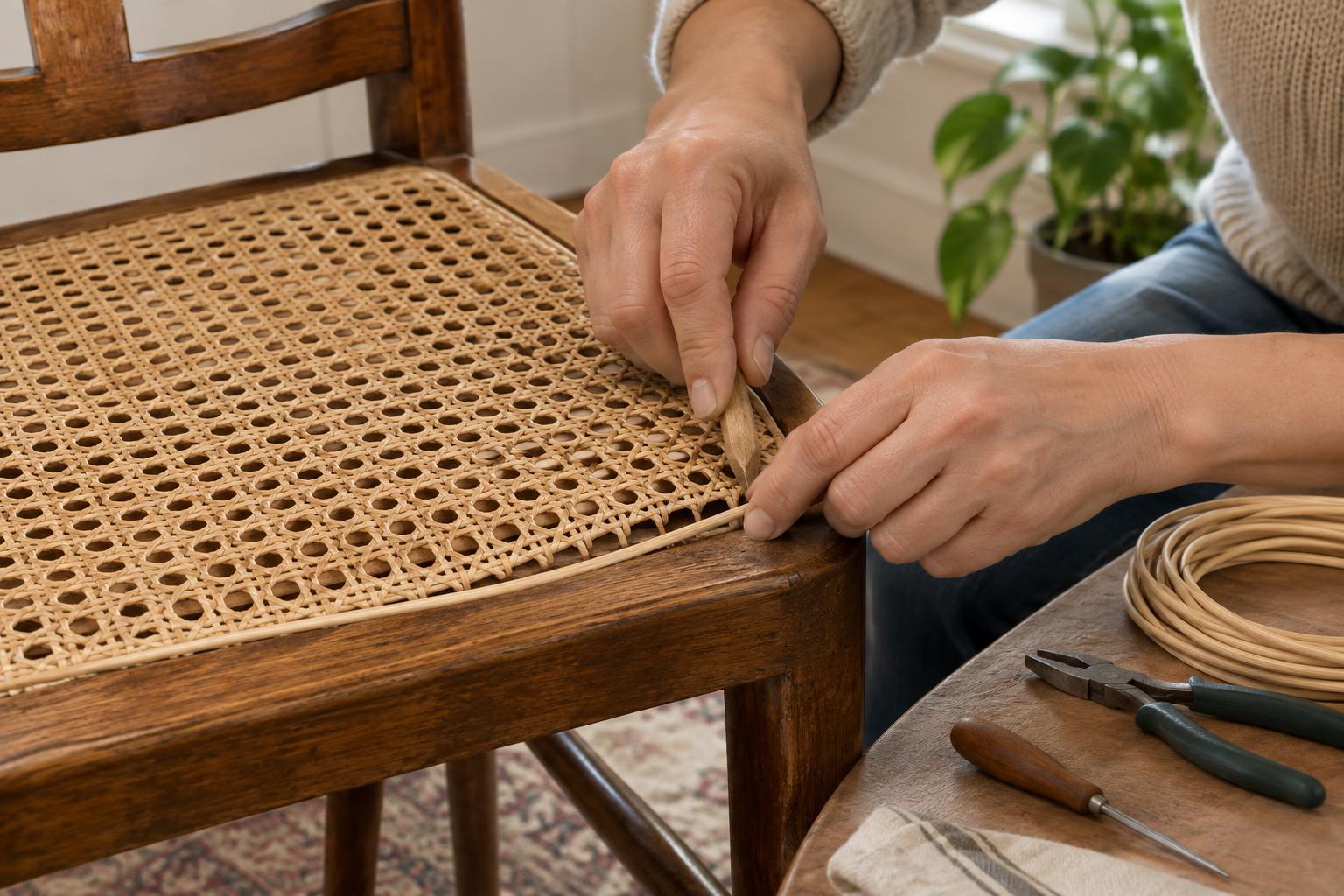
For a limited repair, gather a soft brush, a thin blunt tool such as a craft stick, a clean cloth, suitable wood glue, and painter’s tape or light clamps. Work in good light so you can see where the cane and spline meet the groove. Protect the surrounding finish with a cloth, and avoid using a sharp tool that could cut the cane or gouge the frame.
Lift only the spline that is already loose; forcing up firmly attached sections can turn a small job into a full replacement. Brush out crumbs of old adhesive and dust. If the spline has cracked or no longer fits snugly, replace that section with matching spline rather than relying on extra glue to fill the gap. Likewise, if the cane edge has pulled free or frayed too far to sit beneath the spline, plan to replace the whole sheet.
Reseat the cane and spline
If the cane edge is sound, guide it back into the groove with the blunt tool. Keep the weave aligned with the rest of the seat, working gradually rather than pulling hard on one strand. The cane should lie flat without a sharp fold at the rim. Do not try to tighten a stretched, sagging seat by tugging only at the loose edge; the strain can damage the weave.
Apply a modest amount of wood glue inside the clean groove, then press the spline back into place over the cane edge. Wipe away excess glue promptly with a barely damp cloth, taking care not to spread moisture across the seat or the chair’s finish. Use tape or light, padded clamps to hold the spline down without crushing it. Let the glue dry fully according to its label before removing the supports, and check that the edge stays seated before using the chair.
Know when to replace the webbing
A whole-seat replacement is more involved, but it is often the cleaner choice when the weave itself has failed. You will need sheet cane with a pattern and strand size suited to the chair, along with spline that fits its groove. Remove the old spline carefully, clear the groove, and use the old seat as a rough guide when cutting the new sheet. Leave enough extra cane around the opening to tuck its edges into the groove; trim the surplus only after it is seated.
Replacement sheet cane is commonly dampened to make it easier to handle. Follow the supplier’s preparation guidance and avoid prolonged soaking or wetting the wooden frame. Center the weave, ease it into the groove evenly, and secure it with the spline as directed for the materials you are using. Allow the seat to dry and settle fully before testing it. If the groove is damaged, the frame is unstable, or the chair has a hand-woven seat, a furniture repair specialist may be the safer route.
Help the repair last
Once the seat is secure, treat it as a woven surface rather than a solid panel. Avoid standing on it or placing a heavy object on a small area. Keep the chair away from persistent dampness and intense heat, both of which can be hard on natural cane and wood. Dust the weave with a soft brush or vacuum it gently with a brush attachment.
Check the perimeter from time to time. A lifting spline is easier to address before the cane edge begins to wear. If the seat loosens again soon after a small repair, reassess the condition of the webbing and groove instead of adding more glue. A sound frame, well-fitted materials and an evenly secured edge matter more than a quick cosmetic fix.