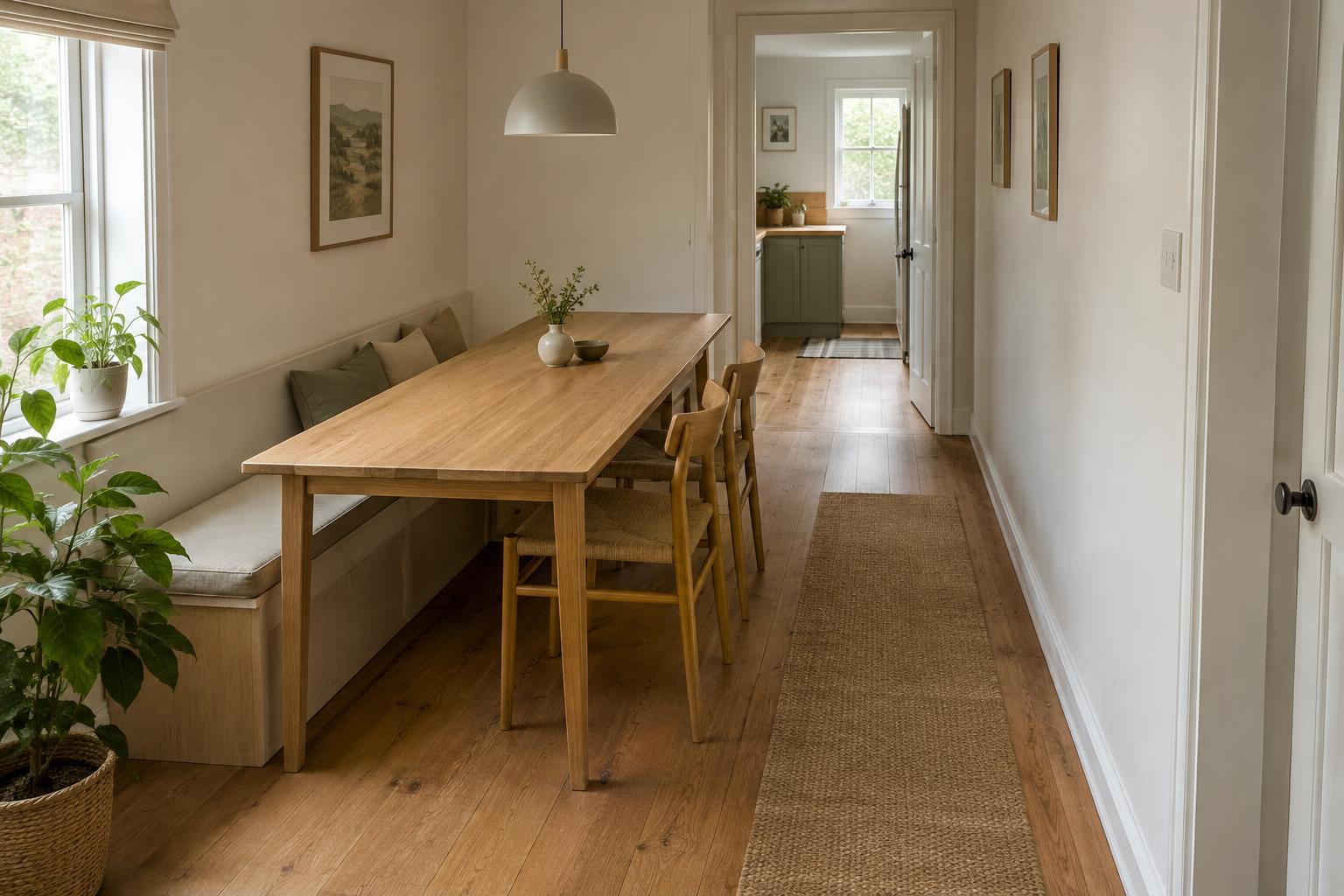
Start with the paths people actually use
Before moving furniture, notice how you cross the room. Trace the route from the doorway to the kitchen, dining table, sofa and any doors that lead outside. Keep those routes clear rather than placing a divider where people will have to walk around it. A useful division makes the room easier to use; it should not turn a short trip with a dinner plate into an obstacle course.
Decide which area needs more floor space at different times. If the dining table expands for guests, leave room to pull out chairs and walk behind them. If the living area is where people gather most often, give the sofa and seating a comfortable footprint. Sketching a simple plan with approximate furniture sizes can help you test arrangements before lifting anything.
Use furniture to draw a soft boundary
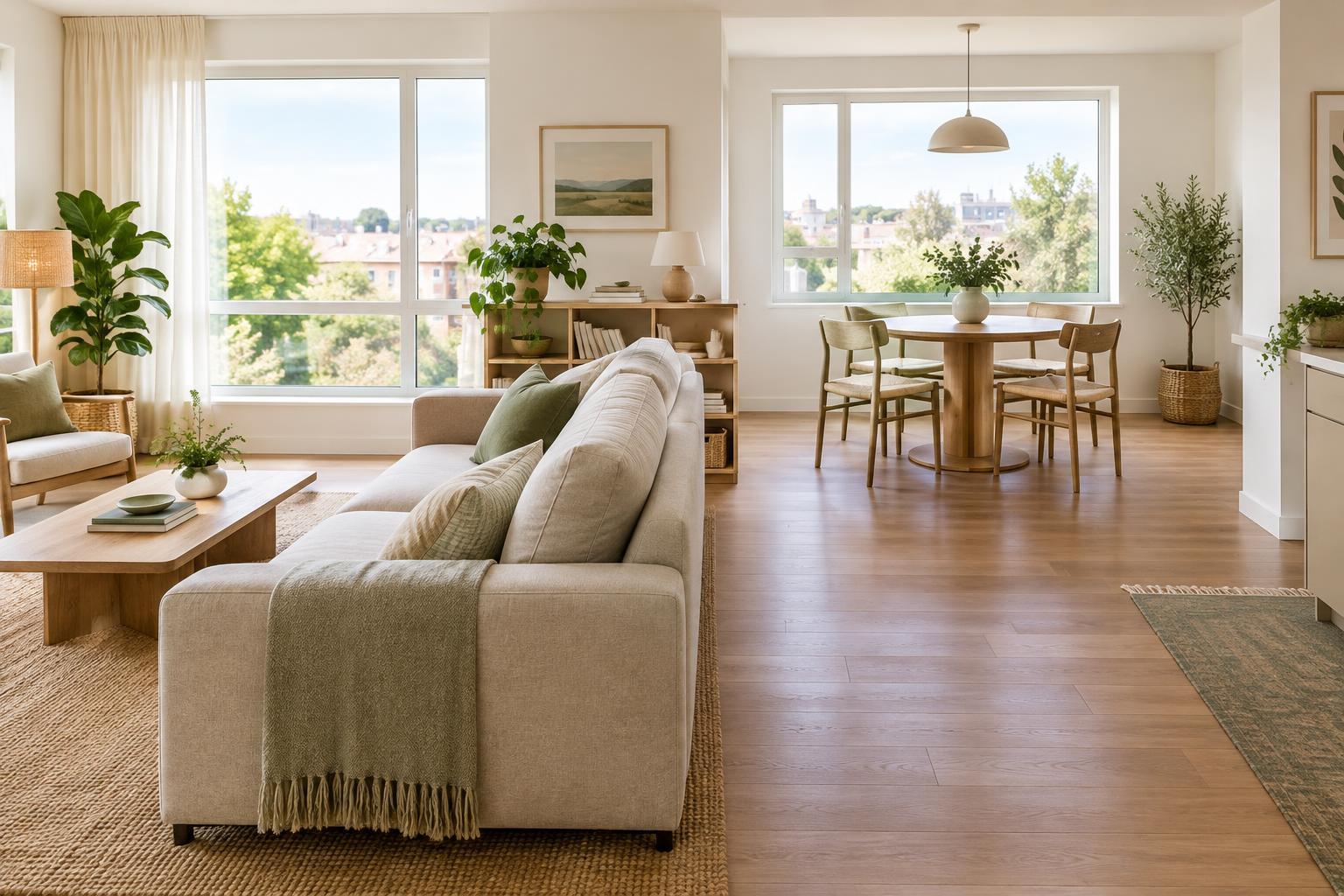
A sofa is often the clearest divider. Instead of pushing it against a wall, place its back toward the dining area and face the seats toward the living room’s focal point. The back of the sofa signals where one zone ends, but the view across the room remains open. If its back looks unfinished, a narrow console behind it can hold a lamp, books or a small plant without adding much visual weight.
Other low pieces can do the same job. A sideboard near the dining table defines that area while storing table linens and serving pieces. An open bookcase can provide a stronger boundary, though it works best where its shelves will not block a doorway or crowd a walkway. Avoid filling every shelf: gaps let light through and help the two areas feel related rather than cut off.
Give each zone its own visual anchor
Rugs can mark separate areas without taking up vertical space. In the living zone, choose a size that connects the main seats rather than leaving a small rug stranded in front of the sofa. Under the dining table, allow enough rug around the edges for chairs to remain on it when pulled back. If that is impractical, a bare floor beneath the table may be simpler to clean and just as effective when the living area has a rug of its own.
Lighting reinforces the distinction after dark. A pendant centered over the dining table identifies it as a place to eat and gather, while a floor or table lamp gives the living area a softer pool of light. The fixtures need not match. Repeating one detail, such as a warm finish or a simple shape, can make them feel part of the same room. Keep cords out of walking routes and check that lights do not shine into seated eyes.
Bring in plants and natural texture without making a barrier
Plants can soften the line between zones. A tall plant beside the sofa or sideboard creates a gentle marker while preserving the openness above and around it. A few smaller plants grouped on a console can have a similar effect. Choose positions based on the light each plant needs, not just where a gap looks empty, and leave enough room to water it without reaching over upholstery or the dining table.
Natural materials can connect the two sides while allowing them to have different characters. For example, woven baskets in the living area might echo a woven pendant above the table, while wood tones appear in both storage and dining chairs. Repetition is more useful than making every piece identical. If the room already has several strong textures, keep the divider simple so the layout remains restful.
Adjust the separation to suit your room
The right amount of division depends on how you use the space. If conversation between the table and sofa matters, favor low furniture and open sightlines. If you want more privacy for reading or working, try an open shelf or a lightweight screen that can move when you entertain. Even a change in furniture orientation may be enough: dining chairs facing inward and living chairs angled toward one another establish two centers of activity.
Live with a new arrangement for a few days before adding another divider. Check whether chairs pull out easily, whether daylight still reaches both areas and whether the route through the room feels natural. An open-plan layout does not need a visible border at every edge. When furniture, light and materials each offer a small cue, the living and dining areas can feel distinct while remaining comfortably connected.