Start with the paths you use every day
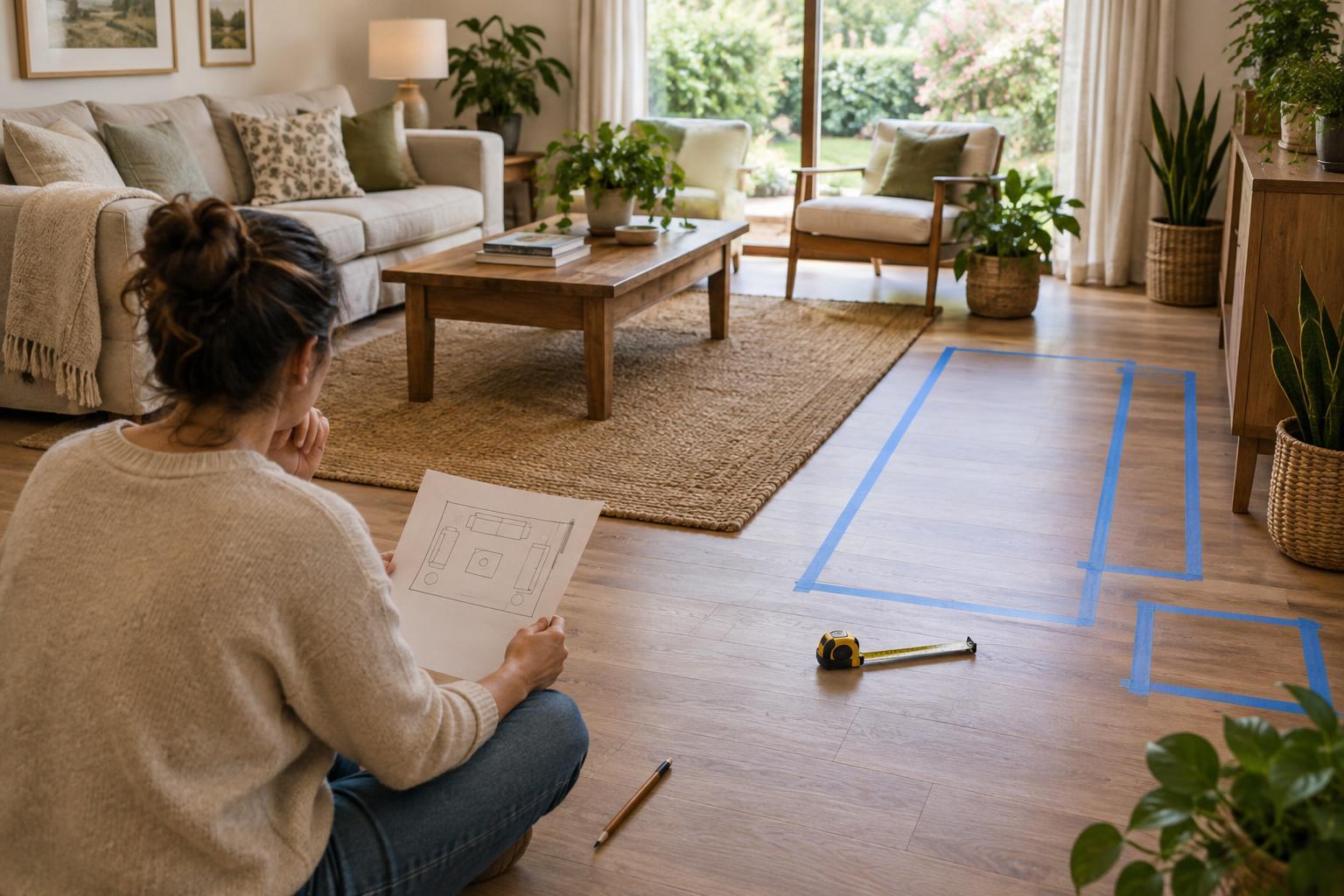
Before moving furniture, sketch the studio’s basic shape and mark the door, windows, kitchen, bathroom and built-in storage. Then trace the routes you take most often: from the entrance to the kitchen, from the bed to the bathroom and from the living area to a window. These paths should be easy to follow without turning sideways around furniture or stepping over belongings.
Choose a sleeping area that feels settled but does not block a doorway or cut off the room’s main source of daylight. A quiet corner or a stretch of wall away from the entrance can work well. Put the living area where you have enough room to sit, move around and use the activities that matter to you, whether that means reading, entertaining or working at a table. Let those activities guide the layout rather than trying to fit in a standard set of furniture.
Use furniture to suggest a boundary
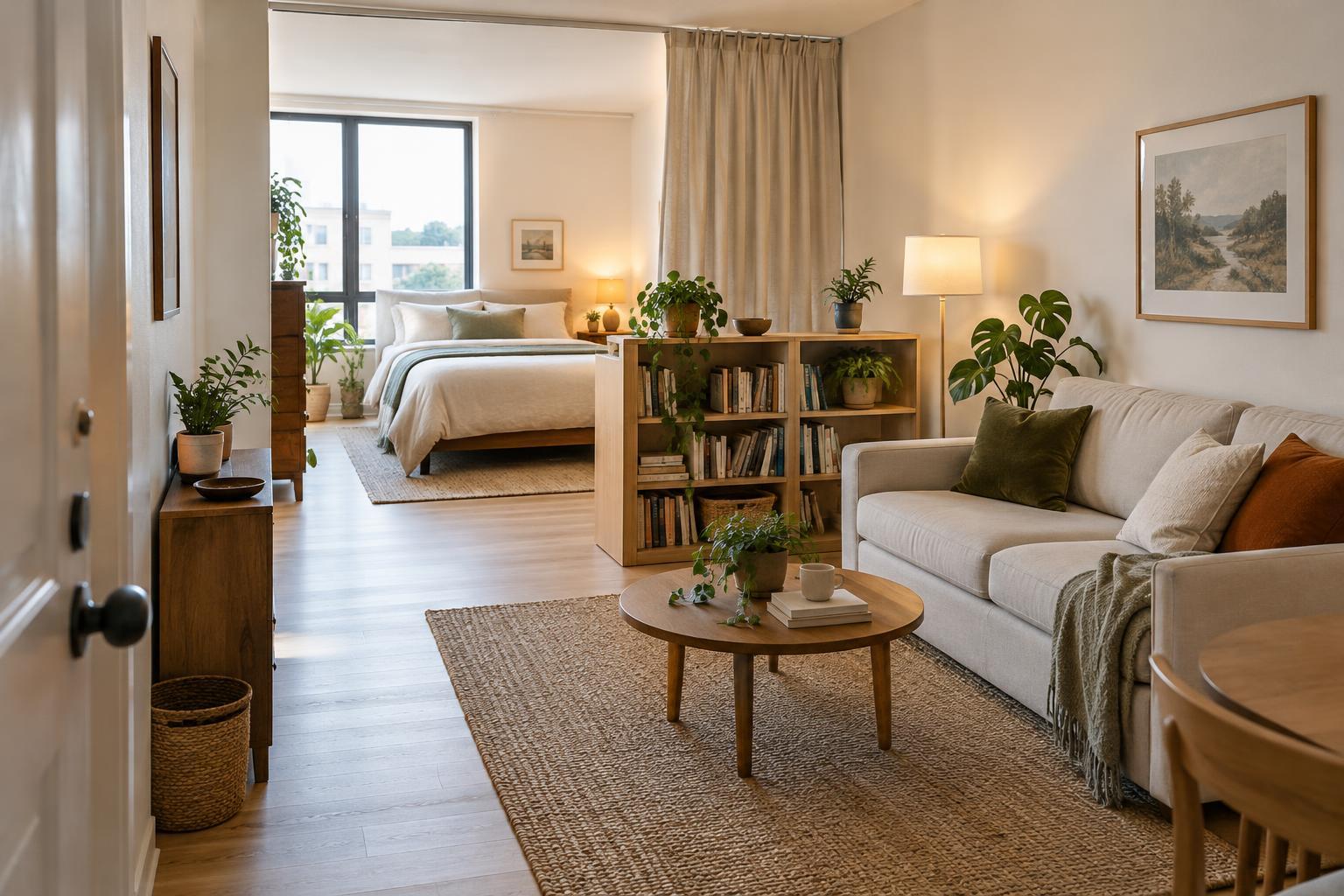
A boundary does not need to be a wall. Turning a sofa so its back faces the bed can signal the start of the living zone. A low bookcase or storage unit can do the same job while holding books, baskets and other everyday items. Keep tall pieces where they will not make the center of the studio feel boxed in, and secure furniture that could tip according to its instructions.
If space is tight, begin with the largest pieces: the bed, sofa and table. Give each a clear purpose and test whether doors and drawers can open fully. A small dining table may double as a desk, while a storage bench can offer seating near the entrance. These choices often create more usable space than squeezing in separate furniture for every task.
Leave some visual connection between zones. You might place a low shelf perpendicular to a wall rather than stretching a tall unit across the room. This creates a sense of separation while allowing light to reach farther into the studio.
Give each zone its own visual cues
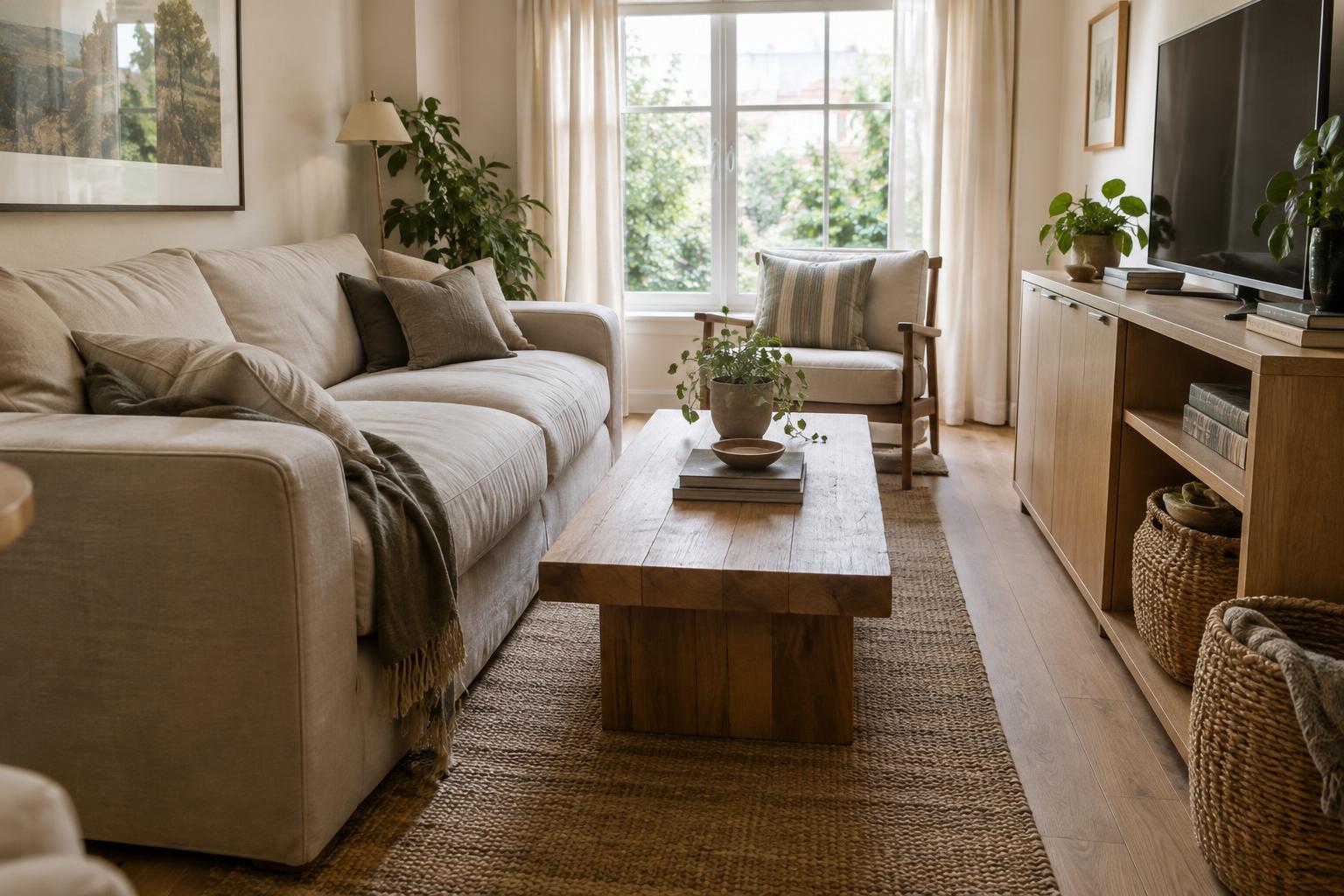
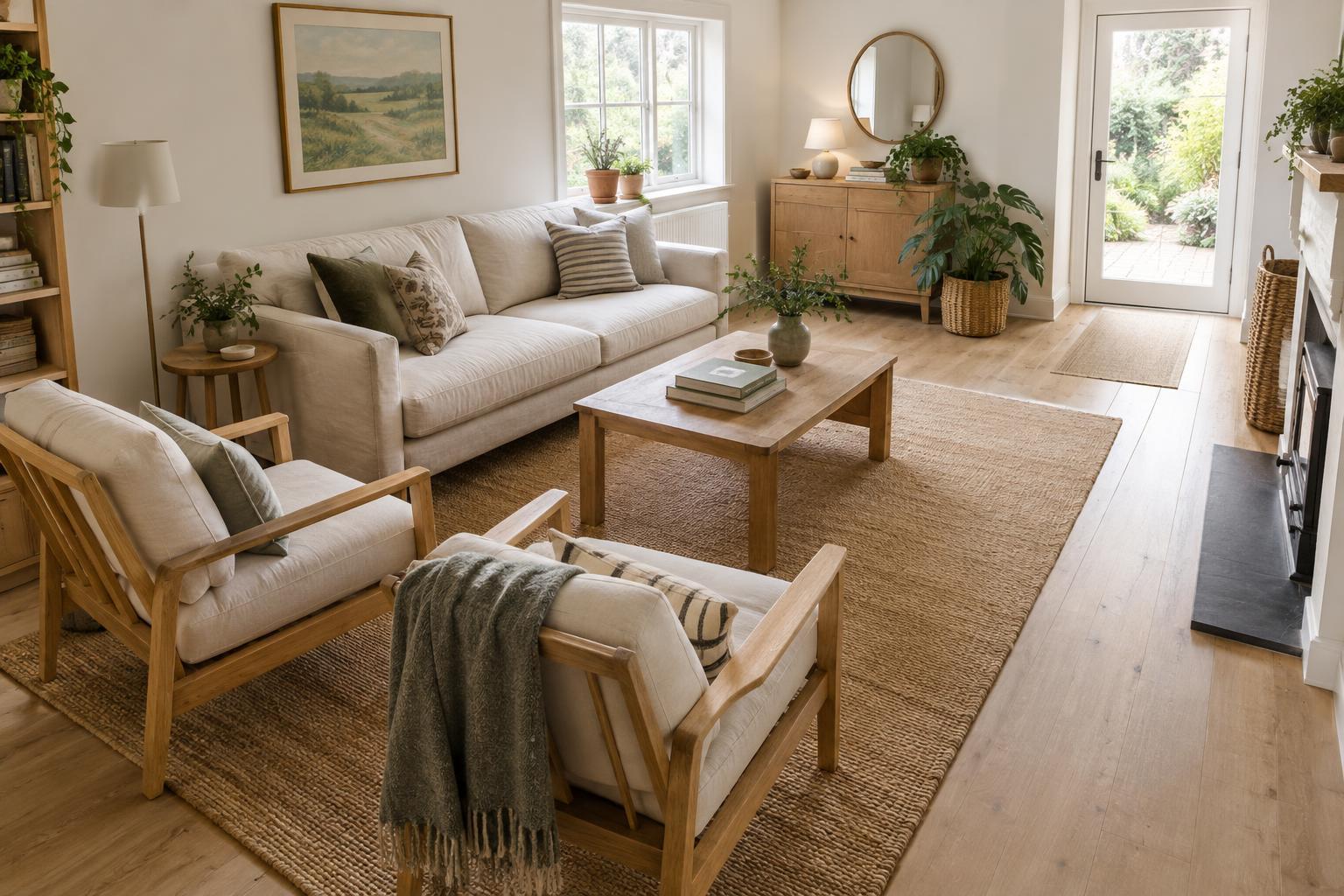
Rugs can define areas without taking up vertical space. A rug that sits partly beneath the sofa and nearby seating helps the living zone read as a group. Beside the bed, a smaller rug can make the sleeping zone feel distinct. Rugs should lie flat and suit the way you move through the room; use an appropriate grip pad if one tends to slide.
Lighting reinforces the division. A bedside lamp gives the sleeping area a softer, more focused feel, while a floor or table lamp can support reading and conversation in the living area. If you also work in the studio, a movable task light can help the table change roles during the day. Layered lighting lets you use one zone without illuminating the whole apartment.
You can repeat a few colors or natural textures across both areas so they still feel like parts of one home. For example, a woven basket near the sofa and a similar material by the bed can connect the spaces without making them identical.
Choose privacy that can change with your day
If seeing the bed from the sofa makes it harder to relax, try a flexible screen, a curtain or an open shelving unit. A folding screen can move when you need more floor space. A curtain can provide a stronger visual break, but check what your lease allows before installing hardware. In a particularly compact studio, even positioning the bed so its foot faces away from the main seating area may make it feel less prominent.
Think about what a divider will affect beyond the view. A solid piece may block daylight or make it harder to reach a window. Fabric and furniture should be kept clear of heaters and other heat sources, and windows and exits should remain accessible. The best divider gives you the amount of privacy you want without making either zone awkward to use.
Keep the layout workable over time
Once the furniture is in place, live with the arrangement for a few days before deciding it is finished. Notice where bags land, which route feels cramped and whether you have a comfortable place to put a book or glass of water. Small changes, such as shifting a table or moving a lamp, may solve a problem more easily than buying another piece of furniture.
Plants can soften the edge between zones if the available light suits them. A compact plant on a shelf or a floor plant beside a sofa can add a natural transition without serving as a solid barrier. Keep pots out of walking paths and use saucers or other protection where watering could damage surfaces. In a studio, the aim is not to hide one part of life from another completely. It is to give sleeping and living enough definition that both feel comfortable in the space you have.