Choose one material to lead
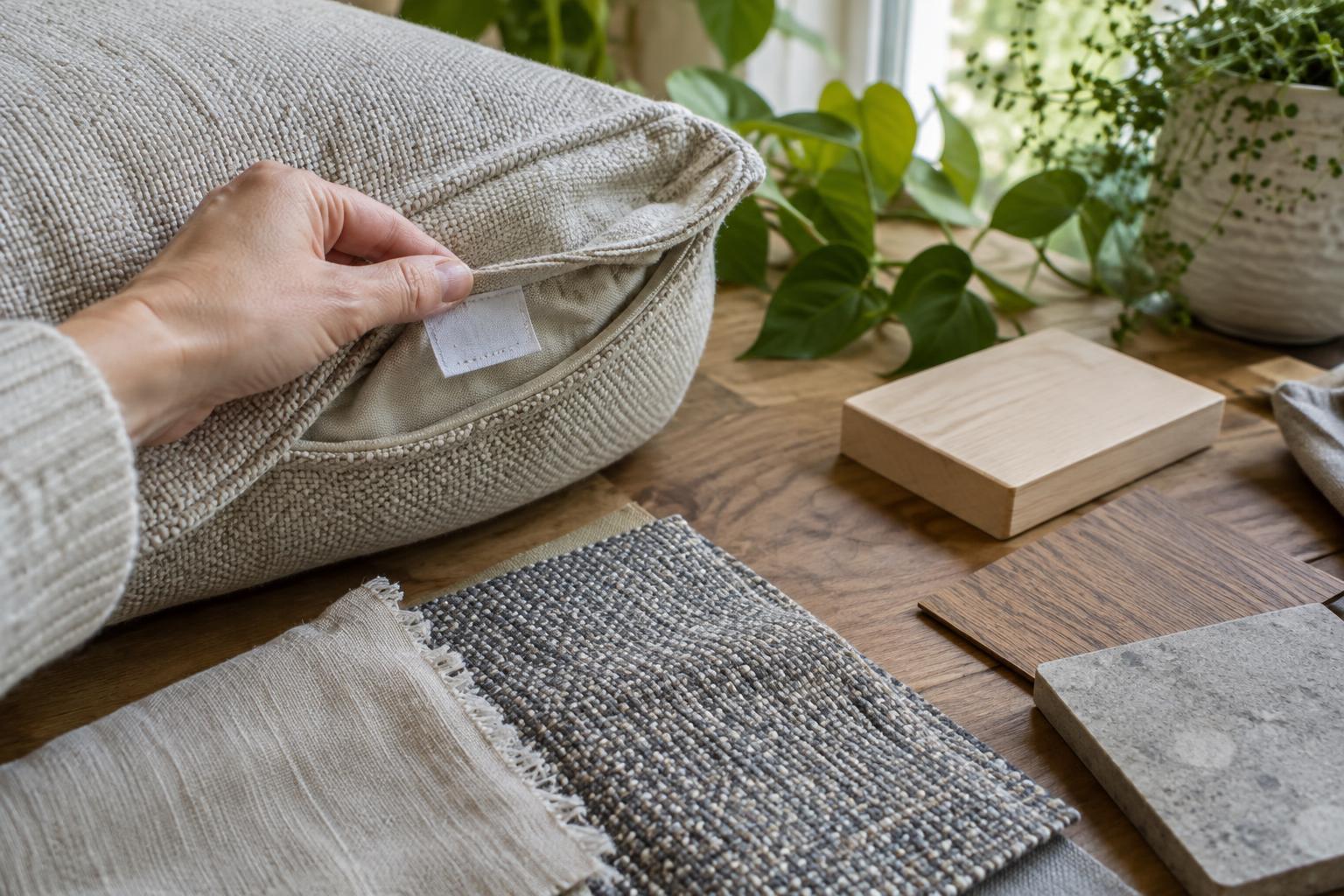
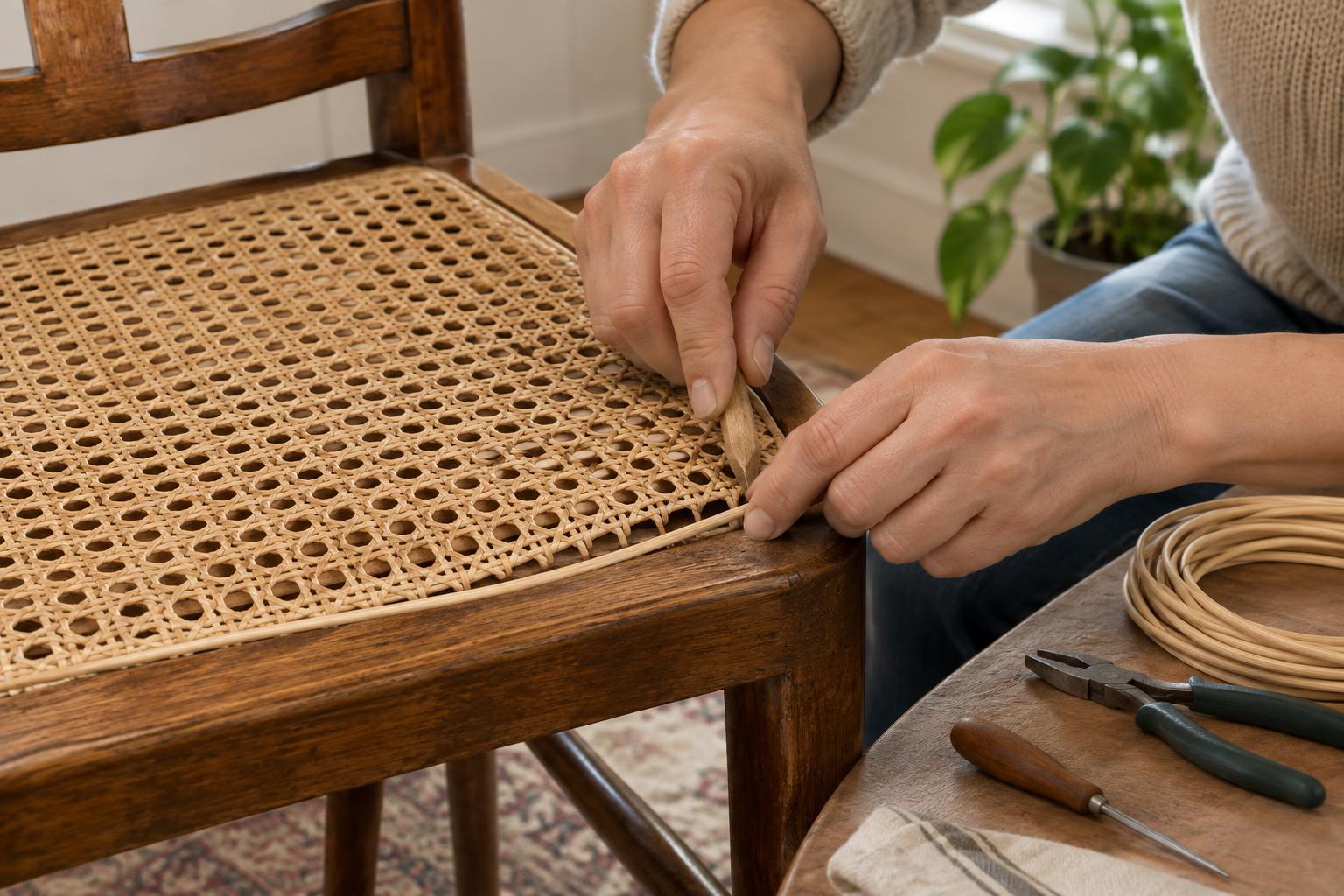
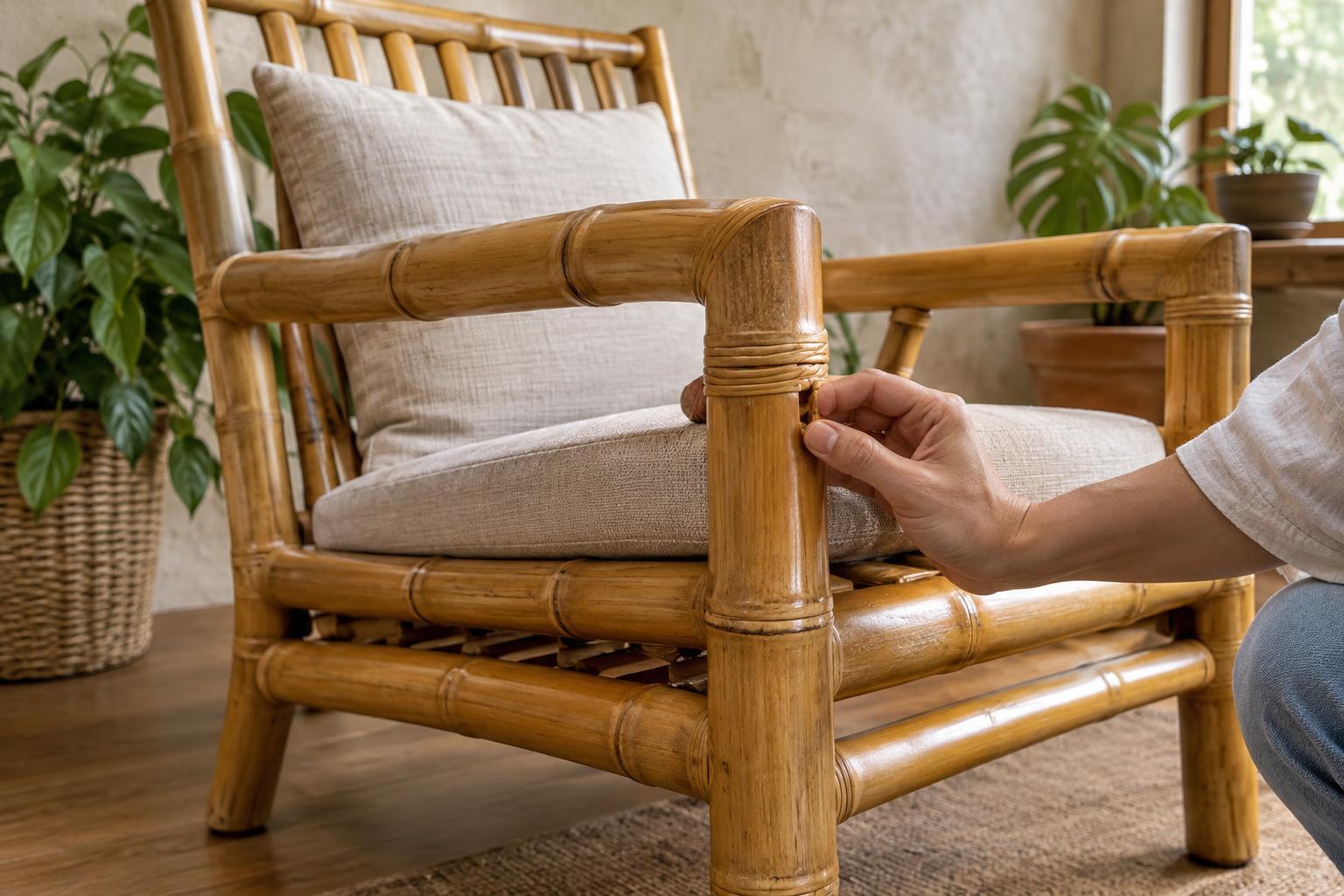
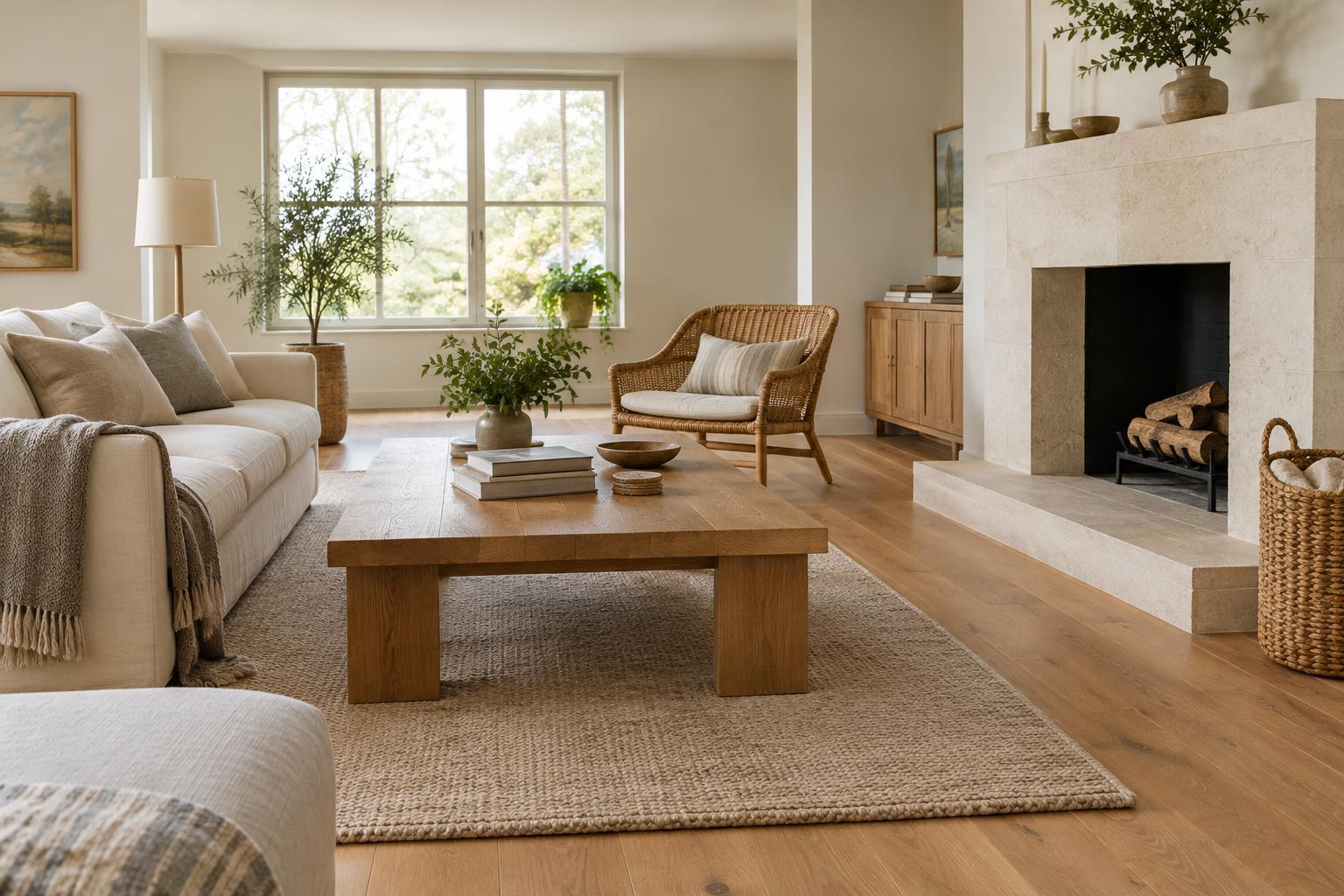
Wood, stone and woven pieces each have a distinct visual character. Wood often brings visible grain and warmth; stone adds a solid, quieter surface; and woven materials introduce fine patterns and a softer edge. The simplest way to combine them is not to give all three equal attention. Look at what is already fixed in the room, such as flooring, a countertop or a fireplace surround, and let that material set the direction.
If the floor is timber, for example, it may already supply plenty of wood texture. A stone-topped side table and a woven basket could be enough to complete the mix. In a room with prominent stone, a wooden table can provide warmth while a single woven shade or rug softens the setting. This approach lets each material be noticed without asking every object to become a focal point.
Find a small family of colors
Natural materials do not need to match exactly, but they benefit from a shared palette. Start by identifying two or three colors already present: perhaps honey-colored wood, warm gray stone and cream upholstery. When choosing a new woven piece, look for fibers or finishes that sit comfortably beside those colors. A basket with both tan and gray strands, for instance, can help connect a wooden cabinet to a stone surface.
Pay attention to undertones as well as the main color. A cool gray slab may look more at home beside weathered or pale wood than beside a strongly orange finish. This is a guide rather than a rule: contrast can work well when it feels deliberate. If you are unsure, bring home a sample or place the intended items near one another in the room’s usual light before committing.
Vary the size of the textures
A room can feel crowded when every surface has a strong pattern, even if the colors are restrained. Broad wood grain, heavily veined stone and chunky weaving all compete for attention. Try pairing one expressive texture with calmer companions. A dramatic stone tabletop, for example, can sit on a simple wooden base beside a tightly woven, nearly solid-color rug.
Scale also matters. Large woven furniture can have as much visual presence as a substantial wooden cabinet, while a slim rattan tray reads as a small accent. Step back and notice where your eye lands first. If it jumps between several patterned objects, remove or relocate one before adding anything else. Leaving some smooth, plain surfaces in view gives the richer materials room to stand out.
Spread materials around the room
Rather than clustering every natural texture in one corner, repeat them lightly across the space. A wooden dining table might be echoed by a small frame on the opposite wall. A stone vase can pick up the tone of a stone hearth without duplicating its pattern. Two woven elements at different heights, such as a basket near the floor and a shade above a table, can make the room feel considered without looking like a matching set.
Keep the repetitions loose. You do not need identical wood species or baskets in every corner. What matters is that no single side of the room carries all the visual weight. If a sofa faces a heavily textured wall, quieter furnishings nearby may provide the balance that more accessories cannot.
Make the mix work for daily life
A material looks best when it suits the job it has been given. Think about spills, dampness, sunlight and how often a surface is handled. A woven basket is useful for blankets but may be less convenient for tiny items that catch in its fibers. A stone surface can be a practical landing place, though different stones and finishes call for different cleaning and sealing routines. Check the maker’s care guidance before using a strong cleaner or placing a material in a wet area.
Finally, edit with use in mind. Leave space to set down a cup, open a drawer and move around furniture comfortably. If a room feels busy, put a few accessories away for a week rather than replacing the larger pieces. The most inviting combination of wood, stone and weaving is one that has texture to enjoy and enough breathing room to live in.