Choose plants worth growing again
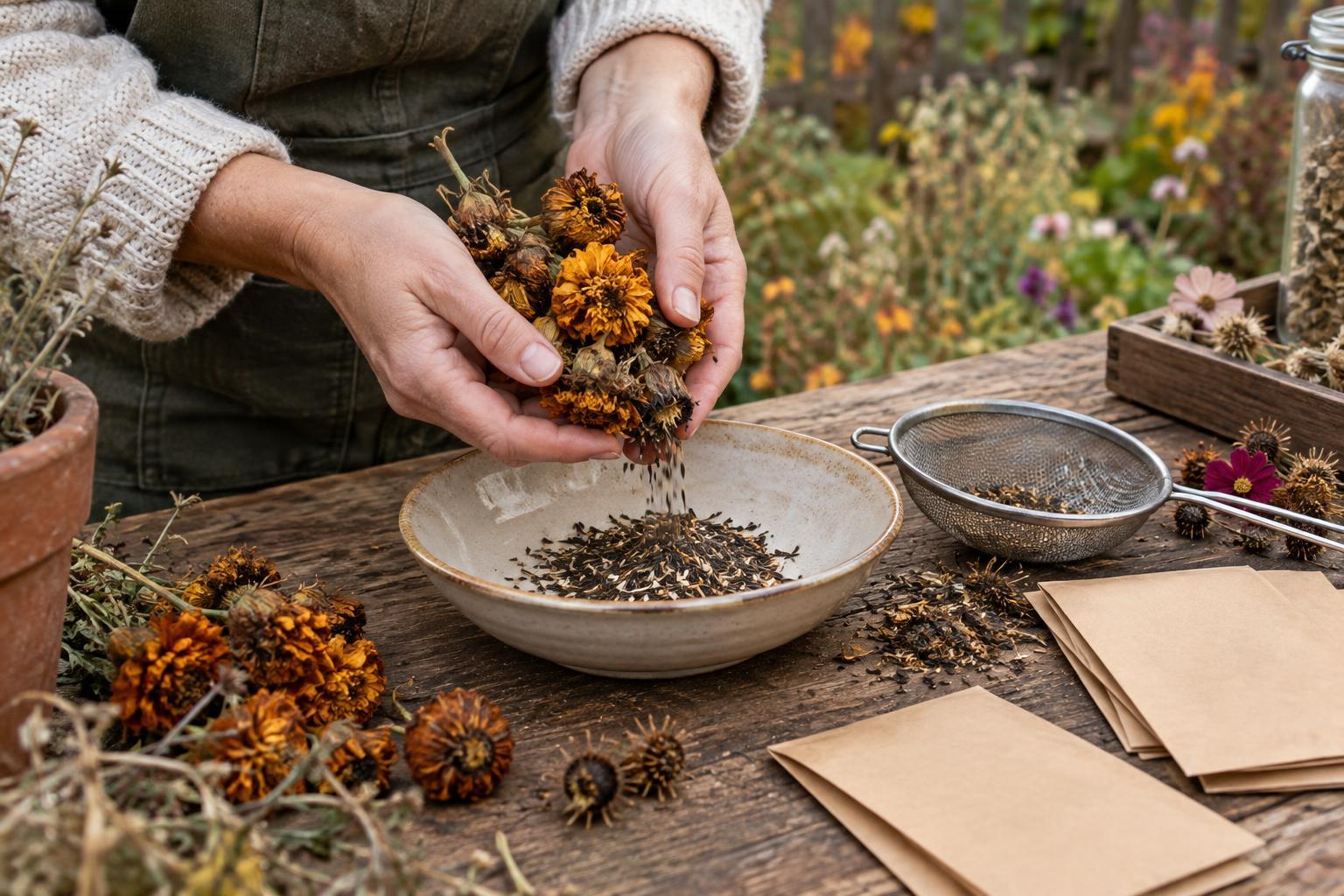
Autumn seed collecting can be as simple as leaving a few spent flowers on the plants you enjoyed most. Calendula, cosmos, marigolds, zinnias and sunflowers are approachable places to start. Choose healthy plants with flowers, colors or growth habits you would welcome back, then leave some heads in place after the petals fade. You do not need to save every seed head; a small harvest can be plenty for a window box, container or garden bed.
Saved seeds may not produce plants identical to their parents. Plants grown from hybrid seed, often marked F1 on a packet, can give varied results in the next generation. Different varieties of the same plant may also cross-pollinate when grown nearby. If a particular color matters to your plans, keep the original seed packet as a guide and treat home-saved seed as an experiment. Collect only from plants you can identify, and leave some seed heads for birds and other garden visitors.
Wait for signs of maturity
The most useful rule is to let seeds mature on the plant whenever conditions allow. A faded flower is not necessarily ready: the seeds inside may still be developing. Look instead for dry, papery or brittle seed heads and pods that have changed from green to tan or brown. Calendula forms curved seeds in its spent flower heads; cosmos and zinnias hold seeds among their dried petals and flower parts. Sunflower seeds develop in the center of the head, which dries as the plant finishes its season.
Pick on a dry day after surface moisture has evaporated. Hold a bowl, bag or envelope beneath a head before clipping it so loose seeds do not fall to the ground. For pods that split suddenly, check often and collect when they are dry but before they open fully. If a spell of wet weather threatens nearly mature heads, you can cut them with a short piece of stem and hang or spread them indoors to finish drying. Very green, immature seeds may not develop well after cutting.
Dry and clean the harvest
Spread collected heads in a single layer on a tray, screen or sheet of paper in a sheltered place with moving air. Keep them out of rain and strong direct sun. Paper bags can catch seeds shed by hanging stems, but avoid packing damp material tightly into a bag. Check the harvest regularly, turning dense heads if needed and removing anything that develops mold. Drying can take longer when the air is humid, so use the condition of the seeds rather than a fixed number of days as your guide.
Once the heads are thoroughly dry, rub or crumble them gently over a clean tray. Separate the seeds from larger petals, stems and husks by hand or with a sieve. They do not need to be perfectly clean, but removing damp plant debris helps make storage easier. Work with one variety at a time and label each batch immediately. Many seeds look surprisingly similar once they are out of their heads.
Pack seeds for a quiet winter
Put dry seeds into paper envelopes or small paper packets and write the plant name, variety if known, and collection season on each one. A note about the flower color or where it grew can be helpful next spring. If seeds still feel soft or cling to damp debris, leave them to dry longer before packing them away. Do not use heat from an oven to speed the process; gentle airflow is a safer choice for the harvest.
Store labeled packets somewhere cool, dry and dark, away from radiators, sunny windows and rooms with frequent temperature swings. An airtight jar or box can add protection from household humidity, but seal seeds inside only when they are completely dry. Keep the collection away from food and out of reach of children and pets, especially if you have saved seeds from plants that may be harmful if eaten.
Make next spring easier
Before putting the packets away, jot down which plants had enough room, which crowded their neighbors and where you would like to try them next year. This small note turns seed saving into a useful planning tool. When planting season returns, check each plant’s usual sowing needs rather than assuming every annual should be started the same way: some suit direct sowing outdoors, while others may benefit from a sheltered start.
Germination can vary, even with careful storage, so sow a few extra seeds if space permits and thin or move seedlings as needed. If an older packet is important to your plans, try a few seeds first in a small pot to see whether they sprout. The reward is not just a supply of seeds. It is a record of what grew well in your particular space, ready to guide another season.