Start by looking at the leaves
Dust can make indoor plants look dull, but cleaning them does not need to be a major project. Before reaching for a cloth or a spray bottle, look at the plant. Large, smooth leaves can usually tolerate a gentle wipe. Small, thin leaves may bend or tear when handled, while fuzzy leaves can hold water among their fine hairs. A plant with a natural powdery coating also deserves extra care: rubbing may remove that coating and leave visible marks.
Choose a time when you can work slowly and let any damp leaves dry away from strong direct sun. Clear a little space around the pot, and place a towel underneath if you expect drips. If the potting mix is loose, take care not to tip the plant while reaching its lower leaves. Cleaning a few leaves at a time is better than rushing through a crowded plant.
Wipe sturdy, smooth leaves with water
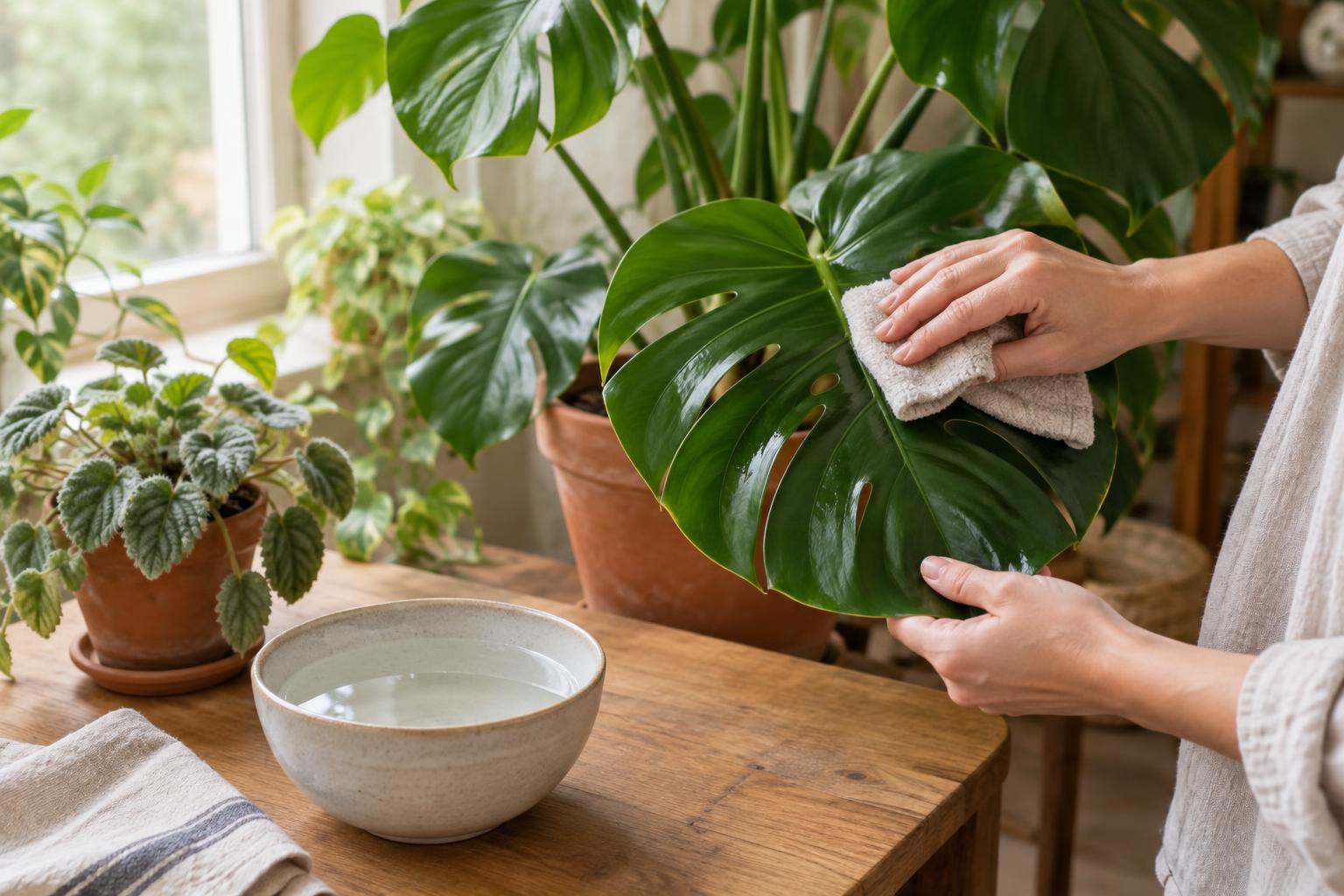
For broad leaves, start with a soft, clean cloth lightly dampened with lukewarm water. Support each leaf from underneath with one hand and wipe from the stem end toward the tip with the other. Use almost no pressure. If dust remains, rinse the cloth and make another pass rather than scrubbing. Change to a clean area of cloth as you go so you do not move dirt from one leaf to the next.
Pay attention to the undersides, which can collect dust too. They are also a useful place to notice discoloration, webbing or insects while you work. If you spot a possible pest problem, set the plant apart from its neighbors and identify what you are seeing before choosing a treatment. A routine dusting is not a substitute for pest care.
Plain water is a sensible first choice. Leaf-shine products and household cleaners are unnecessary for removing ordinary dust, and oily residues can attract more grime or affect the appearance of some leaves. If your tap water leaves noticeable spots, use a small amount of filtered or distilled water for the final wipe, then gently blot any large droplets.
Use a light rinse for plants with many leaves
Wiping every leaf on a full, fine-leaved plant may be awkward. If its foliage tolerates water, a gentle rinse can be easier. Move the pot to a sink or shower and use a soft stream of lukewarm water, keeping the pressure low enough that stems do not whip around. Rotate the pot to reach different sides, and check that water can drain freely afterward.
Try not to soak the potting mix simply to wash the foliage, especially if it is already moist. You can tilt the pot carefully, shield the soil surface or wait until the plant is due for watering. Let excess water drip away before returning it to its usual spot. Avoid placing wet leaves immediately against a cold window or in harsh sun. If the plant is too large to move safely, a damp cloth or a small, soft brush may be more manageable.
Handle fuzzy and fragile foliage without rubbing
Fuzzy leaves and leaves with a powdery surface often look worse after a wet wipe. For these plants, begin with a dry, soft artist’s brush or clean makeup brush. Steady the stem without pulling it, then sweep dust away in short, light strokes. Brush toward the leaf tip where possible, lifting rather than grinding dust into the surface. Test one inconspicuous leaf first if you are unsure how the finish will respond.
For very delicate stems, leave a little dust in place rather than risk breaking leaves to reach it. A dry brush also works well around leaf joints where a cloth will not fit. Keep the brush clean between plants, particularly if you have noticed signs of pests. If a leaf is badly marked or damaged, cleaning may not restore its appearance; focus on caring for the healthy growth instead.
Make cleaning part of a simple plant check
There is no need to clean every plant on a fixed schedule. Check leaves when you water and clean them when dust is visible or transfers easily to a fingertip. Plants near open windows, busy walkways or fabric furnishings may need attention more often than those in quieter corners. While you work, remove fallen debris from the soil surface and turn the pot if growth is leaning toward the light.
The aim is not a polished shine. It is to clear away loose dust while preserving each leaf’s natural surface. Matching the method to the foliage—a damp cloth for sturdy leaves, a soft rinse for suitable leafy plants and a dry brush for sensitive textures—keeps the task small and helps your indoor greenery look its best without rough handling.