Start with a cushion-by-cushion check
Before you put away the patio furniture, bring the cushions into a sheltered spot and look at each one separately. Check for loose seams, worn fabric, stubborn stains, and damp areas. A cushion that feels cool or heavy may be holding moisture even if its surface looks dry. Set damaged or wet pieces aside so they do not get packed against clean, dry ones.
Read any attached care labels before cleaning. Outdoor fabrics, removable covers, and inner fillings can have different instructions, even when they belong to the same furniture set. If a cover has a zipper, check whether the maker says it can be removed; a zipper alone does not mean it is machine washable. Note which cover belongs to which seat or back cushion so reassembly is easy in spring.
Remove loose dirt, then clean gently
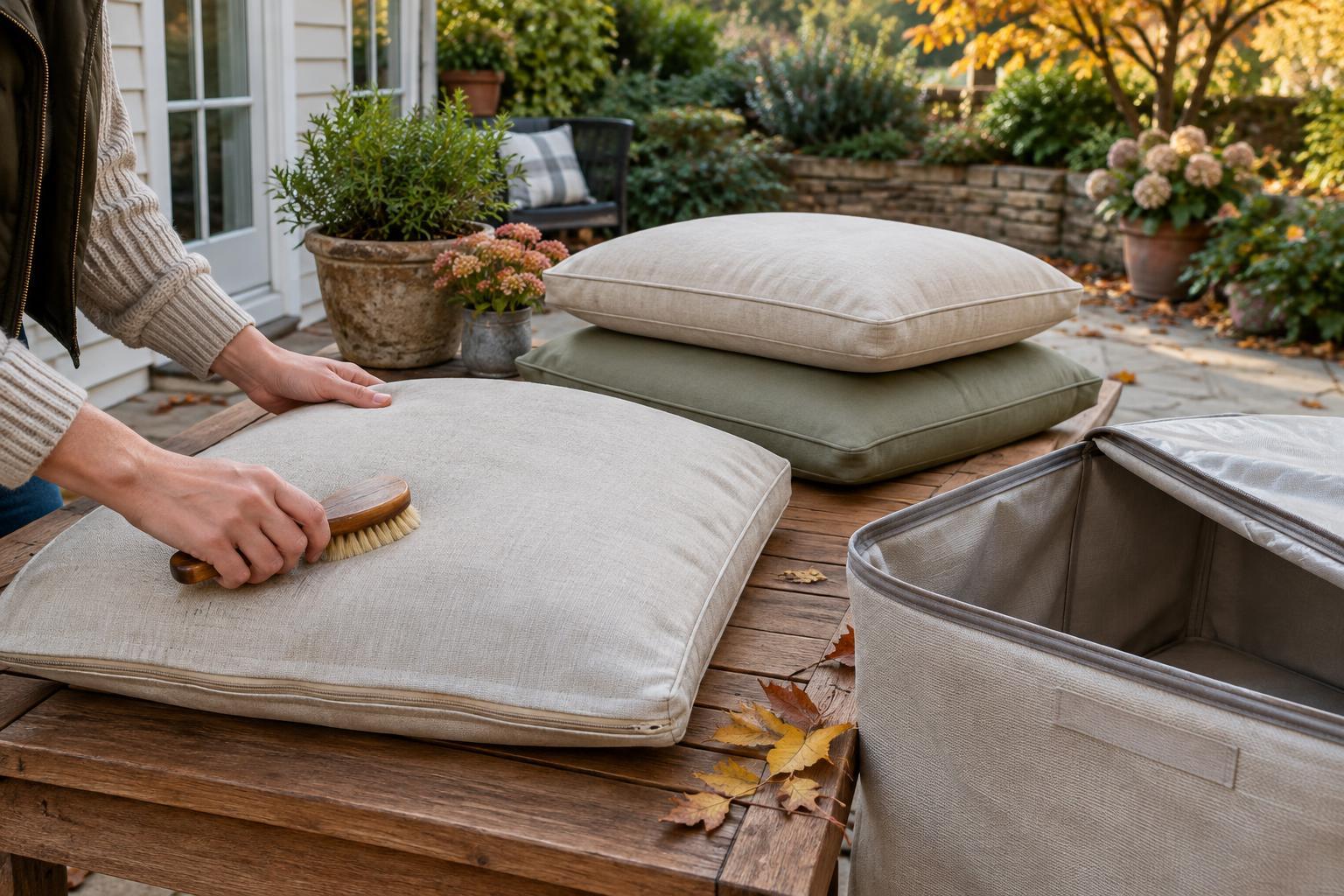
Brush away leaves, soil, and crumbs, paying attention to seams, piping, and ties. A vacuum with an upholstery attachment can lift grit that a brush misses. Doing this first keeps loose dirt from spreading when you add water. For small marks, try a damp cloth and a little mild soap in an inconspicuous area. Blot and work gently rather than scrubbing hard, which can roughen the fabric.
If the care label permits washing, follow its directions for removable covers. Otherwise, clean the fabric in place with a soft cloth or brush, using only as much soapy water as needed. Wipe or rinse away soap residue according to the care instructions; leftover cleaner can attract dirt. Avoid bleach, strong detergents, and pressure washing unless the manufacturer specifically allows them. These methods may affect color, coatings, seams, or filling. For a persistent stain, it is better to repeat a gentle treatment than to soak the entire cushion without knowing how it will dry.
Give covers and inserts time to dry
Drying is the most important step before winter storage. Even a clean cushion can develop a musty smell if moisture remains inside it. If covers are removable, dry them as the label directs and leave inserts out separately. For cushions cleaned in place, stand them on edge in a sheltered, airy location so both sides can breathe. Turn them periodically and feel along seams and through the center where practical; the outer fabric may dry before the filling.
Do not pack cushions away just because they have spent an afternoon outside. Drying time varies with thickness, filling, humidity, and airflow. If rain is likely, move them under cover rather than leaving them on wet furniture overnight. If a cushion has a strong musty odor or visible growth that remains after appropriate cleaning and thorough drying, consider whether it is suitable to keep. Storage will not fix a moisture problem already inside the cushion.
Choose storage that suits your space
Once everything is completely dry, choose a clean, dry place off the floor. An indoor closet, utility room, or other protected area is often simpler to manage than an exposed deck box. If you use a shed or garage, check for leaks, condensation, and signs of pests before putting cushions there. Raising bags or containers on a shelf can help keep them away from floor moisture, while leaving a little room around them makes inspection easier.
Breathable fabric storage bags can work well in a reliably dry room. A lidded plastic bin can help shield cushions from dust and pests, but only if the cushions are fully dry when sealed; trapped moisture has nowhere to escape. Avoid compressing thick cushions under heavy objects for months, since they may take time to regain their shape. Store covers and their inserts together when possible, and tuck ties inside so they do not snag.
Make spring setup easier
Label bags or bins by furniture piece, especially if several cushions look alike. Before closing the storage area, brush debris from the furniture frames as well, and check that no cushion has been left outdoors beneath a cover. A furniture cover may protect a chair from weather, but it is not necessarily a dry place for its soft furnishings through winter.
If your storage space tends to become damp, check the cushions occasionally during the colder months. Look for condensation, leaks, or an unexpected odor, and move the cushions to a drier place if needed. In spring, unpack them with time to spare: air them out, check seams and covers, and give them a quick brush before they return to the garden. That small check is easier than discovering a problem just as you want to sit outside.